Last updated November 18, 2026


Free written scope consultation - allowances, timeline, and change-order rules on paper before a single trade is scheduled
Fence Installation Troubleshooting: Common Problems and How to Fix Them
A leaning fence post set in a concrete collar that hasn’t cracked is not a concrete failure. The post is pivoting inside the collar because the collar itself is too shallow to resist the moment arm of a 6-foot fence in a 70 mph wind event. That single distinction separates a $60 repair from a $400 one, and it’s the kind of thing most troubleshooting guides never mention. In Palmdale, where caliche layers, wind-driven dust, and 15-degree temperature swings between day and night all work on a fence at once, diagnosing the actual failure mode tells you whether to repair or replace. This guide walks through the six failure patterns we see most, how to diagnose each one, and what the right fix costs.
Quick Answer
Most fence problems in Palmdale trace back to the post, not the panel. A leaning post needs diagnosis based on how it moves when pushed and whether the concrete collar is intact; wood rot needs a screwdriver-probe test at the grade line; panel sag has three mechanical causes that each require different hardware; vinyl chalking at 10-plus years usually signals replacement, not repair. Repairing a post typically runs $150 – $450; full replacement of a 100-foot wood fence runs $3,200 – $6,800.
Styles & brands we work with
- Kitchen remodeling
- Bathroom remodeling
- Home additions & ADU
- Roofing
- Windows & doors
- Driveway & pavers
- Fence
Table of Contents
- Diagnosing a Leaning Fence Post
- Wood Rot: Surface Checking vs. Through-Rot
- Panel Sagging: Three Mechanical Causes
- Vinyl Chalking and UV Brittleness
- Gate Sag: When It’s Really a Post Problem
- Caliche and Footing Depth in Palmdale Soil
- Repair vs. Replace: The Decision Framework
- When a Fence Problem Is a Safety Problem
Diagnosing a Leaning Fence Post
A leaning post is not one problem. It’s a symptom with four distinct causes, and pushing on the post will tell you which one you’re dealing with. Do this before you buy a single bag of concrete.
- The push test. Place both hands on the post about chest height. Push firmly for ten seconds. Watch for three things: does the whole post move as a unit (footing problem), does it pivot at the grade line (collar is too shallow), or does it wiggle slightly in place (post is cracked or rotting)?
- The collar inspection. Expose the top 3 inches of the concrete collar with a hand trowel. If the collar is intact and level but the post leans, the collar is shallow (typically under 24 inches deep). If the collar is cracked or heaved up on one side, the ground below is moving.
- The depth check. A 6-foot wood fence needs a post set 30 – 36 inches deep in Palmdale soil, with an 8 – 10 inch diameter collar. If your post was set at 18 – 24 inches (very common in older Antelope Valley installs), it’s under-engineered for the wind loads this area gets.
- The below-grade probe. Use a thin metal rod and push it down alongside the post inside the collar. If it sinks easily past 6 inches, the post is rotting below grade and needs replacement, not re-plumbing.
Understanding which of these applies before you commission work saves the most money. We’ve seen homeowners pay for a “post reinforcement” that was really a shallow footing that needed to be re-poured, and we’ve seen posts replaced when a deeper collar and a re-set post would have held for another decade. For general fence scope and material guidance, see our Fence Installation in Palmdale page.
Typical cost by diagnosis:
- Re-plumb a post with an intact collar: $150 – $280 per post
- Re-set post in a deeper collar (footing re-pour): $280 – $450 per post
- Full post replacement including new collar and rail re-attachment: $350 – $600 per post
Wood Rot: Surface Checking vs. Through-Rot
Every wood fence in Palmdale checks. That’s the fine surface cracking you see on the grain, and it’s normal, cosmetic, and mostly harmless. Through-rot is a different animal and the two are frequently confused. The best on-site test is a screwdriver probe at the grade line, which is where rot actually starts because moisture accumulates at the soil-air interface.
The screwdriver-probe test
- Use a #2 Phillips screwdriver, not a pocket knife (a knife only tells you about surface fibers).
- Probe the post at the grade line (where the wood meets the soil). Push firmly but not violently.
- Also probe 6 inches up and 6 inches down (below grade, following the post into the soil).
- Interpretation: if the screwdriver only dents the wood 1 – 2 mm and feels firm, that’s surface checking – no action needed. If it sinks 10 mm or more but stops on firm wood, that’s incipient rot – apply a penetrating borate or copper-based treatment and monitor. If it slides in past 25 mm or hits hollow space, that’s through-rot – the post is structurally compromised and needs replacement.
Palmdale’s dry climate slows rot compared to coastal California, but it doesn’t eliminate it. Sprinkler overspray, poor drainage at the base of a fence line, and grade-contact without a barrier accelerate rot on the below-grade portion of a post. Pressure-treated lumber rated for ground contact (UC4A or better) lasts 20 – 30 years here; untreated or “deck grade” lumber fails in 6 – 10. If you’re not sure which grade you have, look for the end-tag stamp on the post top – it’s usually readable for the first 5 – 7 years.
Vertical rot is cheaper to catch early. A $20 borate treatment on a just-starting post saves a $400 post replacement 3 years later.
Panel Sagging: Three Mechanical Causes
Sagging panels look identical from a distance but have three distinct causes. Diagnose the cause before you buy hardware.
1. Rail failure
The horizontal rail has cracked, split along the grain, or delaminated. Look for a visible crack or sag in the rail itself – a straightedge laid against it will show a clear gap. This is the least common cause in newer fences but is common on 15-plus-year-old cedar or redwood rails in the Antelope Valley. Fix: replace the rail (a single 8-foot 2×4 rail runs $8 – $18). Use stainless or hot-dip galvanized fasteners rated for exterior, sized #10 x 2-1/2 inch.
2. Fastener pull-out
The rail is intact but the screws or nails have backed out of the post or rail. Look for gaps between the rail and post, or screws protruding from the rail face. This usually happens when installers used nails or short screws inappropriate for the load. Fix: back out the old fastener, drill a pilot hole, and drive a #10 x 2-1/2 inch structural screw (Simpson Strong-Tie SD or GRK RSS) at a slight downward angle. Two per rail end, staggered front and back. Hardware cost: $1 – $2 per screw.
3. Post deflection
The rail and fasteners are fine, but the post itself has deflected (bowed or rotated) under wind or soil load. You’ll see the post lean slightly and the panels on either side of it pull away or crowd together. Fix: this is a footing problem, not a panel problem. See the post-lean section above. Do not tighten hardware to compensate – it will over-stress the post and accelerate failure.
Full panel rebuild (rails and pickets) runs $180 – $320 per 8-foot section in Palmdale. Getting the diagnosis right the first time is what separates a $40 hardware fix from a $400 panel replacement.
Vinyl Chalking and UV Brittleness
Vinyl fences in Palmdale age on a predictable curve under the High Desert sun, which delivers roughly 8,000 – 8,500 BTU/ft² of UV exposure per day at peak solar angle. That’s meaningfully more than most of coastal Southern California, and it accelerates the degradation curve about 20 – 30%.
- Years 1 – 5: light chalking (a chalky film that rubs off on your hand). Cosmetic. Can be cleaned with a soft brush and mild detergent. No structural concern.
- Years 5 – 10: visible fade and moderate chalking. Panels may still be flexible when you press on them. This is the window to evaluate product grade.
- Years 10 – 15: brittleness becomes structural. Press on a panel; if it flexes easily, it’s still OK. If it cracks or gives a “snap” when pressed, or if you can crack a picket edge with hand pressure, the vinyl has lost plasticizer and UV stabilizer to the point of embrittlement. Replacement is the answer.
- Years 15+: even premium vinyl grades from reputable brands like Bufftech or ActiveYards (both of which spec their top-tier lines for 20-plus year UV stability) start showing brittleness in Palmdale. Repairable fading transitions to structural failure in the 15 – 18 year range on standard residential grades.
Class 1 vs. Class 2 TiO2 loading
Every vinyl fence formulation uses titanium dioxide (TiO2) as a UV blocker. Class 1 formulations carry a lower TiO2 load and pass a moderate UV exposure test; Class 2 formulations carry a higher load and pass a much longer test before noticeable chalking. If you’re comparing replacement quotes, ask which class the product is. Class 1 vinyl is fine for coastal applications with less sun; in Palmdale, Class 2 is the specification worth paying a modest premium for, usually $2 – $5 per linear foot extra, and it’s the difference between 10-year chalking and 20-year chalking.
Chalky, faded vinyl that’s still flexible at 12 years: repair or paint with a vinyl-specific coating, $4 – $8/linear foot. Brittle, cracking vinyl at 12 years: replace, $28 – $55/linear foot installed.
Gate Sag: When It’s Really a Post Problem
Gates sag faster than fence panels because they take two loads the panels don’t: the rolling weight of the gate leaf on a hinge side that has to resist cantilever, and the closing-force shock every time the gate latches. But sag isn’t always the gate’s fault. There are two categories of gate sag, and they need different repairs.
Anti-sag kits: what works versus what doesn’t
A turnbuckle-style anti-sag kit (a tensioned stainless cable running diagonally from the top hinge corner to the bottom latch corner) is the correct fix for a gate whose frame is sagging but whose posts are solid. It works because it converts the gate leaf back into a rigid truss. Cost: $18 – $35 for the kit, and it usually restores the gate in 20 minutes of adjustment.
What doesn’t work: adding a third hinge at the top of an already-sagging gate (does nothing for a diagonal frame failure), over-tightening the hinge pin, or shimming the latch striker. These are band-aids that fail in 6 – 18 months.
When the sag is actually post deflection
If your gate is sagging but the gate frame itself is square (check with a diagonal measurement – both diagonals should match within ¼ inch), the hinge-side post is leaning or rotating under the gate’s cantilever load. This is a footing problem. The gate is expressing a fence post that wasn’t engineered for the extra load a gate imposes. Anti-sag kits will not fix this: they will just add tension to a failing post. Diagnose the post using the push test from the earlier section, and repair the footing before touching the gate.
Gate repair runs $120 – $280; gate post replacement runs $350 – $650. Getting the diagnosis right is typically the difference between those two numbers.
Caliche and Footing Depth in Palmdale Soil
Palmdale sits on soil that includes caliche – a naturally cemented layer of calcium carbonate that forms 12 – 36 inches below grade in many parts of the Antelope Valley. Caliche behaves like weak concrete when dry and can deflect a digging bar or slow a post-hole digger to a crawl. It’s one of the reasons poorly-specified fence installs happen here: a contractor quotes a standard 24-inch footing depth and discovers at dig-time that they can’t reach it without a jackhammer or auger rent. So they shorten it.
That shorter footing is what causes most lean and pull-out problems 3 – 8 years later. In our experience across Palmdale installs, a properly engineered fence post should be:
- Set 30 – 36 inches deep on non-gate line posts (not 24).
- Set 36 – 42 inches deep on gate posts and corner posts.
- Set in an 8 – 10 inch diameter collar of 3,000 psi concrete, crowned slightly at the top so water sheds rather than pools.
- Set with a gravel or cardboard barrier at the base (prevents soil from draining moisture away from the concrete during cure and provides drainage after).
If you’re building new fence or replacing posts, and the soil under your fence line is caliche, expect the footing work to add $40 – $80 per post in labor for the extra digging time. That’s the honest number. A quote that doesn’t visibly account for soil conditions is either guessing or planning to cut the depth. Most reputable installers will want to see the site before quoting the trench. Our Driveway & Pavers in Palmdale guide covers related soil and grading considerations if you’re reworking the ground around a fence line at the same time.
Repair vs. Replace: The Decision Framework
Here’s the practical answer most homeowners want, and the one we give on every fence estimate: count the posts. If fewer than 20% of your posts fail the push test or fail the probe test, repair is almost always the right call. Between 20% and 50%, the answer depends on fence age. Above 50%, replacement is usually more economical than repair, because the panels you’d keep are on their final few years too.
- Count the posts. Walk the line, push each one, probe each one at the grade line. Write down the number that fail.
- Assess panel condition. Are the rails intact? Are the pickets still attached? Have they been repainted or re-stained in the last 5 years?
- Age the installation. Wood: under 10 years = repair-biased. 10 – 20 years = mixed. Over 20 years = replace-biased if the panels are matching the post problems. Vinyl: under 10 years = repair. 10 – 15 years = evaluate Class 2 spec and brittleness. Over 15 years = replace-biased.
- Do the math. Full replacement of 100 linear feet of 6-foot wood privacy fence in Palmdale runs $3,200 – $6,800 dependent on grade and soil. Repair of 5 posts and 3 panels runs $1,400 – $2,600. If you’re in the middle, the repair buys you 4 – 8 years before the next major repair cycle; the replacement resets the clock entirely.
- Choose the number honestly. If you’re planning to sell within 3 years, repair is usually enough. If you’re staying 10-plus years, the replacement math often wins.
We put that written number in front of every customer before work starts – that’s the discipline we’ve held across more than 4,000 projects, and it’s why the range you get from us is a flat written price with a written scope, not a “call for a quote” number that shifts when they arrive. If you’ve got a competitor’s estimate, we’ll review it line by line at no charge as a Free Second Opinion.
When a Fence Problem Is a Safety Problem
Most fence problems are cosmetic or mechanical. A few are safety concerns that deserve a specific callout. We’re a construction contractor, not a structural engineer, and the following scenarios are ones where you should stop and call a professional rather than troubleshoot further on your own:
- Posts set in soil near a gas line or utility easement. Any digging to expose a footing near a marked utility corridor should go through 811 (the national Call Before You Dig service) and should be handled by a professional who knows the local utility map.
- A post that has pulled clean out of the ground with attached fence panels falling toward a walkway or driveway. A falling fence has real energy – a 6-foot panel is 30 – 50 lbs landing on a child or a parked car. Secure it or call before touching it.
- An overhead power line within 10 feet of a fence corner. Never attempt to work near overhead lines with a ladder, pole, or tall tool. Call the utility or a licensed contractor.
- Foundation-adjacent posts showing active soil movement under a slab. If the ground is moving under a post that borders your home’s slab, that’s a geotechnical question, not a fence question. Get an engineer’s opinion before repairing.
If any of these apply, call us at (844) 320-8244 and we’ll walk through what we’re seeing. In our experience, being upfront about when a fence problem needs more than fence experience is what separates a contractor worth trusting from one who overreaches.
Common Mistakes to Avoid
- Adding more concrete to the top of a shallow collar. The collar that’s already there is fine – it just needs to be deeper. Topping it up doesn’t increase resistance to the moment arm the post experiences under wind, and it makes the eventual proper repair harder and more expensive.
- Using nails for fence rail repair. Nails back out under the seasonal expansion and contraction cycle that Palmdale’s 30-degree day-night swings create. Structural screws (#10 x 2-1/2 inch, stainless or hot-dip galvanized) cost 40 cents more and last 5 times longer.
- Treating a brittle vinyl picket with vinyl paint. Vinyl-specific coating won’t restore embrittled PVC. If a picket snaps when you press on it, no coating buys it time. Save the product cost and put it toward replacement.
- Tightening gate hardware instead of diagnosing the gate post. A sagging gate on a leaning post is a post problem. Tightening the hinge adds load to a failing footing and accelerates the eventual failure by months.
- Digging a new post hole without calling 811. Palmdale has utility lines and irrigation lines running under many older fence lines. Digging blind is how homeowners hit a line and pay more in repair than the fence post cost.
- Replacing single panels on a 15-year-old fence. New wood against 15-year-old wood looks mismatched from day one and ages at a different rate. Either replace a full run, or repair the existing panels in place.
- Assuming an “18-inch footing” is fine because the fence has stood for 10 years. It has stood until it hasn’t. The failure is cumulative – each Santa Ana wind event loads the footing a little more, and the day it goes is not the day it was mis-installed 10 years ago.
See the difference
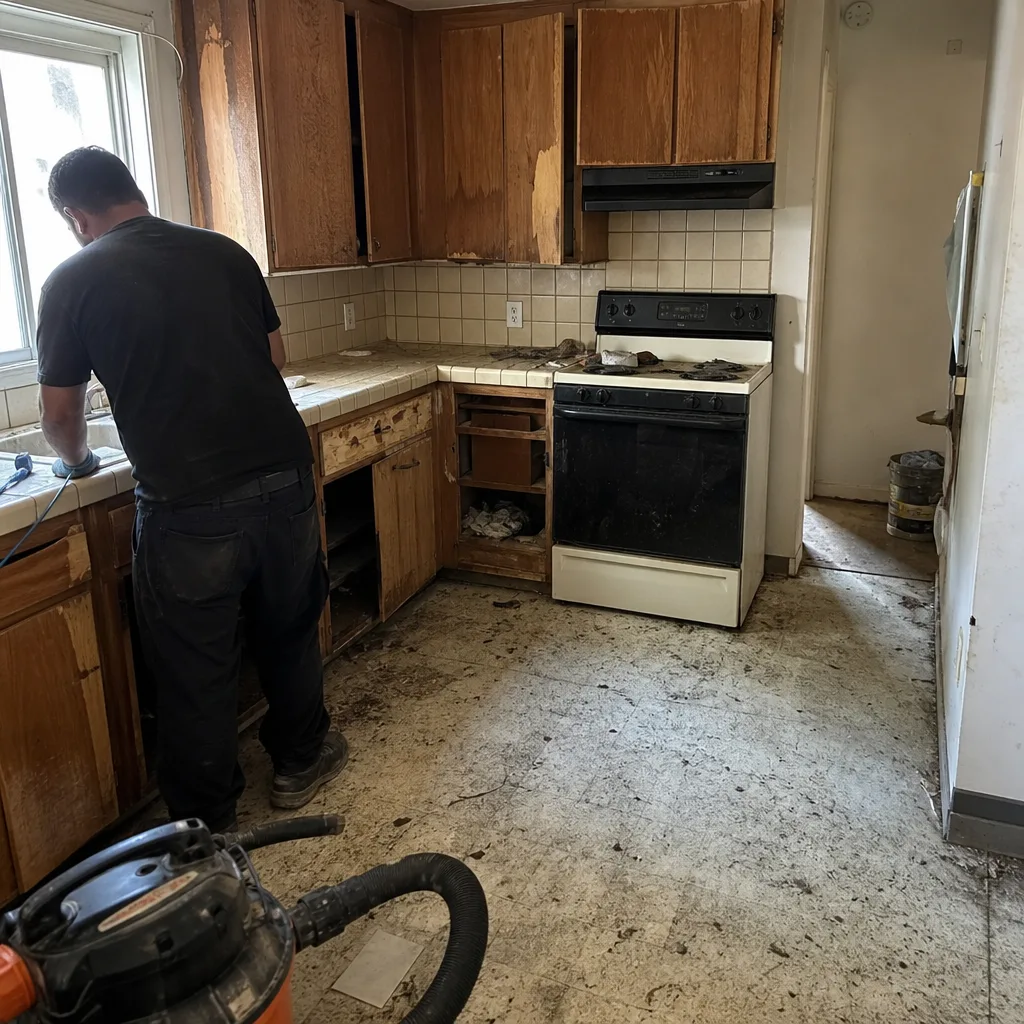 Before
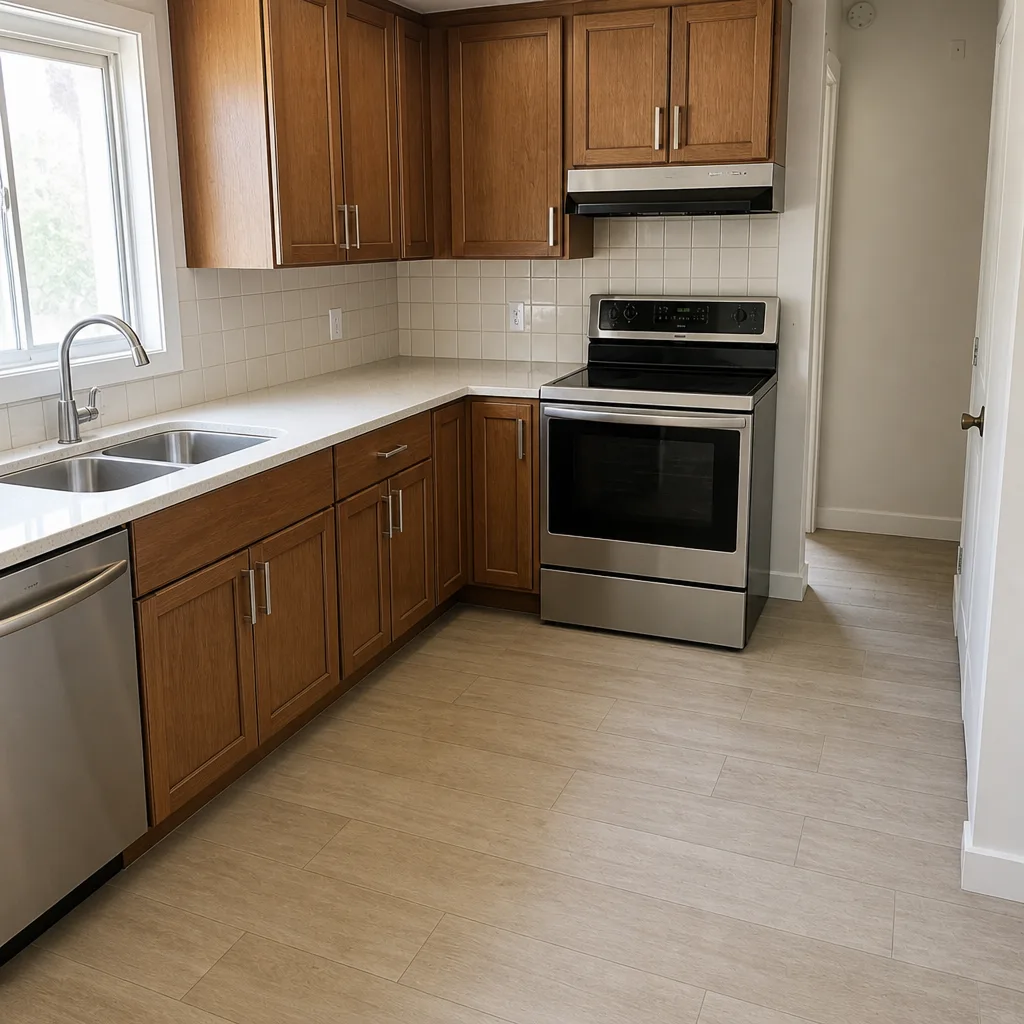 After
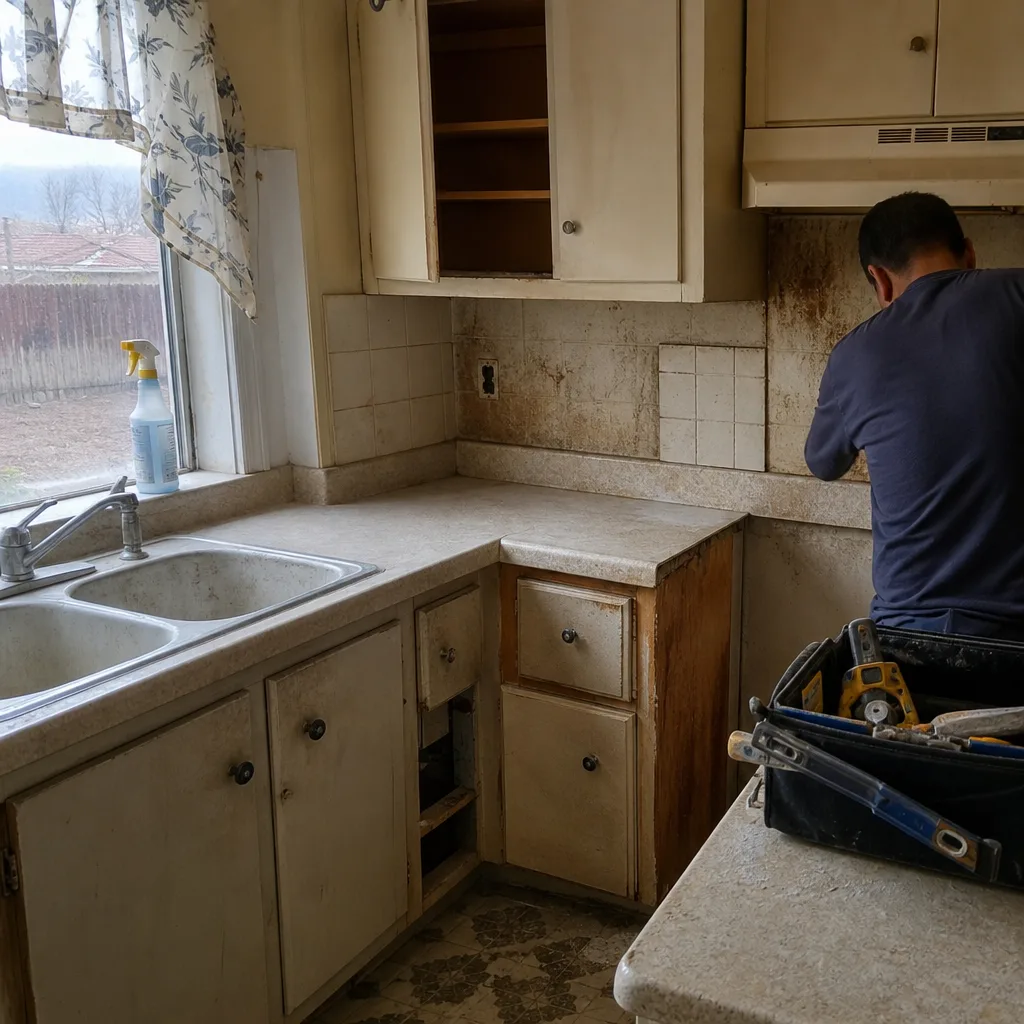 Before
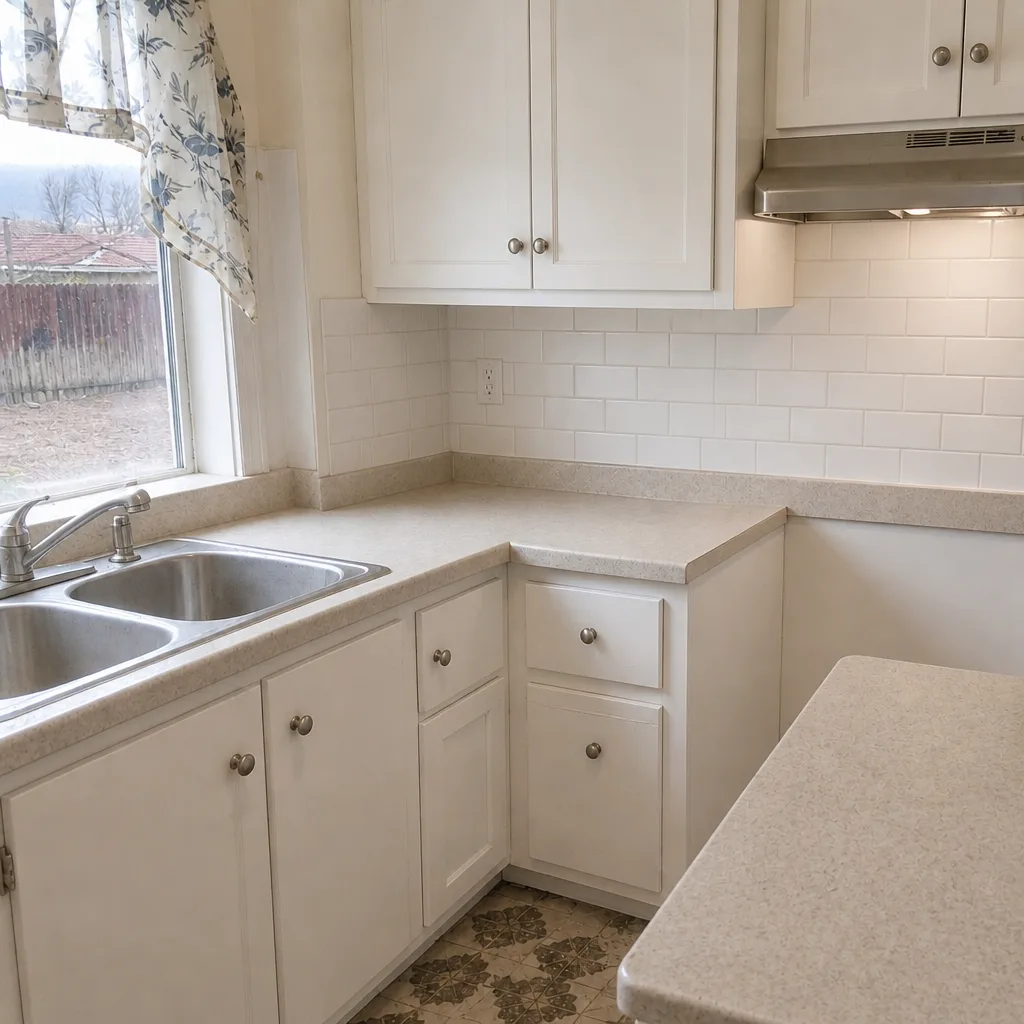 After
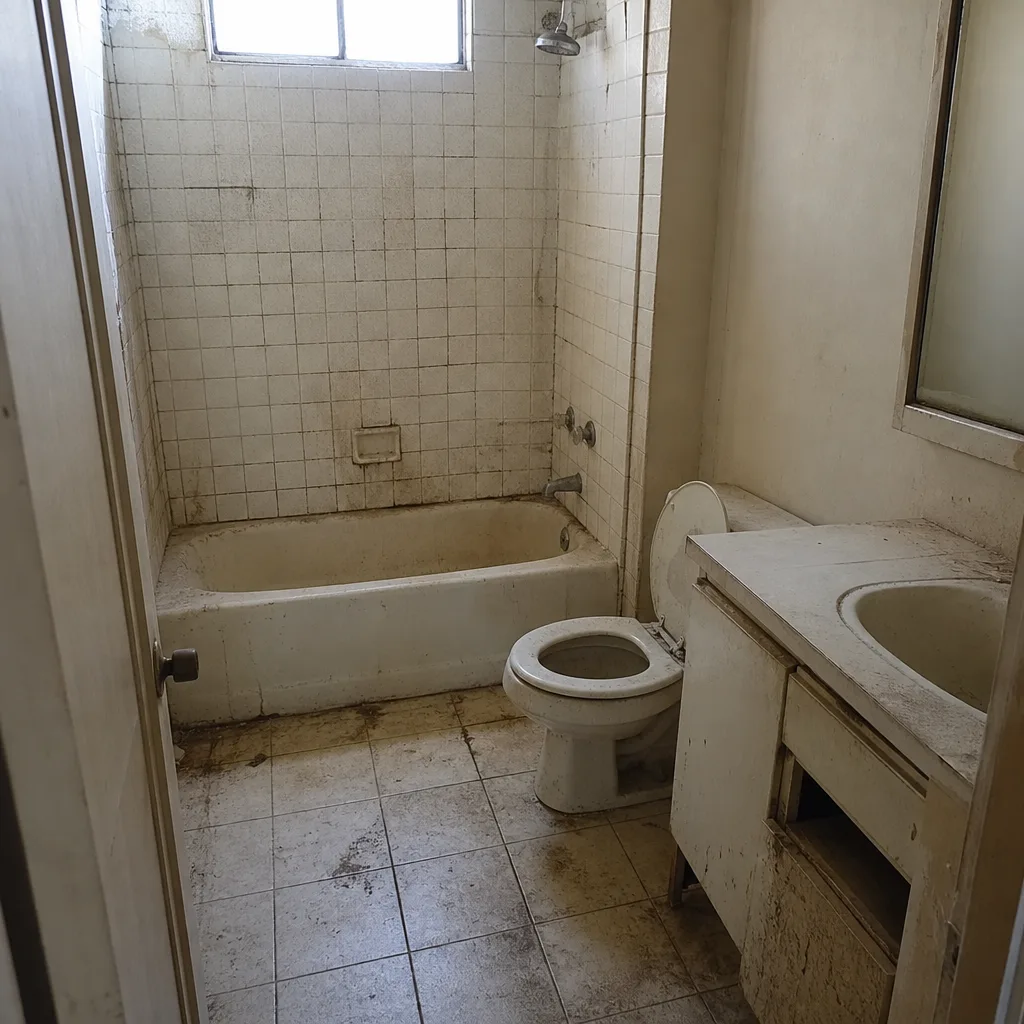 Before
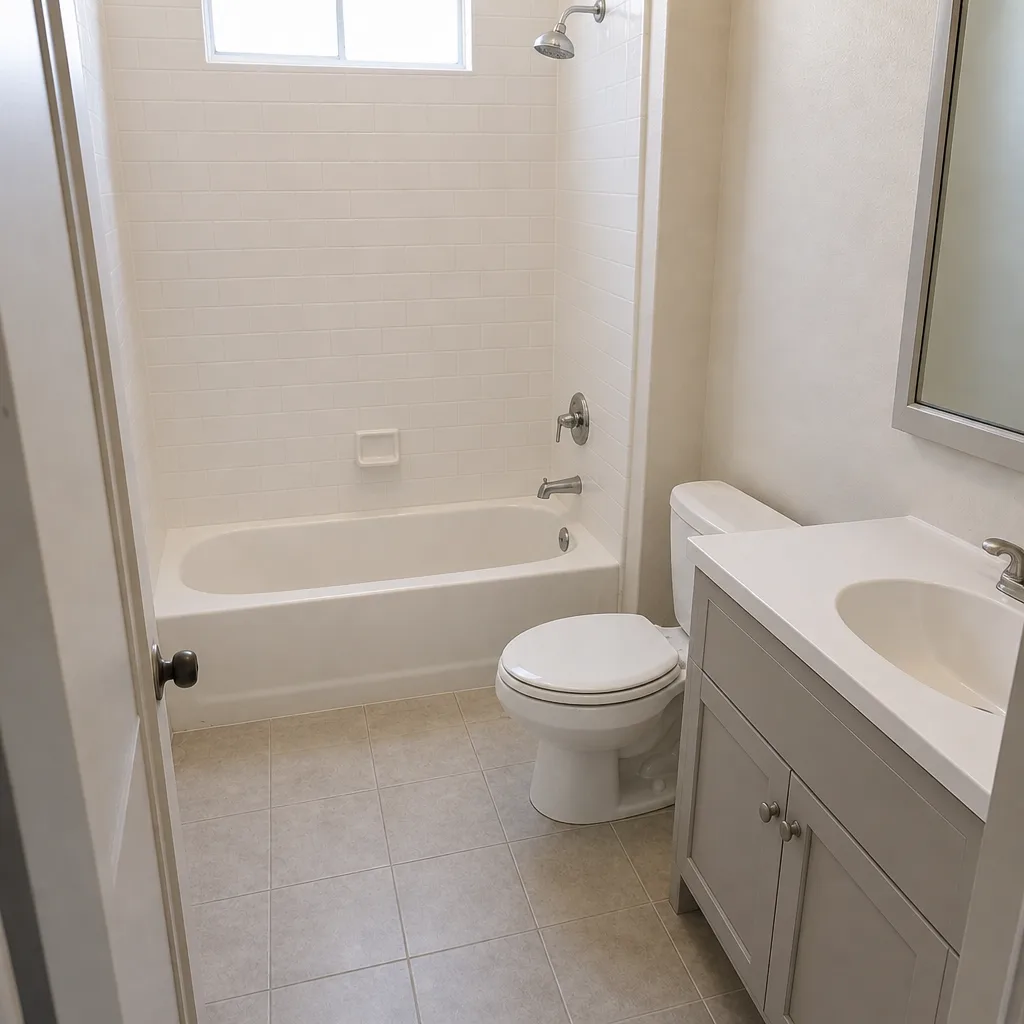 After
When to Call a Professional
Call a professional when the post itself needs replacement rather than tightening, when the footing needs to be re-poured at proper depth in caliche, when a vinyl fence is showing brittleness at 10-plus years and you need a product-grade answer rather than a guess, when a gate’s sag traces to post deflection, or when any of the safety scenarios above apply. If you’re weighing repair against replacement on a 100-foot run, call before you shop materials – the number you need to decide is the number a professional can put in writing after seeing the site. Rowan Construction Group Palmdale offers free estimates in Palmdale – call (844) 320-8244. Every quote is a written flat price with a written scope, no change proceeds without a signed change order, and every visit includes a documented photo record of what we found and what we did. Our technicians have up to 19 years of experience, and every crew member is background-checked, uniformed, and verified before they arrive. Calls are answered by a live person 24/7.
Frequently Asked Questions
A leaning fence post in Palmdale typically costs $150 – $450 to fix, with the range driven entirely by whether the concrete collar is intact. Re-plumbing an intact collar runs $150 – $280; re-setting the post in a properly excavated and poured footing runs $280 – $450. Full post replacement including new collar and rail re-attachment runs $350 – $600. Call (844) 320-8244 for an exact quote after we see the site – estimates are free.
No. Every Rowan quote is a flat written price with a written scope before any work starts, and no change proceeds without a signed change order. That discipline is why our projects finish within a few percent of the agreed cost across more than 4,000 completed jobs. If we discover something at dig-time that changes the scope – say, an unmarked utility line or deeper caliche than the site walk suggested – we stop, write a change order, and get it signed before proceeding. Nothing moves without your signature.
For a 15-year-old wood fence, replacement is usually the better investment in Palmdale – not repair. At 15 years under High Desert UV, the panels not yet showing problems are typically in their final 3 – 6 years, and repairing the failed sections just staggers replacement over the next few years at higher total cost. Full replacement of 100 linear feet runs $3,200 – $6,800; repairing the failing 5 – 6 posts and 4 – 6 panels runs $1,400 – $2,600 but resets the clock only partway. If you’re planning to sell within 3 years, repair is often enough. Call (844) 320-8244 to walk through the specific fence and get a written number either way.
A gate sags faster than a fence panel because it carries cantilever load the panel doesn’t. If the gate frame itself is square (diagonals match within ¼ inch), the sag traces to the hinge-side gate post deflecting under that cantilever load – it’s a footing problem expressed through the gate. If the gate frame itself is out of square, an anti-sag kit (turnbuckle with stainless cable) is the correct repair, running $18 – $35 in parts. Call (844) 320-8244 and we’ll tell you which one it is during a free estimate.
A Class 2 vinyl fence in Palmdale typically lasts 18 – 25 years before structural brittleness; Class 1 formulations last 10 – 15 years. The difference is TiO2 loading (the UV blocker), not the resin, and it’s the single specification worth asking about on a replacement quote. Chalking and fading at 5 – 10 years is cosmetic; brittleness that snaps a picket under hand pressure is structural. Brands like Bufftech and ActiveYards spec their top-tier Class 2 lines for 20-plus year UV stability, and those are worth the $2 – $5 per linear foot premium over Class 1 in this climate.
Fence permits in Palmdale depend on height and lot position – fences over 6 feet, or fences on corner lots with specific sight-line rules, typically require a permit through the City of Palmdale, and any fence over 7 feet on a property line usually needs one. We pull the permit where it’s required and walk the inspection as part of the install. If your fence repair is a same-height like-for-like replacement, a permit is often not required, and we’ll tell you upfront which category your project falls in during the free estimate. Call (844) 320-8244 to talk through your specific line.
The Bottom Line
The most useful troubleshooting skill with fences in Palmdale is knowing which failure mode you’re looking at before you buy a single fastener. A leaning post with an intact collar needs a deeper footing, not a new post. Wood rot starts at the grade line, and the screwdriver test tells you surface checking from through-rot in ten seconds. Panel sag traces to one of three mechanical causes, each with a specific fix. Vinyl degrades on a UV-load curve that Palmdale accelerates, and Class 2 formulation buys a decade of life over Class 1. Gate sag usually points back to a post. Get the diagnosis right, write the number down before work starts, and repair or replace based on honest math rather than the size of the first quote you get.
If you’re ready to move from diagnosis to a written number, call Rowan Construction Group Palmdale at (844) 320-8244 for a free estimate. We serve Palmdale and the surrounding Antelope Valley, deliver a written flat price with a written scope before any work starts, pull whatever permits your fence line requires, and back our work with the 365-Day Done Right Promise – if it isn’t done right, we make it right. Free Second Opinion on any written estimate you’ve already got: bring it and we’ll review it line by line at no charge. Our Rowan Construction Group Palmdale home page covers the full trade list if your project is bigger than the fence line, and our Home Additions & ADU in Palmdale guide is where homeowners often find us when a backyard fence is part of a larger yard buildout. Estimates are free and there’s no pressure to book anything – just a number you can screenshot and compare.
Written by the team at Rowan Construction Group Palmdale.