Last updated November 18, 2026




Free written scope consultation - allowances, timeline, and change-order rules on paper before a single trade is scheduled
Fence Installation Maintenance Schedule: What to Do and When
Staining a wood fence in Palmdale in July is a waste of money, and most homeowners don’t find out until the following spring. When the temperature sits above 95°F and the humidity drops into the teens, the solvent in an oil-based sealant flashes off before it can soak into the wood grain. You’re coating the surface, not protecting the board. That’s why a fence treated in midsummer often needs another pass in a year instead of three. The work that actually extends a fence’s life in the Antelope Valley happens in the shoulder seasons, and this guide lays out the calendar month by month, species by species, and material by material.
Quick Answer
In Palmdale, fence maintenance is front-loaded into fall and spring: inspect posts and hardware in October, adjust gates before winter winds in November, clear vegetation in February, and apply wood treatment in April once soil moisture returns and daytime highs drop below 85°F. Wood fences need penetrating sealant every 2 – 3 years on pressure-treated pine and film-forming stain every 3 – 4 years on cedar, with the timing driven by temperature rather than the calendar alone.
Styles & brands we work with
- Kitchen remodeling
- Bathroom remodeling
- Home additions & ADU
- Roofing
- Windows & doors
- Driveway & pavers
- Fence
Table of Contents
- Why Fall and Spring Beat Summer for Fence Work in Palmdale
- The Month-by-Month Palmdale Fence Calendar
- Wood Fence Treatment Intervals by Species and Product
- Wrought Iron and Steel: The Rust Protocol
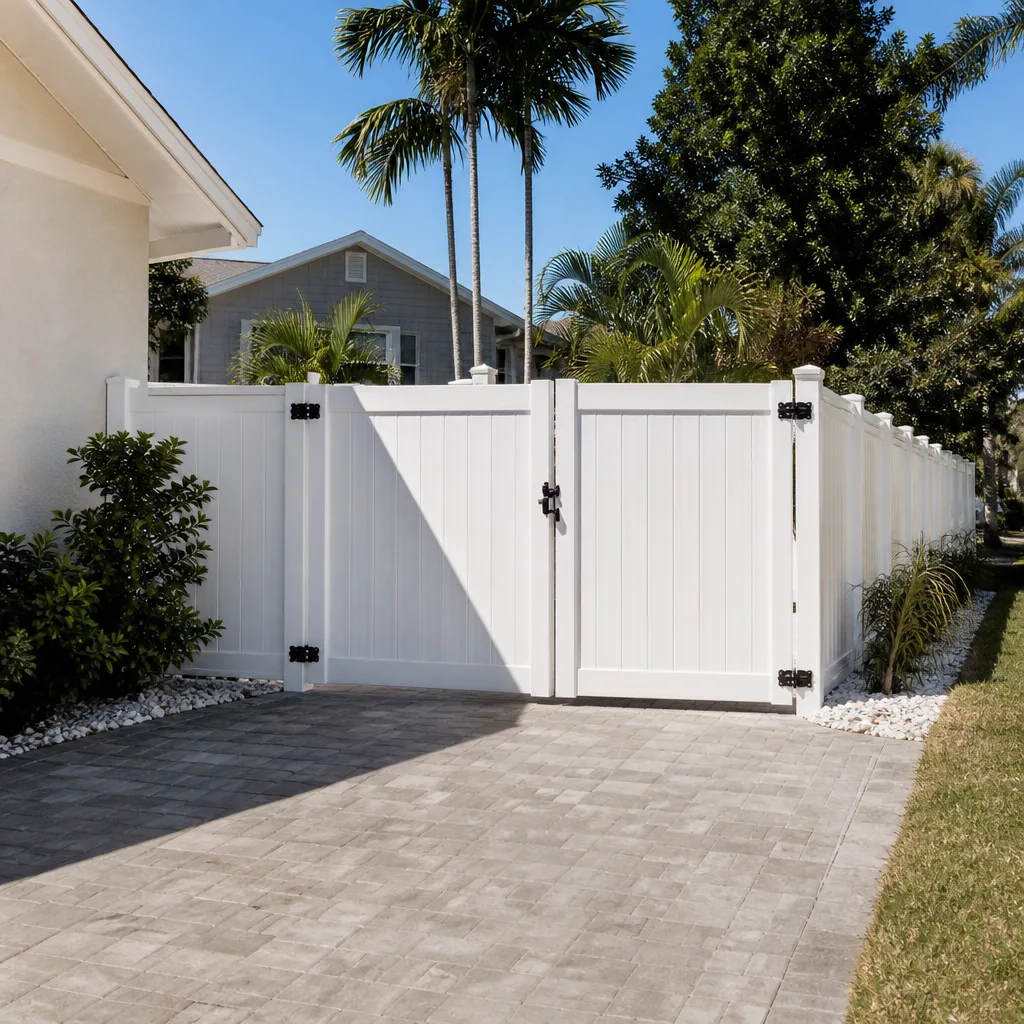
- Vinyl Fence Care: What’s Safe and What Attacks the Plastic
- Building Your Annual Photo Baseline
- Common Mistakes to Avoid
- When to Call a Professional
Why Fall and Spring Beat Summer for Fence Work in Palmdale
The damage that shortens a fence’s life in Palmdale accumulates in summer but only becomes repairable after the heat breaks. UV radiation breaks down lignin in wood cells, and thermal cycling expands and contracts boards against their fasteners. From June through September, the west-facing boards on a typical backyard fence take the worst of it. The problem is that the window to fix that damage opens only when temperatures drop below 90°F, which in Palmdale usually means late September through November and again from March into May. Above that threshold, most penetrating sealants and film-forming stains cure too fast to bond properly. In our experience, a fence sealed in October holds its finish noticeably longer than one sealed in June, even when both use the same product from the same can.
April is the second window, and it’s a good one for a different reason. Soil moisture is still up from winter rain, which means posts are settled and stable, and you’re sealing wood that has reabsorbed some ambient humidity rather than bone-dry summer timber. Daytime highs in April usually sit between 75°F and 85°F, right in the application range most manufacturers print on the label. If you’re planning a full replacement rather than maintenance, the same seasonal logic applies to installation: spring and fall give new wood and new concrete the mild curing conditions they need. Our Fence Installation in Palmdale crews schedule new builds around those windows for exactly this reason.
The Month-by-Month Palmdale Fence Calendar
Here is the maintenance rhythm we recommend for a typical Palmdale property, whether the fence is wood, vinyl, or metal. Adjust the dates slightly for microclimate differences between neighborhoods, since the west side near the foothills runs a few degrees cooler than the east side around the Antelope Valley Mall corridor.
- October – post and hardware inspection. Walk the line and check every post for plumb. Push each one firmly at the top; movement at the base is a warning sign of rot or soil settling. Tighten or replace lag bolts, hinges, and gate hardware. This is also the month to note any boards that have cupped or split after summer.
- November – pre-winter gate adjustment. Gates sag as the ground shifts and hinges wear, and winter wind gusts in Palmdale will finish off a gate that’s already out of alignment. Adjust the sag, check the latch strike, and confirm the gate clears the ground by at least an inch.
- February – vegetation clearance pass. Clear vines, ivy, and brush at least 12 inches back from the fence line. Vegetation traps moisture against the boards and gives termites a covered highway to the wood.
- April – wood treatment window. Once highs hold below 85°F and the soil has dried enough to work, apply penetrating sealant or stain. This is the main event of the year for a wood fence.
- Ongoing (quarterly) – hardware and fastener check. Look for loose nails, popped screws, and rust bloom on metal. Catch these early and repair becomes a twenty-minute job instead of a panel replacement.
Vinyl and metal fences need a lighter calendar – a spring wash and a fall inspection usually covers it. The wood fence is the one that demands real attention, and the April treatment window is non-negotiable if you want the interval to stretch to three years.
Wood Fence Treatment Intervals by Species and Product
The right interval depends on the species and the product, not on a generic “every year” rule. Here’s what we recommend for the two wood types most common on Palmdale fences.
- Pressure-treated pine: oil-based penetrating sealant every 2 – 3 years. Penetrating products soak into the grain instead of sitting on top, which matters in a climate where film coatings crack. Look for products in the Ready Seal or TWP family. Application runs about one gallon per 150 – 200 square feet, which on a standard 6-foot fence works out to roughly one gallon per 25 – 33 linear feet. Budget $45 – $70 per gallon for a quality penetrating oil.
- Cedar: film-forming stain every 3 – 4 years. Cedar holds a film coat better than pine because its grain is tighter and its natural oils resist moisture. Brands like Cabot and Behr make stains that hold up in high-UV markets when applied at the label rate of about 300 square feet per gallon. Cedar that’s been allowed to gray out should be cleaned and brightened before staining, or the stain won’t adhere.
Product cost for a 100-linear-foot wood fence runs $120 – $250 in material, which is a fraction of what premature replacement costs. The interval is set by the product spec, but the application window is set by the Palmdale temperature curve. Don’t apply an oil-based penetrating sealant above 90°F, and don’t apply a film-forming stain if rain is forecast within 24 hours. If you’re comparing a treatment against a full replacement, our Driveway & Pavers in Palmdale guide describes how we think about hardscape lifespan the same way – lifecycle cost, not sticker price.
Wrought Iron and Steel: The Rust Protocol
Wrought iron and steel fences don’t fail from UV, they fail from rust, and in the Antelope Valley’s dry climate rust is a slow, patchy process rather than a fast one. That’s good news for maintenance: you have time to catch it. The protocol is a three-step repair.
- Wire brush, not sandpaper. Use a stiff wire brush or an angle grinder with a wire cup wheel to remove loose rust down to bare metal. Sandpaper alone polishes the rust instead of removing it. Work the brush into pits until you see bare gray steel.
- Rust-inhibiting primer. Apply a zinc-chromate or rust-inhibiting alkyd primer to every bare spot within a day of brushing. The zinc in the primer acts as a sacrificial layer that corrodes before the steel does. Two thin coats beat one thick coat.
- Topcoat with a UV-stable sheen. Use a satin or semi-gloss topcoat rather than a flat finish. Flat paints hold dirt and chalk faster, and in a high-UV market like Palmdale they degrade quickly. Satin holds its color longer and sheds dust better.
For a 100-linear-foot wrought iron section, expect roughly $60 – $110 in material for the full protocol – brush, primer, and topcoat – if you’re doing spot repair rather than a full repaint. Full repaint of 100 linear feet of pickets runs $150 – $280 in paint and primer alone. Metal fences should get a close visual inspection twice a year; catching a rust bloom at the size of a quarter is a ten-minute fix, while a bloom the size of a dinner plate means replacing the picket section.
Vinyl Fence Care: What’s Safe and What Attacks the Plastic
Vinyl fences from manufacturers like Bufftech and ActiveYards are marketed as maintenance-free, and for most of the year that’s close to true. But “maintenance-free” doesn’t mean “indestructible,” and a few common household products will shorten a vinyl fence’s life in ways that don’t show up for years.
The plasticizers that keep vinyl flexible react badly with two categories of cleaner: strong bleach solutions and petroleum-based solvents. Bleach at concentrations above roughly 1:4 with water will attack the surface over repeated use, and concentrated degreasers or solvent-based cleaners can pull plasticizer out of the plastic, leaving it brittle. Safe cleaning is a mild dish soap solution or a dedicated vinyl cleaner, applied with a soft brush and rinsed. A diluted bleach solution – no stronger than 1:10 – is acceptable for mold or mildew spots, but don’t soak the panels in it.
Power washing is where most vinyl damage actually happens. A pressure washer above 1,500 PSI on aged vinyl forces water into the panel surface and leaves micro-fractures in the plastic. Those fractures are invisible at first, but each freeze-thaw cycle and each summer heat cycle widens them. Within a few years, an over-pressure-washed vinyl panel goes chalky and brittle. Keep the pressure below 1,500 PSI, use a wide fan tip, and hold the wand at least 18 inches from the panel. A gentle spring wash with a garden hose and dish soap handles more than most homeowners expect.
Building Your Annual Photo Baseline
The single most useful habit for tracking a fence’s condition over time is a consistent photo record. The point isn’t to take pretty photos – it’s to take the same photos at the same angles every year so you can see change you’d otherwise miss. We build this into every visit as a standard deliverable, and the process is worth copying even if you maintain the fence yourself.
- Post plumb shots. Stand at the base of each corner post and photograph straight up along the post face with a level visible in the frame. The angle is consistent, and any tilt shows up year over year.
- Panel alignment shots. Stand square to the fence at a fixed distance – 10 feet works – and photograph three or four panels at a time. A shadow gap or a sagging top rail becomes obvious in comparison to last year’s shot.
- Hardware close-ups. Photograph each hinge, latch, and gate bracket from straight on. Rust bloom and fastener pull-out show up clearly at close range.
- Base and soil line. Photograph where each post meets the ground. Soil erosion and rot at the base are the two conditions most commonly missed in a walkaround.
Date every photo set and store it in one folder. When a contractor asks how long a fence has been in service, or when you’re deciding whether a repair or a replacement is the better spend, you’ll have the evidence rather than an estimate from memory. Our team photographs every fence visit for exactly this reason – it’s part of the documentation the customer keeps.
Common Mistakes to Avoid
- Staining in summer. Applying stain above 90°F causes the solvent to flash off before it penetrates, which means the same fence needs re-treatment in a year. Wait for the spring or fall window.
- Power washing vinyl at full pressure. Above 1,500 PSI, the water forces micro-fractures into aged vinyl that accelerate brittleness. Use low pressure and a wide fan tip.
- Sandpapering rust instead of wire-brushing it. Sandpaper smooths the rust and leaves the corrosion below the surface. A wire brush gets down to bare metal so the primer can bond.
- Ignoring vegetation against the fence line. Ivy and brush hold moisture against wood and give termites cover. A February clearance pass prevents both.
- Skipping the gate adjustment before winter. A gate that’s slightly out of alignment in November will be dragging by February once the winds hit. Adjust it before the wind, not after.
- Choosing a flat topcoat for metal. Flat paint chalks and holds dirt faster in the Palmdale sun. A satin or semi-gloss finish lasts noticeably longer.
- No photo record. Without year-over-year photos, you can’t tell whether a fence is aging normally or failing early. The baseline is what makes the diagnosis possible.
When to Call a Professional
Some fence problems are genuinely a weekend job – a loose hinge, a coat of sealant, a vegetation pass. Others aren’t. Call a professional when a post has rotted at the base or is leaning past plumb, when a gate frame has cracked or the latch strike has torn out of the post, when a metal section has rust through the picket body rather than just bloom on the surface, or when the fence line has shifted enough that panels no longer align. Wind damage after a Palmdale gust event is worth a professional look even if it looks minor, because fasteners that have pulled halfway out don’t announce themselves. Our team has up to 19 years of experience diagnosing exactly these failures, and the Rowan Construction Group Palmdale home page describes how our process works on every job. Rowan Construction Group Palmdale offers free estimates in Palmdale – call (844) 320-8244 to schedule one.
See the difference
 Before
 After
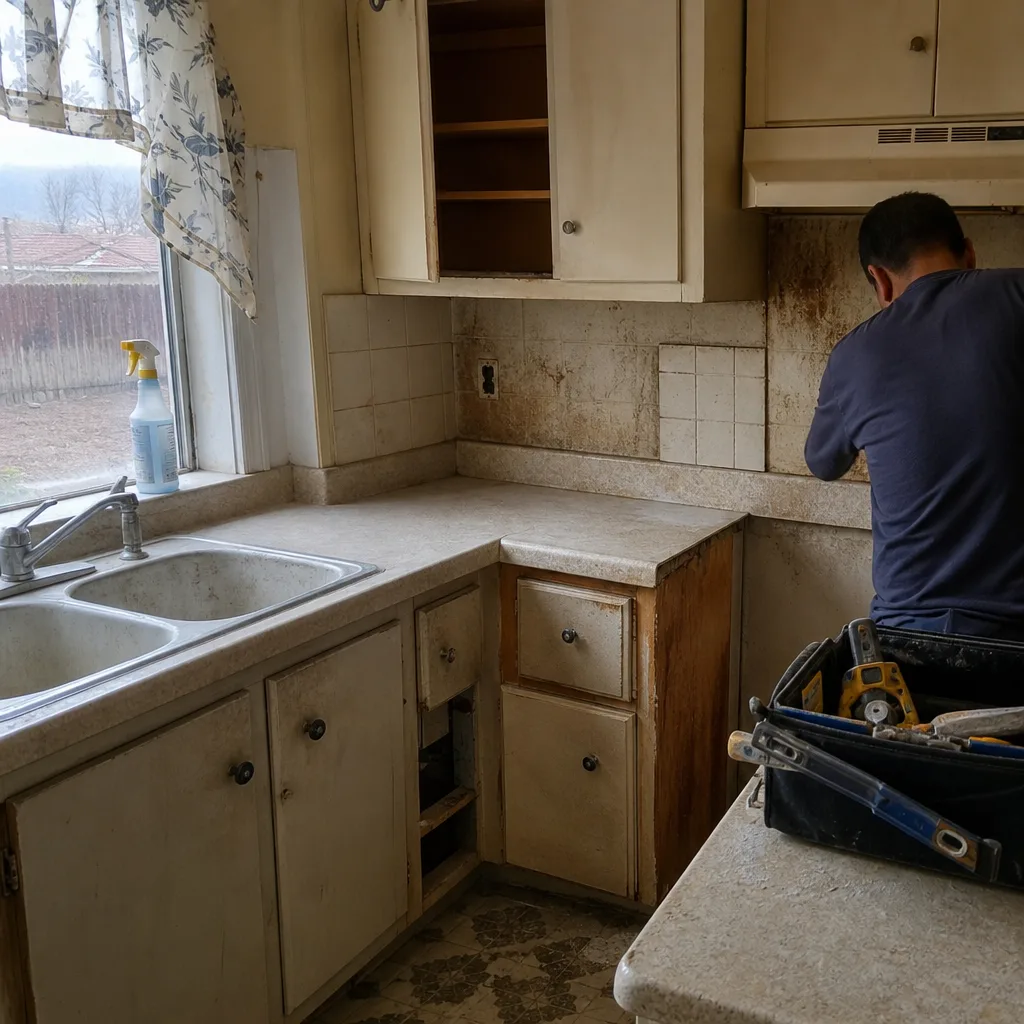 Before
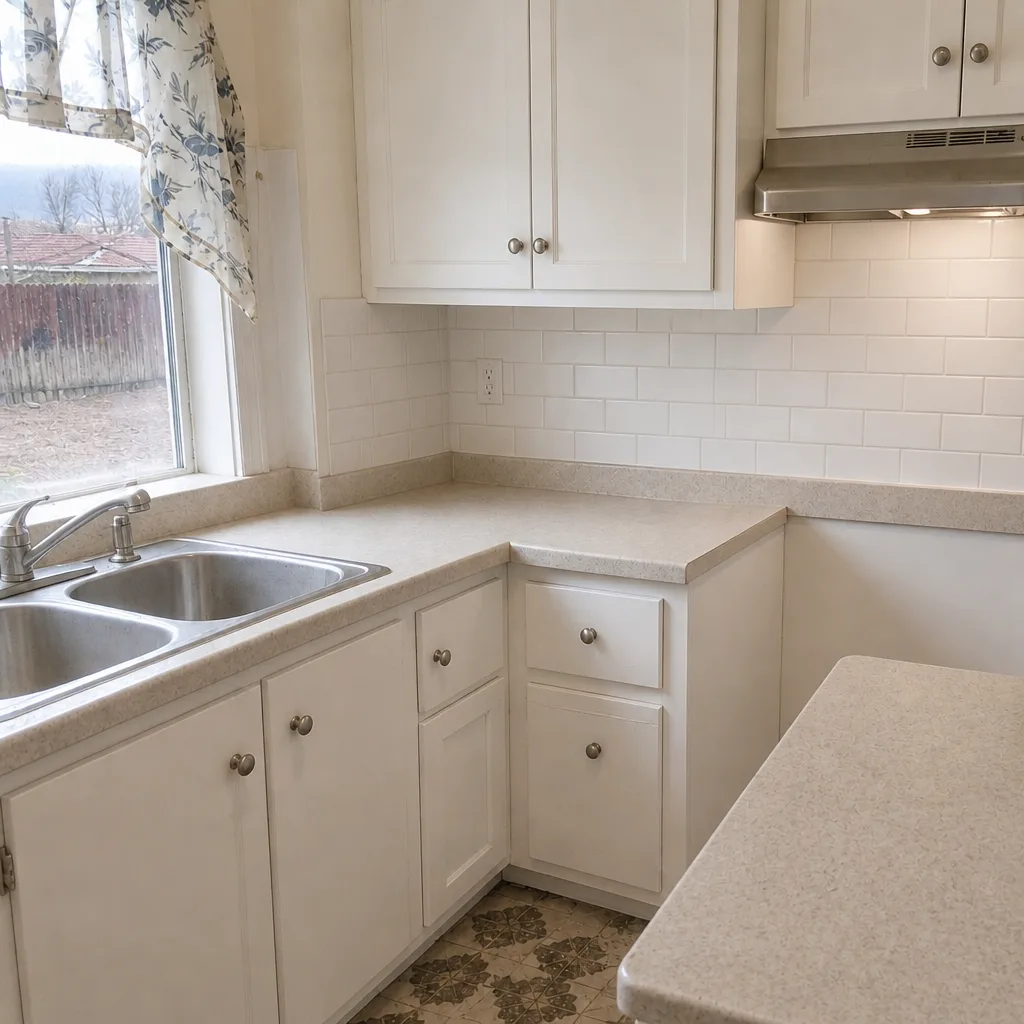 After
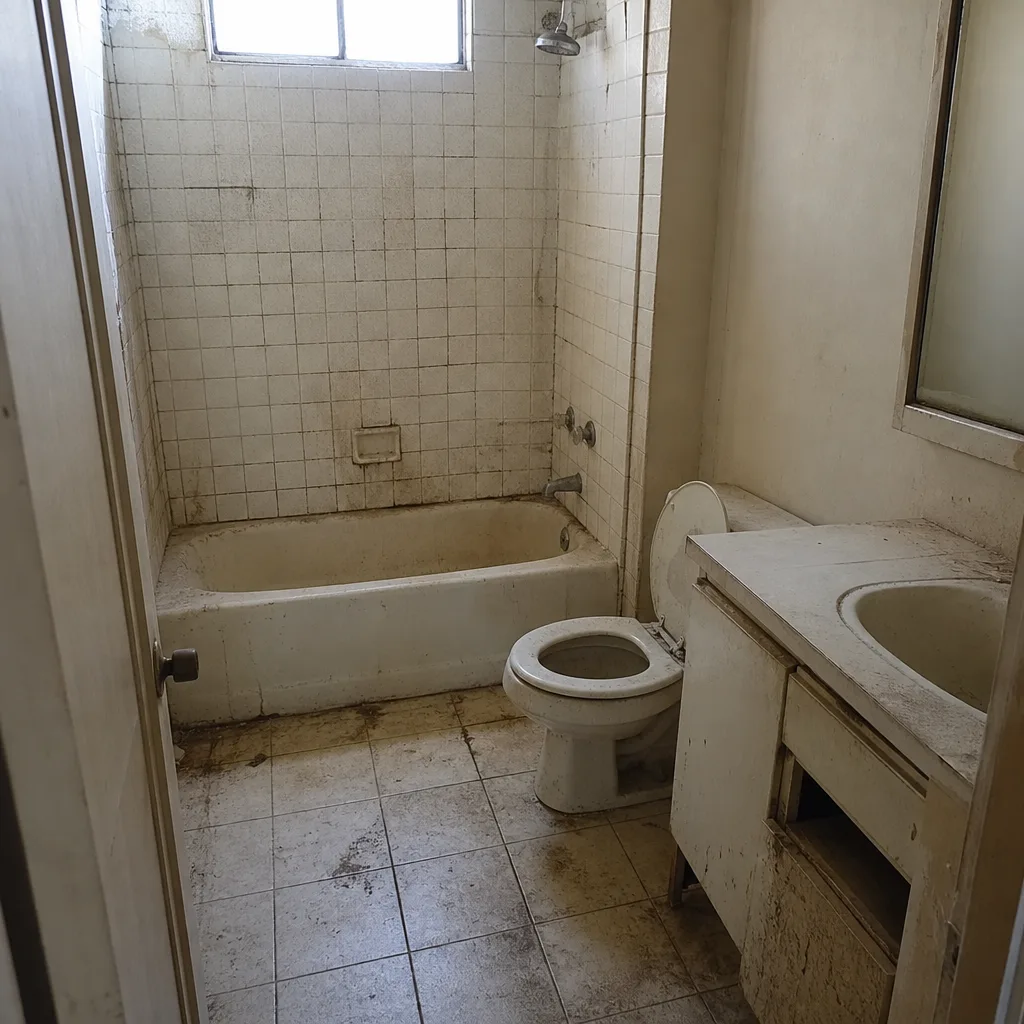 Before
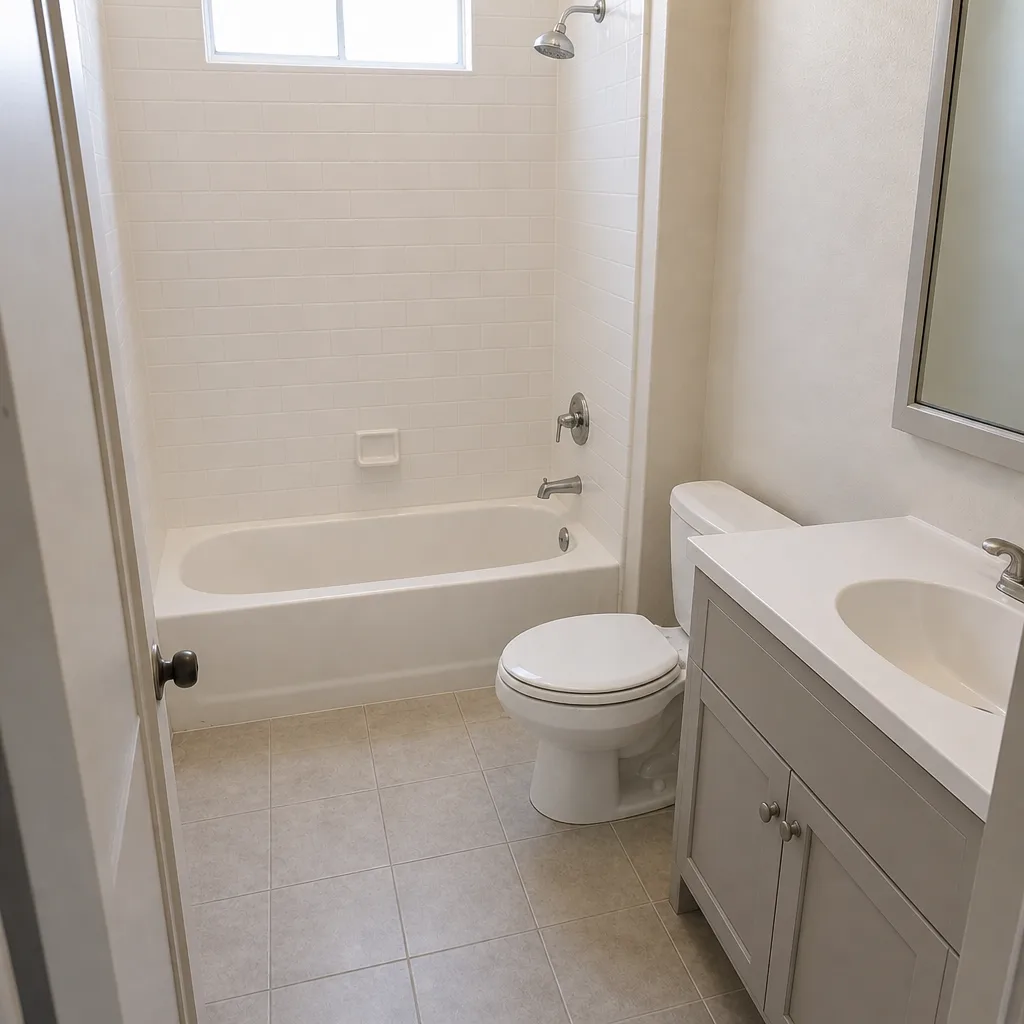 After
Frequently Asked Questions
Pressure-treated pine should be sealed every 2 – 3 years with an oil-based penetrating sealant, and cedar every 3 – 4 years with a film-forming stain. The application timing matters as much as the interval: apply in April or October when daytime highs sit below 85°F, because summer heat drives the solvent off before it penetrates. Call (844) 320-8244 for an assessment of your specific fence.
You shouldn’t. Above 90°F, oil-based sealants and most film-forming stains cure too fast to bond properly, so the finish sits on the surface rather than soaking in. The fence looks sealed, but the protection fails within a year and you’re doing the work twice. Wait for the fall window.
Keep it below 1,500 PSI, use a wide fan tip, and stay at least 18 inches from the panel. Above that threshold, water forces micro-fractures into aged vinyl and shortens the fence’s life. For most cleaning, a garden hose and dish soap handle more than homeowners expect.
If the rust is surface bloom that wire-brushes down to bare metal, it’s a repair: prime and topcoat and it’s done. If the rust has eaten through the picket body or left visible holes, the section needs replacement. A photo record year over year makes the call easier.
Yes, in one specific way. The combination of high UV and large daily temperature swings accelerates wood weathering and shortens finish life compared to coastal climates. The saving grace is low humidity, which slows the rot and mold pressure that coastal homeowners fight. Maintenance timing shifts; the total workload doesn’t rise dramatically.
Cleaning, vegetation clearance, and an annual inspection are reasonable weekend work. Post replacement, gate re-framing, and full fence installation are not, mostly because a fence that’s out of plumb won’t stay in plumb with fasteners alone. If you’re not sure which category your problem falls into, that’s the point to get a written opinion.
The Bottom Line
Fence maintenance in Palmdale is a seasonal discipline, not a year-round chore. The April and October windows are when work actually pays off; the July and August attempts waste material and time. Wood needs re-treatment every 2 – 4 years depending on species, metal needs a rust protocol when the first spots appear, and vinyl needs a gentle wash and nothing more aggressive. The annual photo record is what turns a fence’s condition from a guess into evidence. If a post is leaning, a gate is dragging, or a section has failed, that’s a job for a professional with a written estimate. Call (844) 320-8244 to schedule your free estimate, and we’ll bring the documented process to your fence line. Our technicians have up to 19 years of experience across wood, vinyl, and metal fencing, and if you’re planning a new build or addition alongside the fence work, our Home Additions & ADU in Palmdale page shows how the same documentation discipline carries into larger projects.
Written by the team at Rowan Construction Group Palmdale.