Last updated November 18, 2026

Free written scope consultation - allowances, timeline, and change-order rules on paper before a single trade is scheduled
Driveway & Pavers Warning Signs Every Homeowner Should Know
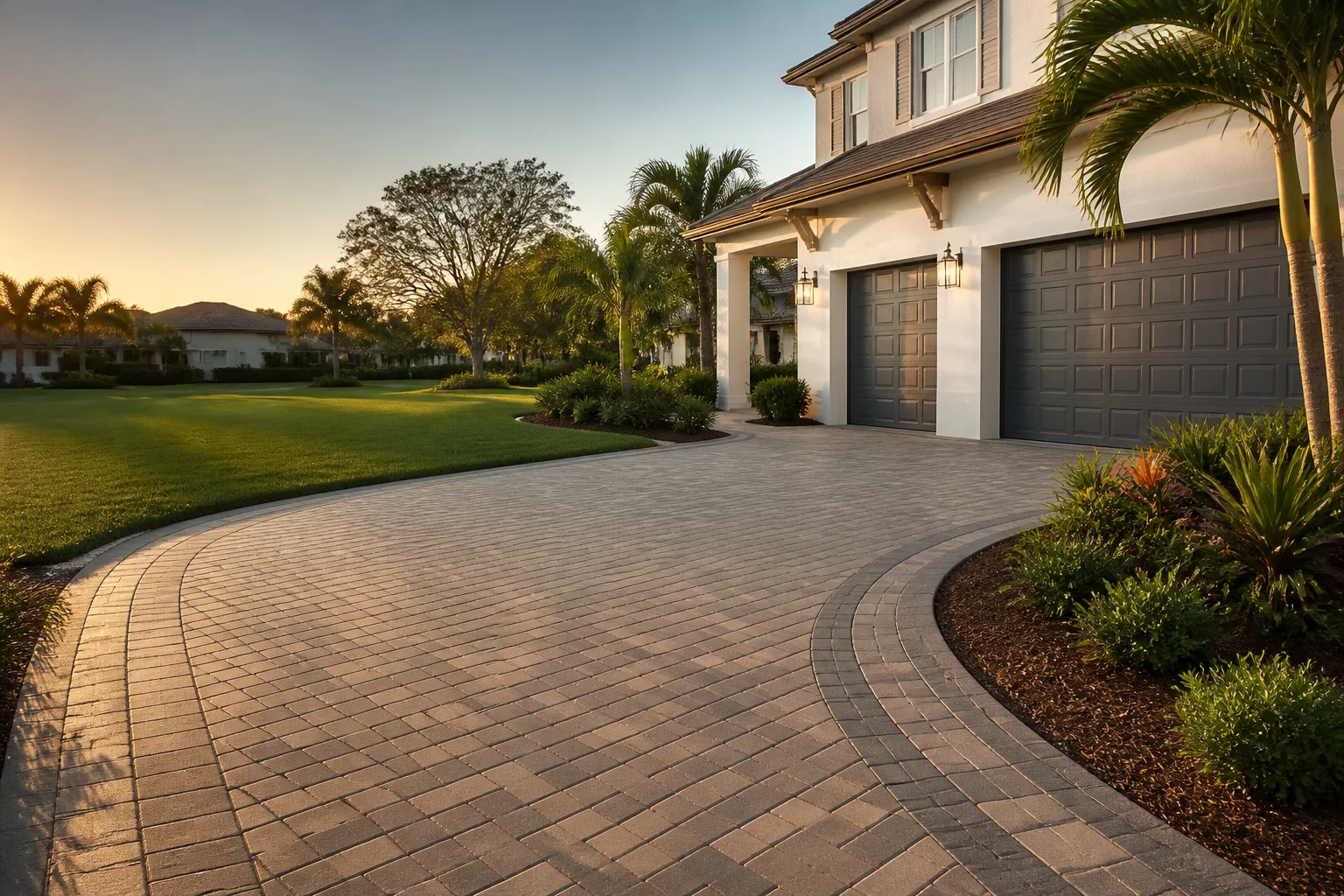
A single paver that rocks under foot traffic is a $40 repair today. That same rocking paver, sitting over a base void during Palmdale’s January freeze cycle, becomes a 20-square-foot sunken section by March – a repair that starts at $600. The signs most homeowners notice first, surface staining and small settling, are usually cosmetic. The signs that matter are quieter: a widening joint, a paver that moves underfoot, water that pools against the garage instead of running off. This guide covers six failure signatures to inspect twice a year, how to rank them by urgency, and exactly what to document before you call anyone in Palmdale.
Quick Answer
Driveway paver warning signs that require action before the next rain or freeze are edge creep, joint widening, rocking units, and depressions – all signs the base or drainage has failed, not just the surface. Cosmetic signs like light efflorescence or a stray weed in a joint can usually wait a season. If your pavers move underfoot or water pools toward the house, get a professional assessment; a single winter of ignored base failure can double repair cost.
Styles & brands we work with
- Kitchen remodeling
- Bathroom remodeling
- Home additions & ADU
- Roofing
- Windows & doors
- Driveway & pavers
- Fence
Table of Contents
- The Six Failure Signatures to Inspect Twice a Year
- How to Rank Warning Signs by Urgency
- The Drainage Test: One Bucket of Water Tells You More Than a Visual Walk
- What to Document Before You Call a Contractor
- DIY-Repairable vs. Open-the-Base: The Specific Visual Threshold
- Why Palmdale’s Climate Makes Some Failures Worse
- What Actually Fails Under a Paver Driveway
- What Paver Repairs Cost, and When Replacement Beats Repair
The Six Failure Signatures to Inspect Twice a Year
Walk your driveway in spring and again in fall. Bring a phone, and photograph anything that looks off. Below are the six signatures to look for, described in enough detail to match against what you see on your own property. We’ve flagged these hundreds of times across Palmdale driveways, and the same six show up again and again.
- Edge creep. Look at the outer border where pavers meet soil, gravel, or the lawn. A crisp, tight edge is what a properly restrained driveway has. Edge creep shows as the border pavers sliding outward, or as soil and gravel pressing into a gap that wasn’t there a year ago. The driveway is spreading because the edge restraint has failed, often from a missing or rotted spike in the plastic or metal edging.
- Joint widening. Joints between pavers should hold sand tightly, at roughly 1/8 to 1/4 inch. If you can see daylight through the joint or if two adjacent joints have widened noticeably more than their neighbors, the sand has washed out or the base beneath has lost volume. A single widening joint over a utility trench is common and easy to spot.
- Rocking units. Stand on one foot and rock. A paver that shifts underfoot has lost its bedding sand or slipped off the base. This is the sign that most directly predicts base failure, and it is exactly the failure that turns a $40 fix into a $600 repair if ignored through a freeze cycle.
- Depressions. Crouch at eye level along the driveway’s long axis. A paver field should be flat to the eye, with a consistent 1 to 2% slope away from the house for drainage. A dip you notice from a crouched position is a base void, not cosmetic, and it will deepen.
- Efflorescence patterns. A white, chalky bloom on the paver face is efflorescence, mineral salts wicking up from moisture below. Isolated patches are cosmetic and wash away. A diagonal band of bloom across the field, or bloom concentrated at the low side near the garage, tracks where water is traveling under the pavers and signals a drainage issue.
- Vegetation in joints. A stray weed after rain is normal. Moss or a continuous strip of grass growing along a joint line is the tell. Moss needs sustained moisture, and if it’s growing in the joint, water is sitting in the joint and the sand has washed out far enough that weeds can root into the base.
How to Rank Warning Signs by Urgency
Not every sign requires the same response. Treat the list below as a triage: three of these signs are “fix it this season” and three are “handle before the next weather event.” The line between them is whether the failure will get worse on its own, and by how much.
- Fix before the next rain or freeze: rocking units, depressions, and edge creep. Each of these lets water get under the pavers, and each one accelerates in cold weather. A paver that rocks gets worse when ice expands the void beneath it.
- Fix before the next rain: joint widening concentrated at the low side or near the garage, and efflorescence that pools along a line. Both point to water flowing to the wrong place, which will damage the base and the house side of the driveway.
- Fix this season, no emergency: scattered efflorescence, a small number of weeds in joints, a single paver that’s slightly out of pitch but not moving.
The single best guide: if the sign is getting worse between your spring and fall inspections, escalate it. If it hasn’t changed in twelve months, you have time. Weather in Palmdale is dry most of the year, which buys you margin on some failures and hides others. The January freeze cycle and the occasional winter rainstorm are when base failures surface, and the repairs that follow cost more because they come in bunches.
The Drainage Test: One Bucket of Water Tells You More Than a Visual Walk
A visual inspection catches the surface signs. A five-gallon bucket of water catches the ones you can’t see from above. Here’s how to run it.
- Fill a five-gallon bucket with water.
- Find the highest point of the driveway – usually near the garage door slab, or where the driveway meets the apron.
- Pour the bucket in a slow, steady stream at that high point.
- Watch where the water goes for the next 60 seconds.
On a properly graded driveway, the water runs off in sheets toward the street or a designed drain, and none of it stands for more than a minute. On a failing driveway, one of three things happens: water pools into a depression and stays there; water seeps into a joint and disappears into the base, which means the joint’s sand is gone; or water runs toward the foundation wall or under the garage door, which means the original grade has flattened out and water is now draining toward the house.
That last outcome is the one to take seriously. Water draining toward the garage undercuts the slab, and it’s the failure that most often leads to a full base rebuild rather than a spot repair. If you see it in Palmdale, schedule an assessment before the next rain. Reach us through our Driveway & Pavers in Palmdale page and we’ll send a team to run the same test with a slope level.
What to Document Before You Call a Contractor
The single biggest cost driver on a paver repair call is diagnostic time. If you hand the contractor a phone with three photos and a probe depth, you shave half a site visit and you get a more accurate quote on the first visit. Here’s what to collect before you call.
- Photos with a coin for scale. Lay a quarter or a nickel beside a widened joint, a depression, or a patch of efflorescence, and photograph from directly above. The coin keeps the photo from being ambiguous, and it means the contractor can see joint width without needing to re-visit.
- A screwdriver probe in soft spots. Push a standard screwdriver into the joint sand or into a soft spot near a depression. Note the depth in inches before you meet resistance, or before the screwdriver hits something solid. A screwdriver that sinks three or four inches means the bedding sand and part of the base are gone.
- The age of the original work. If the driveway is under ten years old, most of the failure causes (edge restraint failure, base settling) are still common but potentially the installer’s responsibility. If it’s older, you’re looking at service life. Write down the install year if you have it.
- The installer’s name and any warranty paperwork. If the original installer offered a workmanship warranty, that paperwork matters. Some base failures are the installer’s problem to fix, and the contractor you hire needs to know.
- A sketch of where water runs. Note where water pools after rain, and where it exits the driveway. A simple sketch with an arrow saves a conversation.
With those five things, a contractor can usually quote a repair range from the photos and a short walk of the property. Without them, you get a “we’ll need to come back out.” That costs you a week and often a second fee.
DIY-Repairable vs. Open-the-Base: The Specific Visual Threshold
Most homeowners want to know what they can fix themselves and what needs a contractor. Here’s the dividing line, stated in visual terms.
DIY-repairable means all six of these are true:
- The paver field is flat to the eye when you crouch along its length.
- No paver rocks underfoot when you stand on it with one foot.
- The edge restraint is intact and the border pavers are tight.
- Joints are all within 1/8 to 1/4 inch of one another.
- The bucket test moves water off the driveway in under a minute.
- The efflorescence washes away with a garden hose and doesn’t return within a month.
Under those conditions, the maintenance list is sand-sweeping joints and re-setting a single paver with the original sand and bedding material. You can do that yourself.
Open-the-base means any one of these is true, and it is the trigger for a professional call:
- Any paver rocks when you stand on it, even a small amount.
- Any depression visible from a crouched position along the driveway.
- Any joint widened to the point where the sand is gone and a screwdriver can sink beyond the paver thickness (typically beyond 2 inches).
- Edge creep of more than 1/4 inch, or a visible gap between the paver border and its restraint.
- Water pooling against the garage, foundation, or sidewall after the bucket test.
Those signs mean the base is failing, and a base fix requires removing the affected pavers, digging out and re-compacting the aggregate base, and resetting them. That is a job for a crew with a plate compactor and a slope level, not a homeowner with a rubber mallet.
Why Palmdale’s Climate Makes Some Failures Worse
Palmdale has a dry, high-desert climate, and that changes the pattern of paver failure in ways that most online guides, written from wet-climate experience, don’t capture. In dry months, the pavers and base dry out and shrink slightly, opening joints a fraction. In a wet winter, water enters those joints and expands the base. In a freeze event, that water freezes and expands further. In January and February, we see more base failures on Palmdale driveways than in any other two months of the year.
Wind is the other local factor. Palmdale’s spring winds strip joint sand out of the surface, especially on west-facing driveways and driveways without windbreaks. If you notice your joints look sand-starved every April, the winter was the trigger and the wind is the amplifer. That’s the reason we recommend a fall inspection in Palmdale specifically: catch the failure before the freeze, not after.
Sun exposure is the third. UV exposure hardens and fades concrete pavers over time, and the topmost 1/16 inch of the paver takes the worst of it. That’s cosmetic, but it can make a functioning driveway look worse than it is. If you have a 15-year-old concrete paver driveway in Palmdale, surface fading alone is not a failure sign. A faded driveway with flat joints and tight edges is fine.
What Actually Fails Under a Paver Driveway
Paver failures almost always originate in the base, not the pavers. A paver is a hard, weather-resistant surface. The structure under it does the work. Four layers make up a driveway, and each one fails differently.
- Subgrade. The native soil under everything. If the subgrade was never compacted or if it drains poorly, it will settle. Depressions and rocking units are the surface evidence. Subgrade failure requires opening the base to fix.
- Aggregate base. Usually three to six inches of compacted crushed stone. It distributes load and drains water. If it wasn’t compacted in lifts, or if it’s too thin for the traffic the driveway carries, it will fail at the point of highest load, typically near the garage apron or the street entrance.
- Bedding sand. About one inch of coarse sand that lets the pavers sit level. Sand migrates out of joints over years. When sand migrates out faster than it’s replenished, the pavers rock.
- Edge restraint. Plastic or metal edging spiked into the base, holding the field tight. When spikes rust or work loose, edge creep begins.
In Palmdale, we also see failures from tree roots under driveways near mature shade trees, and from irrigation lines that were installed under the base without a sleeve. Those are less common but harder to diagnose, because the surface signs appear far from the root or line. A documented photo record of the repair helps: we photograph what we found under the base so the homeowner sees the same evidence the crew did. So do the quotes we write. Every project from Rowan Construction Group carries a written price and a written scope before work starts, and nothing changes until a change order is signed.
What Paver Repairs Cost, and When Replacement Beats Repair
Pavers can go two ways: repair or replacement. Here is a rough range to help you budget. For comparison, our Rowan Construction Group Palmdale home page covers the wider cost landscape for construction work in the region.
- Single rocking paver reset: $40 to $120. Small, cosmetic-level fix.
- Small section of base repair (up to 20 sq ft): $300 to $800, including re-setting the pavers. This is what a rocking paver becomes if ignored through a freeze cycle.
- Mid-size base repair (20 to 100 sq ft): $900 to $2,800, depending on base depth and how much pavers can be salvaged.
- Full driveway base rebuild and re-set: $6 to $14 per square foot installed, or roughly $3,000 to $9,000 for a standard driveway. This is the repair that means the original base has failed throughout.
- Full replacement with new pavement (Belgard or Techo-Bloc, for example): $8 to $20 per square foot installed, depending on the paver line and whether existing base is reusable.
The cost curve is what makes early detection worth money. A $40 repair today and a $600 repair next winter are the same repair a year apart. A $300 fix this fall and a $900 fix after the January freeze are the same fix three months apart. The difference is not craftsmanship or material; it’s the amount of base that failed once water had time to work.
Common Mistakes to Avoid
- Judging the driveway by the surface alone. A stained or faded paver field with tight joints is fine. A clean-looking driveway with one rocking paver is a base problem you can see if you know what to look for.
- Filling a joint with new sand and calling it fixed. If the joint widened because the paver moved or the base settled, sand hides the problem for one season and reappears the next winter.
- Ignoring edge creep until the border is visibly out of line. Edge failures are cheap to fix while the field is still tight; they are expensive once the border paver has pushed its neighbor.
- Skipping the fall inspection in Palmdale. The Palmdale freeze cycle does the most damage between November and February. A fall inspection catches base problems before the freeze, and a spring inspection catches the ones the freeze surfaced.
- Assuming a paver driveway is a “set and forget” surface. Joint sand needs replenishment every two to four years in this climate, and burned-out edge restraint spikes need replacing. The maintenance is small but it is real.
- Calling a contractor without photos and probe depths. You will pay for the second visit. Collect the five documents above before you make the call.
- Accepting a verbal “we’ll see when we get there” estimate. A driveway is a defined scope. Any contractor should be able to put a written price and a written scope in front of you before opening the base. If they can’t, that is the sign to look elsewhere.
If your property has fencing or retaining walls near the driveway, the same base-failure logic applies there too. Our Fence Installation in Palmdale page covers those signs, and if you’re planning any addition or ADU with driveway work as part of the scope, the planning side lives on our Home Additions & ADU in Palmdale page.
See the difference
 Before
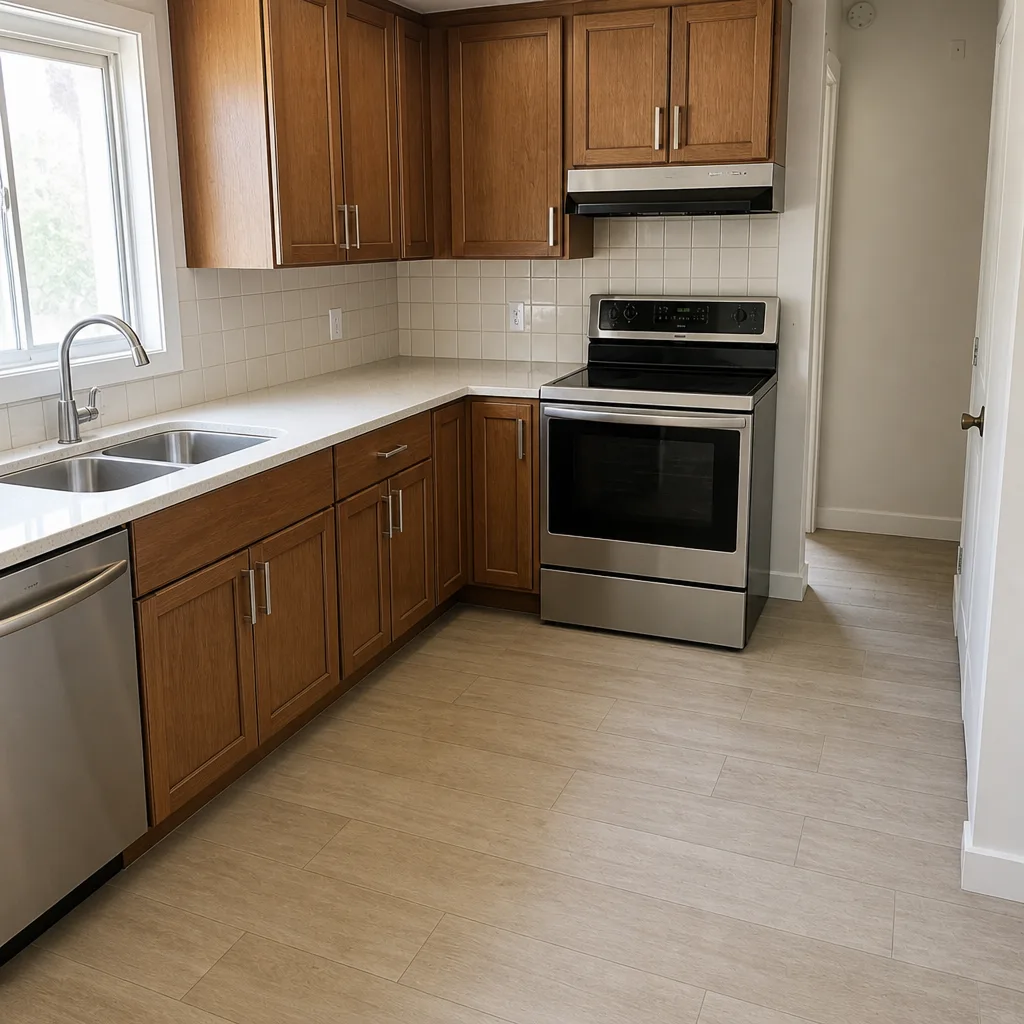 After
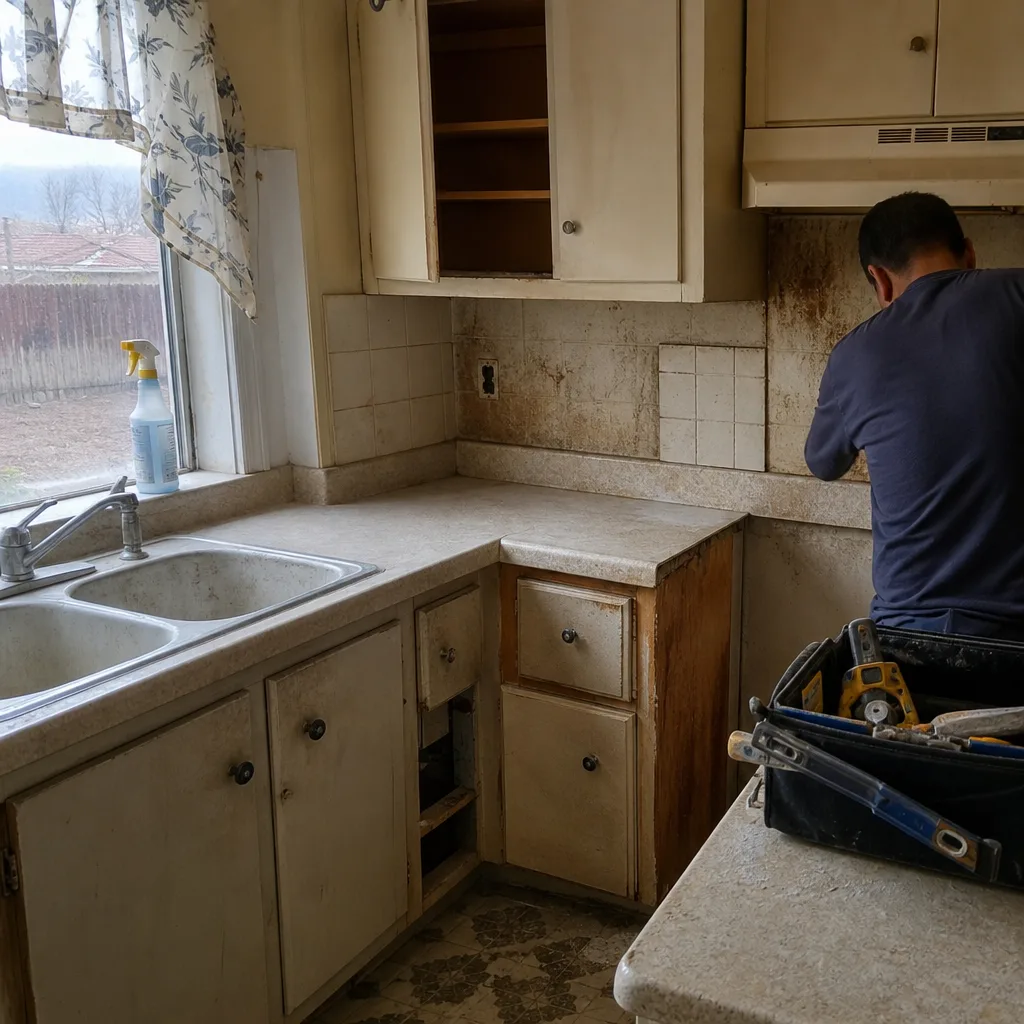 Before
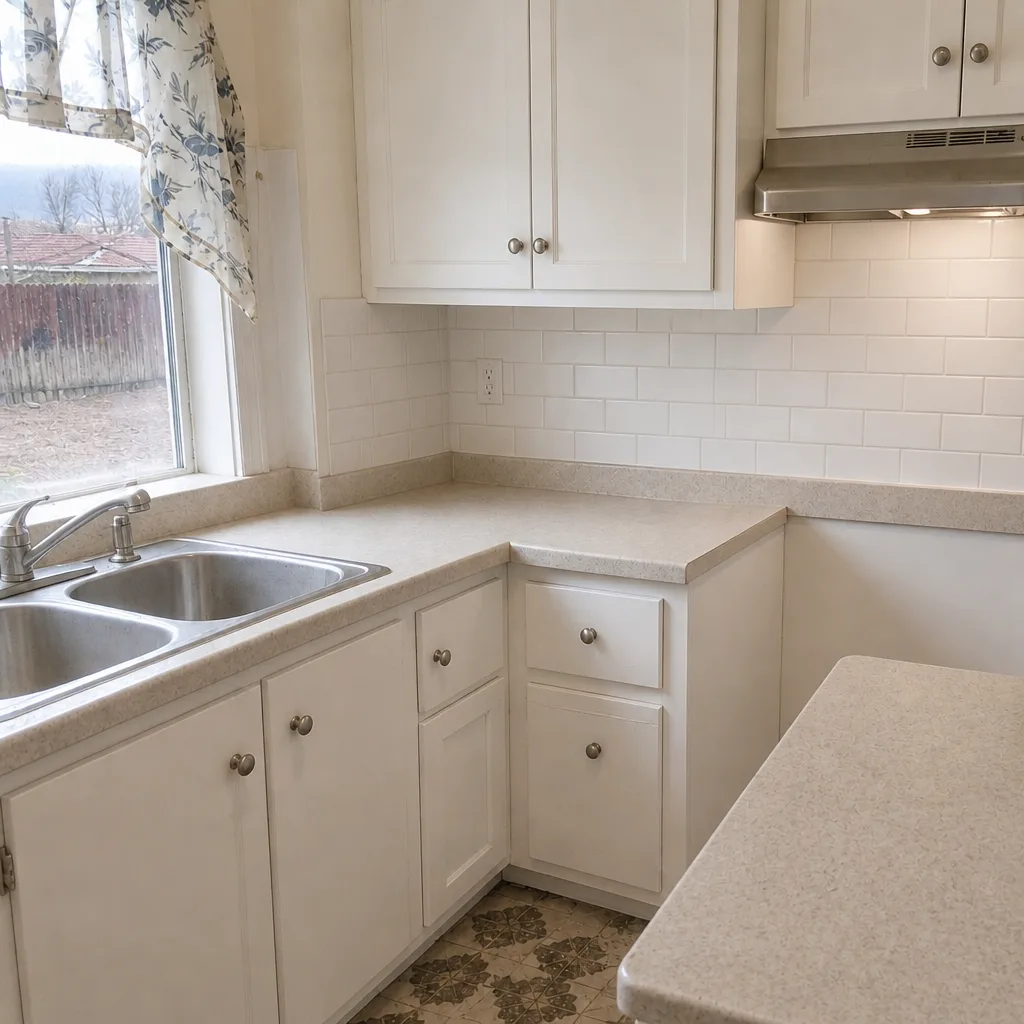 After
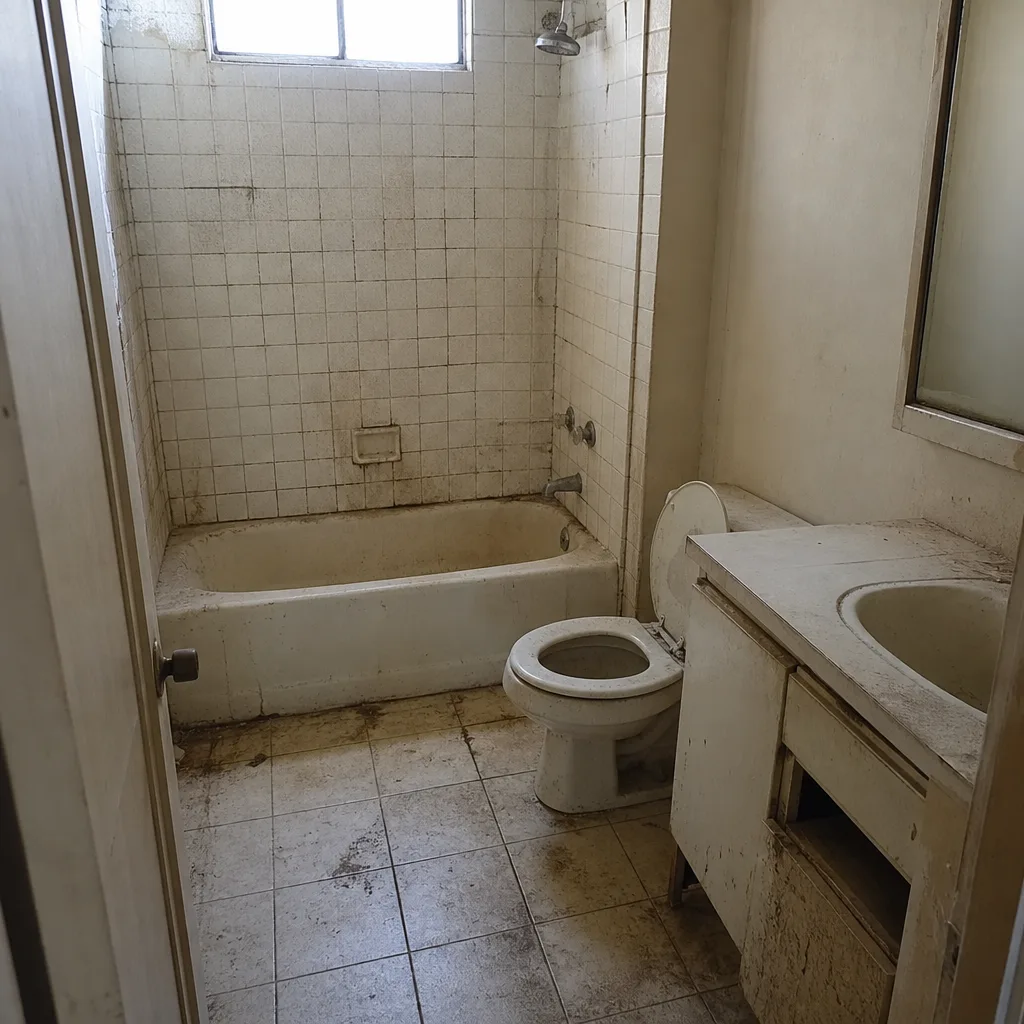 Before
 After
When to Call a Professional
Call a professional when any of these are true: a paver rocks underfoot, water pools toward the garage after a bucket test, edge creep is visible beyond 1/4 inch, a depression is visible from a crouched position, a screwdriver probe sinks past the paver thickness, or your spring and fall inspections show a sign getting worse. Those are the failures that mean the base needs opening, and they get more expensive if ignored. Rowan Construction Group Palmdale offers free estimates in Palmdale – call (844) 320-8244, and we’ll photograph what we find and put a written price and scope in front of you before any work begins. Bring a written estimate from another contractor and we’ll review it line by line at no charge.
Frequently Asked Questions
The most serious signs are rocking units, depressions, edge creep, and joint widening – all four indicate that the base or drainage has failed, not just the surface. Cosmetic signs like scattered efflorescence and a few weeds in joints can usually wait. If you have any of the four serious signs in Palmdale, get them assessed before the next rain or freeze. Call (844) 320-8244 for a free estimate.
Paver repair in Palmdale ranges from about $40 for a single rocking paver reset to $900 to $2,800 for a mid-size base repair, and $6 to $14 per square foot installed for a full driveway base rebuild. The range is wide because the amount of base that failed drives the cost, not the pavers themselves. Call (844) 320-8244 for an exact quote – estimates are free.
You need base repair if any paver rocks when you stand on it, if any depression is visible from a crouched position, or if a screwdriver probe sinks more than about two inches into a soft spot – meaning past the paver thickness. If the field is flat, tight, and the bucket test runs water off in under a minute, you need joint sand, not base work. Call (844) 320-8244 to confirm.
Twice a year: once in fall, before the January freeze, and once in spring, after the winter rains. Palmdale’s dry months hide base failures that the wet and freeze months surface, so a fall inspection catches problems before they cost more. Between inspections, watch for anything that looks different after heavy rain. Call (844) 320-8244 for a free professional inspection if you spot a change.
If a single paver rocks on a driveway where the field is otherwise flat and tight, and no depression is visible, a homeowner can usually reset that one unit. If more than one paver rocks, if a depression is visible nearby, or if the edge has moved, the base has failed and needs a contractor. Call (844) 320-8244 to know which situation you have.
A single-paver reset is typically under an hour. A mid-size base repair usually finishes in one day. A full driveway base rebuild takes two to four days, including removal, base re-compaction, and re-setting. The written scope on your estimate will state the number of days before work begins. Call (844) 320-8244 to schedule a free estimate.
The Bottom Line
The signs that matter on a paver driveway are the ones that signal base failure, not surface wear. Rocking units, depressions, edge creep, and joint widening mean water is getting under the pavers, and the freeze cycle in Palmdale turns small base problems into larger ones each winter. Inspect in fall and spring, use the bucket test, and document what you find with a coin for scale and a screwdriver probe depth. Repair cost rises sharply once a paver has been rockable through a freeze cycle; early detection is the cheapest repair you’ll ever make.
Related reading: our Driveway & Pavers in Palmdale service page, our Fence Installation in Palmdale guide for base failures in fencing, and our Home Additions & ADU in Palmdale page if driveway work is part of a larger project. Book a free estimate with Rowan Construction Group Palmdale by calling (844) 320-8244.
Written by the team at Rowan Construction Group Palmdale.