Last updated November 18, 2026
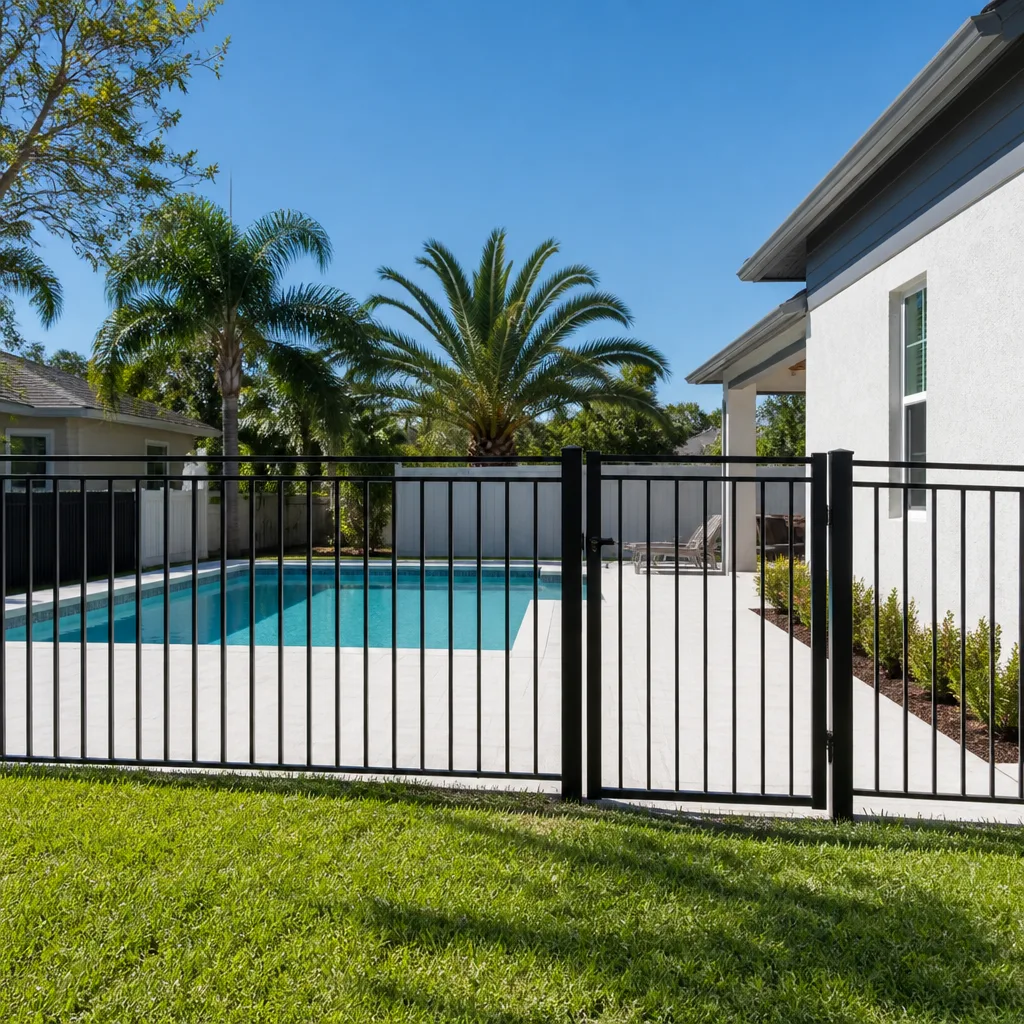
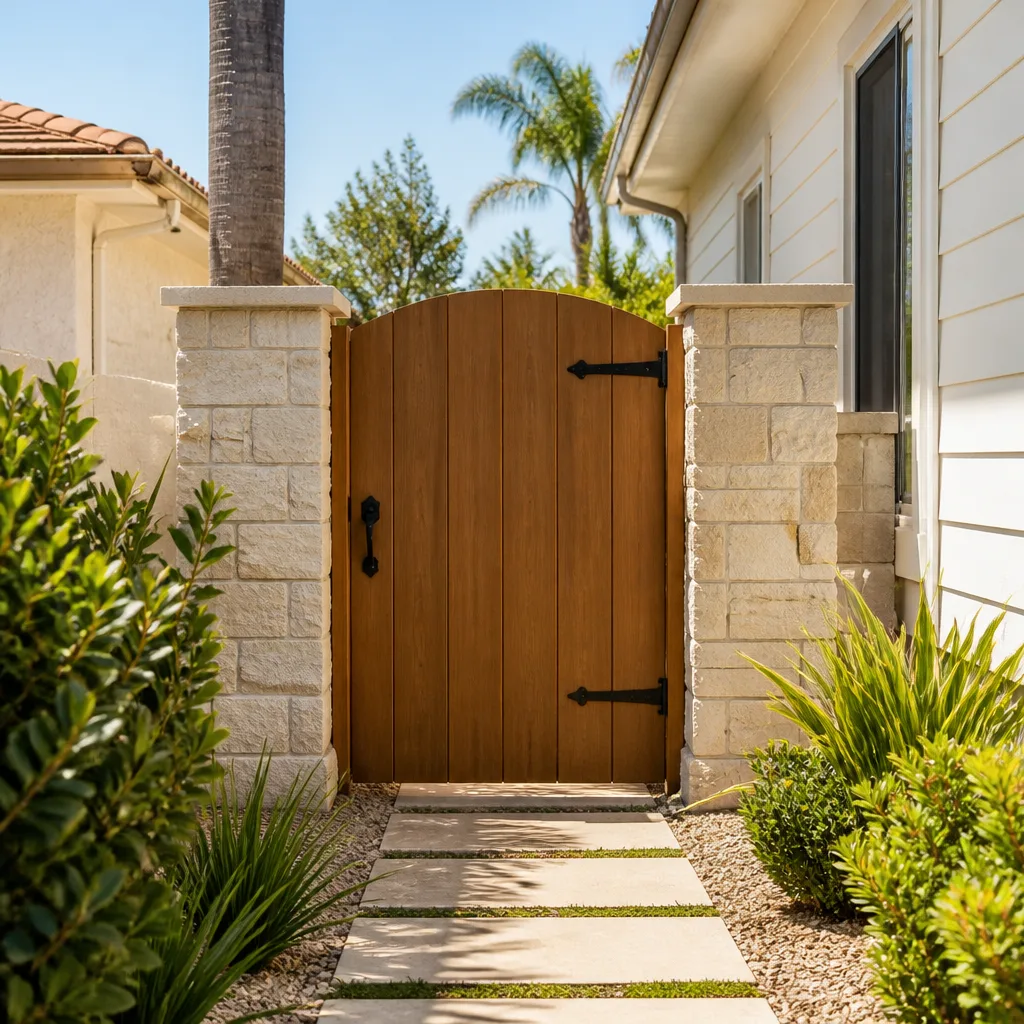

Free written scope consultation - allowances, timeline, and change-order rules on paper before a single trade is scheduled
How Long Does Fence Installation Take? Timelines and What to Expect
A 150-foot wood fence takes an experienced crew roughly six to ten hours to set. The average homeowner waits 18 to 34 days from first call to finished post, and most of that gap has nothing to do with the crew. The installation is the shortest part of the job. The calendar around it is what eats the month.
This guide breaks that calendar into its real phases: material lead times by species, permit review under LA County jurisdiction, concrete cure time, and the awkward surprises that show up in Palmdale’s soil. You’ll get day-count tables instead of vague “a few weeks,” the three delays most guides skip entirely, and the one question to ask before you sign anything. By the end you’ll know exactly what your Palmdale fence project should look like on a calendar, and where it’s most likely to slip.
Quick Answer
Most residential fence installations in Palmdale take 1 to 3 days of actual construction, but the full process from first call to finished fence runs 18 to 34 calendar days in a typical case, and up to 7 weeks when permits and HOA approval are in play. The construction itself is rarely the bottleneck. Material lead time, permit review, utility marking, and concrete cure are where the days go.
Styles & brands we work with
- Kitchen remodeling
- Bathroom remodeling
- Home additions & ADU
- Roofing
- Windows & doors
- Driveway & pavers
- Fence
Table of Contents
- The Real Timeline: Four Phases and Where the Days Go
- A Realistic Day-Count Table by Scenario
- Material Lead Time by Species: Cedar vs. Vinyl vs. Wrought Iron
- Permit Pull Time in Palmdale and LA County
- Concrete Cure Time: 48 Hours Working vs. 28 Days Full
- The Delays Most Guides Skip
- What a Signed Pre-Construction Schedule Looks Like
- Common Mistakes to Avoid
- Frequently Asked Questions
The Real Timeline: Four Phases and Where the Days Go
Fence installation is a four-phase project, and only the last one involves anyone swinging a hammer. Once you separate the phases, the calendar stops being a mystery and starts being a checklist. Here’s how we break it down for Palmdale homeowners.
- Phase 1 – Estimate and design (1 to 5 days). Site visit, measurement, material selection, and a written quote. Under fence installation in Palmdale, this phase is quick when the property line is clear and slow when it isn’t.
- Phase 2 – Permits, HOA, and utility marking (3 to 21 days). This is the phase that separates an 18-day project from a 45-day project. LA County permit review, HOA architectural approval, and DigAlert notifications all live here.
- Phase 3 – Material lead time (2 to 21 days). Cedar can often be sourced same-week. Vinyl and wrought iron are ordered to spec and take longer. This phase runs concurrently with Phase 2 if you plan it right.
- Phase 4 – Install and cure (1 to 2 install days plus cure). A crew sets posts in day one, waits for concrete to reach working strength, then hangs panels, rails, and hardware on day two. Full concrete cure continues for 28 days afterward, though the fence is functional long before then.
The trap is treating these phases sequentially when they can overlap. A well-planned project runs Phase 2 and Phase 3 at the same time. A poorly planned one does them back to back, which is how perfectly normal fence projects stretch into six weeks.
A Realistic Day-Count Table by Scenario
Vague “a few weeks” language is useless when you’re trying to coordinate a fence install around a pool build, a backyard wedding, or a newly adopted dog. Here’s what the calendar actually looks like in real days, based on how these projects run in Palmdale.
| Scenario | Typical Total Days | What’s Included |
|---|---|---|
| Best case (no permit, no HOA, cedar stock) | 7 to 12 days | Estimate day 1, material sourced days 1 to 3, DigAlert 2 business days, install days 4 to 5, buffer for weather |
| Typical (permit required, Cedar or Vinyl) | 18 to 34 days | Estimate days 1 to 3, permit review 7 to 14 business days, material lead time run in parallel, install days 1 to 2, cure window |
| Permit + HOA required | 30 to 49 days | Everything in typical, plus HOA architectural review of 14 to 30 days depending on the board’s meeting schedule |
| Custom wrought iron or obscured vinyl | 28 to 45 days | Fabrication lead time of 3 to 5 weeks, then 2 to 4 install days due to heavier panels and welded sections |
Six business days is the whole construction portion in almost every row. The rest is paperwork, waiting on materials, and giving concrete the time it needs. When a Palmdale homeowner tells us the fence “took forever,” they almost always mean phases two and three, not the crew on site.
Material Lead Time by Species: Cedar vs. Vinyl vs. Wrought Iron
Material lead time is the least predictable variable in fence installation, and it’s entirely determined by what you pick. Here’s how the three main categories behave in the Palmdale market.
Cedar and other wood species
Western red cedar and incised pine are commonly stocked at regional lumber yards, so lead time is often 2 to 5 business days. Premium clear-grade cedar for visible sides of the fence can take 7 to 14 days if the yard has to bring it in. In a high-wind neighborhood near the Antelope Valley foothills, we recommend cedar over pine because it handles seasonal wind load and dry heat better, even though it costs a bit more per linear foot. The lead-time difference between stocked and special-order cedar is a full week, so it’s worth picking your species before you commit to an install date.
Vinyl and composite
Vinyl privacy fencing is ordered to spec once you’ve chosen height, style, and color. Standard white vinyl is often 5 to 10 business days. Custom colors, shadowbox patterns, and obscured glass-effect vinyl runs 10 to 21 days. Palmdale’s dry heat and UV index are a real factor in vinyl selection; the panels that hold color best are the ones formulated with UV stabilizers, and those are usually the special-order ones. If you want a vinyl fence before summer, order early.
Wrought iron and ornamental metal
This is the long-lead category. Fabricated wrought iron and welded ornamental aluminum are made to order, and 3 to 5 weeks is normal even for straightforward runs. Custom scrollwork, gate hardware, and powder-coating add another 5 to 10 business days. If your Palmdale project involves a wrought iron front fence with a matching driveway gate, budget for the metal fabrication time before you book the install crew. It’s the one material choice that can genuinely push a project past six weeks on its own.
If the fence is part of a larger exterior project, like a driveway and pavers in Palmdale job that includes new hardscape and a front gate, sequence the fence install before the pavers go down. It saves you replacing disturbed base material later.
Permit Pull Time in Palmdale and LA County
Fence permits in Palmdale fall under LA County Building and Safety, and the review timeline varies widely depending on the fence height, location on the property, and whether it’s on a corner lot or abuts a public right-of-way. In our experience, straightforward fence permits are approved in 7 to 14 business days. Complex ones, involving front-yard fencing, block walls over six feet, or fences near a flood channel or drainage easement, take longer.
Here’s what triggers a permit requirement in most Palmdale residential zones:
- Fences over six feet in height, measured from the exterior grade.
- Fences in a front yard setback, which are typically limited to three or four feet unless the lot has special characteristics.
- Block, masonry, or retaining walls combined with fencing, because they carry structural review.
- Fences on corner lots where sight-distance triangles affect visibility for motorists.
- Any fence along a property line that is also a public right-of-way or an easement.
Fences six feet or shorter in the rear or side yard of a single-family home in Palmdale often don’t require a permit, but “often” is doing a lot of work in that sentence. Verify the requirement before installation rather than after. Getting a permit pulled and the inspection passed upfront costs a few business days and a modest fee. Removing and re-permitting an unpermitted fence costs weeks and real money.
One detail most guides skip: the permit review and the material lead time can run in parallel. If your fence company orders material on day one of permit submission, you don’t wait for the permit and then wait for the material. You wait for both at once. Ask every contractor you interview whether they plan it that way.
Concrete Cure Time: 48 Hours Working vs. 28 Days Full
Fence posts set in concrete reach working strength at roughly 48 hours and full design strength at 28 days. The distinction matters, and it’s the single most common quality shortcut in residential fence installation.
48 hours is not full cure. The concrete has reached what engineers call “working strength,” which is enough to hang panels and rails without immediately moving the posts. But the concrete continues to gain strength for four weeks, and any post that gets loaded before 48 hours can shift. Panels hung at 24 hours are the number one cause of a wavy fence line that looks fine on install day and leans by the following spring.
Here’s how a properly sequenced install runs:
- Day 1: Dig post holes, set posts, pour concrete. Posts are plumbed and braced.
- Day 1 + 48 hours: Remove bracing, check plumb. Hang rails, then pickets or panels. Attach gates and hardware.
- Day 28: Full cure reached. If a post was going to fail, this is the window where movement shows.
- Day 29 to 365: Under a workmanship warranty, any post that has moved is adjusted or reset at no cost.
Palmdale’s daytime temperatures in summer accelerate the initial set of concrete but also cause it to dry out too fast, which weakens the final strength. Crews working in high heat will sometimes add a curing compound or cover the posts to slow evaporation. Skilled installers know this. Fast ones skip it. Ask what your contractor does to manage concrete cure in summer heat, and if the answer is a shrug, that tells you something.
For a full property exterior refresh, coordinating concrete cure with home additions and ADU work in Palmdale requires careful sequencing so site access isn’t blocked during the cure window.
The Delays Most Guides Skip
Three specific delays show up in Palmdale fence projects and almost never make it into a general “how long does a fence take” article. If you know they’re coming, you can plan around them. If you don’t, they quietly add a week.
1. Utility marking through DigAlert
California law requires anyone digging more than 12 inches to notify DigAlert, the regional utility notification service, at least two business days before excavation. Underground utility marking is a legal requirement, not a courtesy. On a fence install, post holes routinely go 24 to 36 inches deep, so DigAlert is triggered on nearly every job. The two-business-day minimum is a floor, not an average; complex properties with multiple utilities can take longer to mark. A fence contractor who starts digging without a DigAlert ticket is putting you at risk of hitting a gas, water, or electrical line, and the resulting damage bill is on you.
2. HOA approval windows
If your Palmdale property sits in one of the area’s master-planned communities or any neighborhood with an active HOA, architectural review is a hard gate. Boards often meet monthly, and a request submitted the day after a meeting waits another 30 days. Design review adds its own time if the fence material, height, or color isn’t already on the community’s approved list. Before you pick a fence style, ask the HOA for the written architectural guidelines. A cedar privacy fence that’s fine on one street can be rejected three streets over for a color mismatch.
3. Caliche hardpan during post-hole augering
Much of the Antelope Valley sits on caliche, a naturally cemented soil layer that behaves like soft rock. Standard post-hole augers can’t always punch through it, and crews end up breaking out a jackhammer or drilling through with specialty bits. On a 150-foot fence, that can turn a 3-hour post-setting day into a full day or more. The fix is straightforward: ask any Palmdale contractor how they handle caliche in post-hole work, and confirm that hardpan encountered on site does not become a surprise change order.
What a Signed Pre-Construction Schedule Looks Like
A signed pre-construction schedule is the single most useful document in a fence project. It’s a written calendar that lists every milestone, names who is responsible for each one, and gives you a reference point when the install date starts slipping.
Here’s what a schedule should list, and who should own each line:
- Contractor: Site measurement and written quote delivery within 3 business days of your call.
- Contractor: Permit application submitted within 2 business days of signed contract.
- Contractor: DigAlert notification filed 2-plus business days before excavation.
- Contractor: Material ordered within 3 business days of signed contract and deposit.
- Contractor: Install date confirmed in writing once permit and material are both in hand.
- Contractor: Post-setting completed day 1, panels hung at minimum 48 hours after post setting.
- Contractor: Final walkthrough with photo documentation and signed completion.
- Homeowner: HOA submission within 5 business days of receiving the plan, if applicable.
- Homeowner: Access to the property on install days; gate clearance; pets secured.
- Homeowner: Property line and any known utility locations reviewed before DigAlert filing.
Compare that to the quote you’re holding from another contractor. If the other quote has one line item, “Install fence: 2 days,” that is not a schedule. That is a hope. Ask for the calendar before you sign, in writing, with all four phases laid out.
The One Question to Ask Before Signing
If you take one question into every contractor meeting, make it this: “Is concrete cure time built into your schedule, or will you hang panels before 48 hours?”
The answer tells you more about the fence company than the price or the brand of materials. A contractor who hangs panels at 24 hours is trading your fence’s long-term line for a faster job. A contractor who builds a 48-hour cure window into the schedule is telling you they intend the fence to still be straight in ten years. That’s not marketing. That’s the difference between a fence done right and a fence done fast.
Ask it in the same breath as your other questions. It costs nothing and reveals everything.
Common Mistakes to Avoid
- Booking install before permit approval. A crew that shows up day one of permit review and starts digging is either pulling a permit they didn’t tell you about or skipping the permit entirely. Either way, you own the consequence when the county inspects.
- Skipping DigAlert to save two days. DigAlert is a legal requirement, not a suggestion. Skipping it risks striking a utility line in your yard and taking on the repair bill. The two-day wait is cheap by comparison.
- Choosing a material without checking HOA guidelines. In Palmdale’s HOA-managed communities, a rejected design review can cost a month. Check the approved materials list before you fall in love with a fence style in a catalog.
- Misjudging the property line. A fence built six inches onto a neighbor’s parcel or into a county easement can be ordered removed. Before the crew arrives, confirm the line against the plat map, not memory. A survey costs a few hundred dollars. Removal and rebuild runs into the thousands.
- Ignoring wind exposure. Palmdale sits in a high-wind corridor, and a fence built with posts at 8-foot spacing rather than 6-foot spacing will lean after its first Santa Ana event. Ask about post spacing and depth in light of local wind load.
- Waiting until summer to order material. Vinyl and custom metal lead times get longer in spring, not shorter. A March order for a June install often beats a June order for a June install by three weeks.
- Paying in full before the project starts. A deposit is normal. Full payment before work begins removes every incentive to finish on schedule. Pay in milestones tied to the pre-construction schedule you signed.
See the difference
 Before
 After
 Before
 After
 Before
 After
When to Call a Professional
We get calls from Palmdale homeowners at three distinct points: when they’ve measured the run and realized the linear footage is beyond a weekend project, when they’ve discovered their property line isn’t where they thought it was, and when a prior DIY fence is already leaning after one wind season. Those are all good reasons to call.
Post-hole digging in caliche, permit filings with LA County, HOA architectural submissions, and any fence on a slope or near a utility easement are all situations where an experienced crew saves far more time than it costs. Our technicians have up to 19 years of experience in Antelope Valley soil conditions, and the quote you get includes a written schedule, permit handling, DigAlert filing, and a documented photo record of the finished install.
Rowan Construction Group Palmdale offers free estimates in Palmdale. Call (844) 320-8244. Every quote comes with a written price and a written scope before work starts, and we’ll review any competitor’s written estimate line by line at no charge if you want a second opinion.
Frequently Asked Questions
A 150-foot fence typically takes one to two install days, with post setting on day one and panel hanging 48 hours later. The full project from first call to finished fence runs 18 to 34 calendar days once permits, HOA approval, DigAlert marking, and material lead time are factored in. Call (844) 320-8244 for a written schedule tailored to your property.
Fences over six feet, fences in a front-yard setback, and block or masonry walls require a permit through LA County Building and Safety. Rear and side yard fences six feet or shorter often don’t, but the specific rules depend on your zone, corner-lot status, and easement conditions. A contractor who pulls the permit and passes the inspection as part of the scope saves you the guesswork. Call (844) 320-8244 and we’ll confirm the requirement for your address.
Under Clause 1 of the Haven Standard, the price is written before anyone starts, and no change proceeds until a signed change order is on file. If we encounter caliche hardpan in your post holes, unexpected utility conflicts, or a property line correction, we stop and document the change before touching the work. You approve or decline in writing. No hidden adjustments, no verbal add-ons, no surprise invoice at the end. Call (844) 320-8244 for a written quote.
Yes. Permit handling for LA County is part of the standard scope, and every permit we pull gets inspected and passed before the job is signed off. The permit review timeline of 7 to 14 business days is built into the schedule we give you, and the inspection photo record is delivered as part of the final documentation. Call (844) 320-8244 to schedule your estimate.
The fastest realistic timeline is 7 to 12 days for a fence under six feet in a rear or side yard with no HOA and stocked cedar material. That window assumes DigAlert is filed immediately and there’s no caliche on your property. Anything involving a permit, HOA review, or special-order material pushes you to 3 to 7 weeks. Call (844) 320-8244 and we’ll tell you which scenario applies to your address.
We specify post spacing at six feet rather than eight in open areas, set posts deeper in caliche-heavy soils, and recommend cedar or UV-stabilized vinyl over pine and untreated alternatives. Concrete cure in summer heat is managed with curing compound and shade covers to prevent the mix from drying before it reaches strength. Wind load and heat are real design variables in Antelope Valley fence work, not afterthoughts. Call (844) 320-8244 for a materials recommendation built around your property’s specific exposure.
The Bottom Line
Fence installation isn’t slow because crews are slow. It’s slow because the two to four weeks before the crew shows up are filled with permit review, HOA schedules, material sourcing, DigAlert windows, and concrete cure time. If your contractor plans phases two and three to run concurrently, you cut the total calendar nearly in half. If they treat them sequentially, you wait a month and a half for a two-day job.
The pre-construction schedule is the document that separates the two. Get it in writing, get it signed, and confirm your contractor builds in 48-hour cure time before panels go up. That’s the whole discipline of fence installation, condensed into a single page. The crews at Rowan Construction Group Palmdale apply that discipline to every install across Antelope Valley. Call (844) 320-8244 to schedule your free estimate. Written price, written schedule, documented install, 365-Day Done Right Promise. You’ll have a number before a single post leaves the ground.
Written by the team at Rowan Construction Group Palmdale.