Last updated November 18, 2026
Free written scope consultation - allowances, timeline, and change-order rules on paper before a single trade is scheduled
DIY vs Professional Driveway & Pavers: What’s Safe to Do Yourself
A rented plate compactor weighs 150 to 200 pounds and needs several overlapping passes to reach the density that keeps a driveway from settling. Most DIY videos show one pass and call it finished. That’s why a homeowner-laid paver driveway can look sharp at six months and show ruts, dips and shifting edges at eighteen. In Palmdale, where the ground swings from baked-hard summer clay to rain-softened winter soil, that timeline compresses. This guide draws the honest line between what a capable homeowner can do well and what reliably turns into a callback: layout, cutting and joint sand are fair game; excavation, compaction and edge restraint in clay soil are not. You’ll get hour estimates, current dollar figures for a 400 sq ft Palmdale driveway, and the permit rules that decide who can legally sign off on the base.
Quick Answer
You can safely lay pavers, cut them with a rented wet saw, and install joint sand on a base that a professional has already excavated, graded and compacted. The base itself is the part that fails when DIY’d: it needs a plate compactor run in overlapping passes to hit roughly 95% Proctor density, and in Palmdale’s clay-heavy soil it also needs proper depth and a anchored edge restraint. Hire out the base, and the finish work is genuinely within reach.
Styles & brands we work with
- Kitchen remodeling
- Bathroom remodeling
- Home additions & ADU
- Roofing
- Windows & doors
- Driveway & pavers
- Fence
Table of Contents
- What You Can Safely Do Yourself
- The Tasks That Reliably Fail When DIY’d
- True Cost: DIY vs. Professional for 400 sq ft in Palmdale
- Why Compaction Is the Whole Game
- Permits and Compaction Testing in Palmdale
- The Middle Path: Base Done, Pavers by You
- Tool Rental Reality Check
- Common Mistakes to Avoid
What You Can Safely Do Yourself
Three parts of a paver driveway are within reach for a homeowner with patience and a rented saw. We’ve watched capable DIYers in Palmdale turn out clean herringbone and running-bond patterns, and the work holds up because the base underneath was right. Here’s what’s realistic, with hours per 100 sq ft.
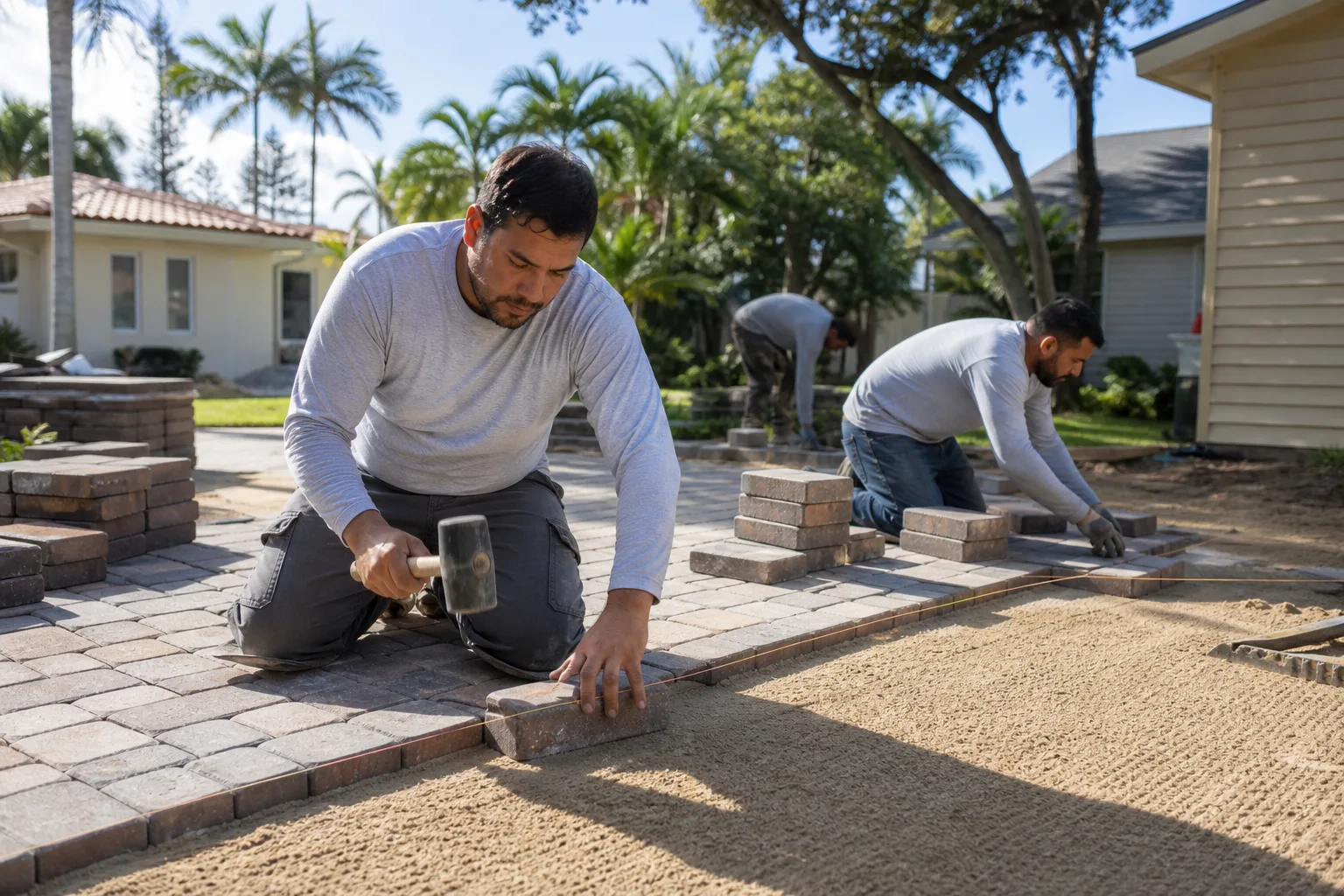
- Pattern layout (4 to 8 hours per 100 sq ft). Snapping chalk lines, dry-fitting the field, and setting the running bond or herringbone. This is slow, careful work, but nothing about it is dangerous or unforgiving. Get the starting row dead straight and the rest follows.
- Paver cutting with a rented wet saw (2 to 4 hours per 100 sq ft). A wet saw with a diamond blade runs $80 to $120 a day at most Palmdale rental yards. Border cuts, angle cuts around curves, and infill pieces are all doable. Wear eye and ear protection; the slurry is messy.
- Joint sand installation (1 to 2 hours per 100 sq ft). Sweep polymeric sand into the joints, tamp it in, mist it lightly to activate, and let it cure per the bag. Belgard and Techo-Bloc both publish joint-sand specs; follow the bag, not the video.
Add it up: roughly 7 to 14 hours of homeowner labor per 100 sq ft for the finish work alone. A 400 sq ft driveway is a long weekend or two, not a Saturday. But the labor is real and the results are clean if the base is honest.
The Tasks That Reliably Fail When DIY’d
These are the three things that generate our callbacks. Not because homeowners are careless, but because each one requires either equipment a homeowner won’t rent or experience you can only get by doing it badly first.
Subgrade excavation depth
A paver driveway needs 8 to 10 inches of total depth: 4 to 6 inches of compacted aggregate base, an inch of bedding sand, and the paver thickness on top. In Palmdale’s expansive clay, we frequently dig deeper than the minimum to reach stable soil and bring in clean crushed aggregate. Homeowners routinely under-excavate by 2 to 3 inches, then compensate with more bedding sand. Sand doesn’t compact; it shifts. That’s the dip you feel at the garage apron in year two.
Base compaction verification
This is the one that breaks the DIY plan. Aggregate base needs to hit roughly 95% Proctor density, and that’s a lab-tested number, not a feel. You get there with a plate compactor making overlapping passes, usually 4 to 6 passes per lift, in 2- to 4-inch lifts. Not one lift. Not one pass. A homeowner watching a video sees one pass and assumes done. It isn’t. The compaction is what carries the load of a car; skip it and the pavers telegraph every soft spot through the surface.
Edge restraint anchoring in clay soil
Every paver field pushes outward, and edge restraint is what holds the pattern together. In clay soil that swells when wet and shrinks when dry, restraint has to be anchored into stable material with spikes long enough to bite below the active zone. Homeowners often set restraint on top of the clay without digging a proper trench. Six months of Palmdale’s wet-dry cycle later, the edge lifts and the border pavers splay outward. That’s a repair, not a touch-up.
True Cost: DIY vs. Professional for 400 sq ft in Palmdale
Here’s where the DIY spreadsheet usually breaks. Material-only numbers look great until you add tool rental, base failure repair, and the value of your weekends. These are current Palmdale-market figures.
- DIY materials only: $1,400 to $2,200 for pavers, base aggregate, bedding sand, joint sand, and edge restraint on 400 sq ft. This assumes the base is already there, which it isn’t.
- Tool rental: $250 to $450 total for a plate compactor, wet saw, and hand tools across a multi-day project.
- DIY if the base fails: $2,500 to $4,500 to remove the pavers, re-excavate, bring in new aggregate, compact, and re-lay. You lose the pavers you already cut and the weekends you spent.
- Professional all-in: $10 to $18 per sq ft for a full paver driveway in Palmdale, meaning $4,000 to $7,200 for 400 sq ft, including excavation, compaction, materials, and installation. Belgard and Techo-Bloc product lines sit at the higher end; basic concrete pavers at the lower end.
Run the honest math: DIY saves real money when the base holds, and loses money fast when it doesn’t. A failed base turns a $2,000 project into a $5,000 project and a month of evenings. The calculator tips professional if there’s any doubt about the subgrade. Rowan Construction Group Palmdale quotes a flat written price before anyone picks up a shovel, so you can compare the DIY number to a real number.
Why Compaction Is the Whole Game
Pavers don’t carry a car. The compacted base carries the car, and the pavers distribute the load across it. Every paver driveway’s long-term performance traces back to that base. When you hear a “loose” paver or see a low spot, the base beneath it moved, and the pavers just followed.
The plate compactor is the tool that creates that density. It’s a vibrating steel plate, typically 150 to 200 pounds, driven by a small engine. You walk it back and forth across the aggregate in overlapping passes, usually 4 to 6 per lift, with a lift being 2 to 4 inches of material. You re-wet the base as you go if it’s dusty. You check for low spots with a straightedge. Then you bring in the next lift and do it again. On a 400 sq ft driveway that’s a full day of walking a heavy machine, and it’s the reason the base line item on a professional quote is what it is.
In Palmdale, the summer heat bakes the aggregate surface and the winter rain softens the fines, which is why we grade for drainage away from the house and garage before compaction. Water sitting under pavers in clay soil is a slow failure. The base takes the traffic; the drainage protects the base. Neither one is a place to cut corners.
Permits and Compaction Testing in Palmdale
The permit question is the quiet reason a lot of DIY driveway projects stall. Palmdale generally requires a permit when a driveway changes the grading, affects drainage toward a public right-of-way, or involves more than cosmetic resurfacing; a straight paver-over-existing-base swap sometimes doesn’t. The rule of thumb: if you’re moving earth, expect a permit. If you’re re-laying the same footprint over the same base, ask the city before you start.
The reason this matters for DIY is inspections. A permitted driveway job is inspected, and on sites where grading is involved, the inspection can include compaction verification. Compaction testing produces a density number from a field test, and a homeowner can’t self-certify it. You either rent the test equipment, which most homeowners won’t do, or the inspection fails and the job stalls. That’s the point where the DIY plan meets a professional’s paperwork. Rowan Construction Group Palmdale pulls the permits and passes the inspections as part of the job, and the signed-off record stays with the property.
The Middle Path: Base Done, Pavers by You
Here’s the option most DIY guides ignore, and it’s the one we recommend when a homeowner wants to stay hands-on: hire a contractor for excavation, grading and compaction only, then lay the pavers yourself. It’s called a base-only contract, and it works because the part that needs equipment and experience gets done by the crew, and the part that needs patience gets done by the homeowner.
A base-only job on 400 sq ft in Palmdale typically runs $2,500 to $4,000 for excavation, aggregate, compaction, permits, and edge restraint anchored properly. You then buy the pavers and joint sand, lay and cut the field yourself, and save the labor line on installation. Total lands around $4,000 to $5,500 versus $4,000 to $7,200 all-in, with a real base underneath.
Not every contractor will structure a contract that way. Some want the whole job or nothing, because a base-only job leaves them no margin on materials and they carry the risk of your install failing on their base. We’ll structure it when a homeowner asks, with a written scope that says exactly where our work ends and yours begins, and a photo record of the compaction and restraint so you know the base is sound before you start. Free second opinion on any written estimate you’re comparing, line by line.
Tool Rental Reality Check
Before you commit to DIY, run the tool list against what a rental yard in Palmdale will actually hand you. A short list of what the finish-work-only path needs:
- Wet saw with diamond blade: $80 to $120 a day. Rent it for the cutting day, not the whole project.
- Hand tamp or plate compactor for the bedding sand: $60 to $90 a day. The bedding sand needs a light pass before laying, not the full base treatment.
- Rubber mallet and knee pads: $40 to $60 to buy. Your knees will notice a 400 sq ft field.
- Chalk line, string line, 4-foot level, straightedge: $60 to $100 to buy. Layout tools matter more than the saw.
- Trenching tools for edge restraint: $40 to $80 to buy or rent, plus spikes and restraint material.
If you’re doing the base too, add a plate compactor at $90 to $130 a day for two or three days, which is where the rental cost climbs. And add a delivery charge for aggregate if you’re not hauling it yourself, because 400 sq ft of base is several tons of material. That delivery line is one more thing the video didn’t mention.
Common Mistakes to Avoid
- Laying pavers on existing dirt without excavation. In Palmdale’s clay, the surface looks firm in July and turns to mush in January. Excavate to depth, don’t scrape the crust and go.
- One compaction pass instead of four to six. The videos show one pass. The spec calls for overlapping passes per lift. This is the single most common cause of a driveway that dips at eighteen months.
- Adding bedding sand to fix a shallow excavation. Sand doesn’t compact; it migrates. If you’re short by 2 inches, dig, don’t fill.
- Setting edge restraint on top of the clay. Anchor the restraint into stable material with spikes that bite below the active zone, or the border will splay within a season.
- Skipping the drainage grade. Pavers should shed water away from the garage and house. In Palmdale’s clay, a flat driveway holds water and the base softens under it.
- Buying pavers before the base is verified. Order sizes after you know the base depth and the layout cuts, not before. Returns on cut pavers don’t exist.
- Assuming a permit isn’t needed. If you’re moving earth in Palmdale, ask the city first. A failed inspection mid-job is worse than a permit fee.
See the difference
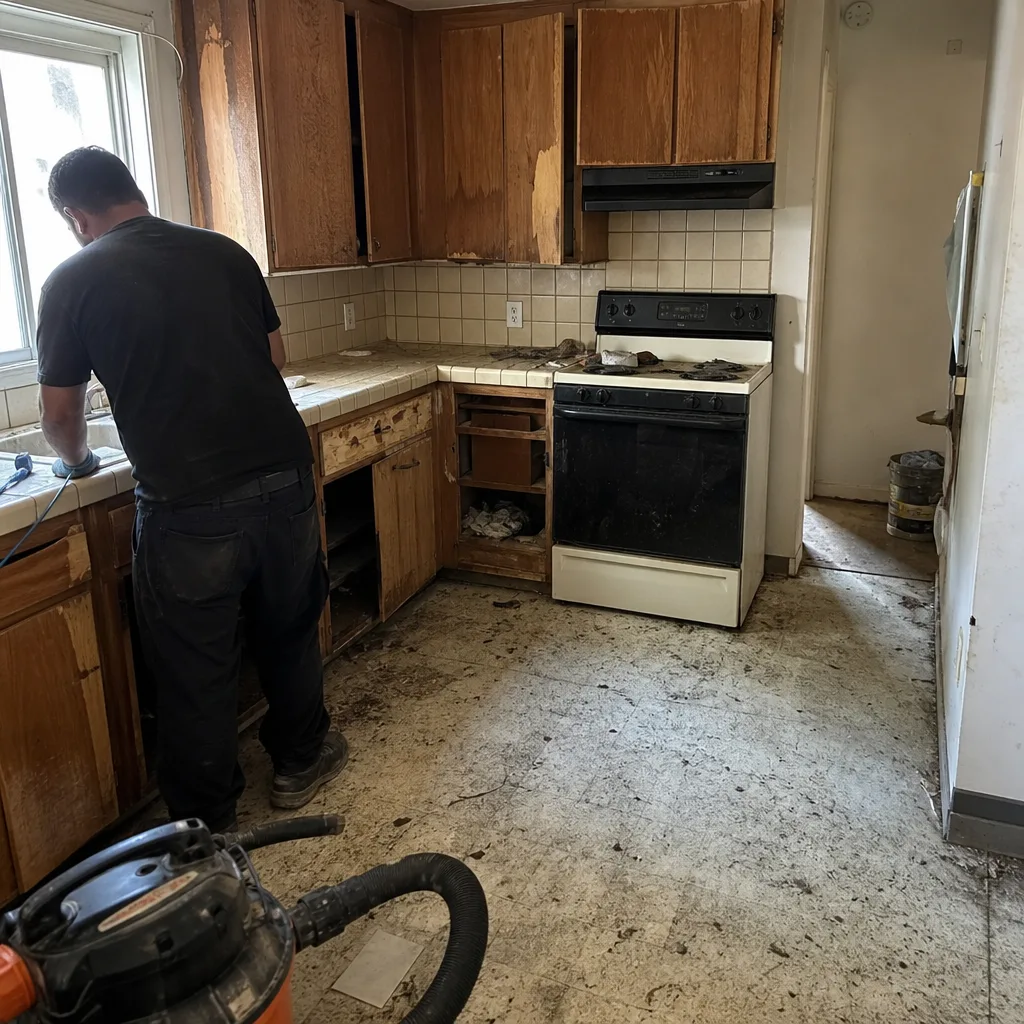 Before
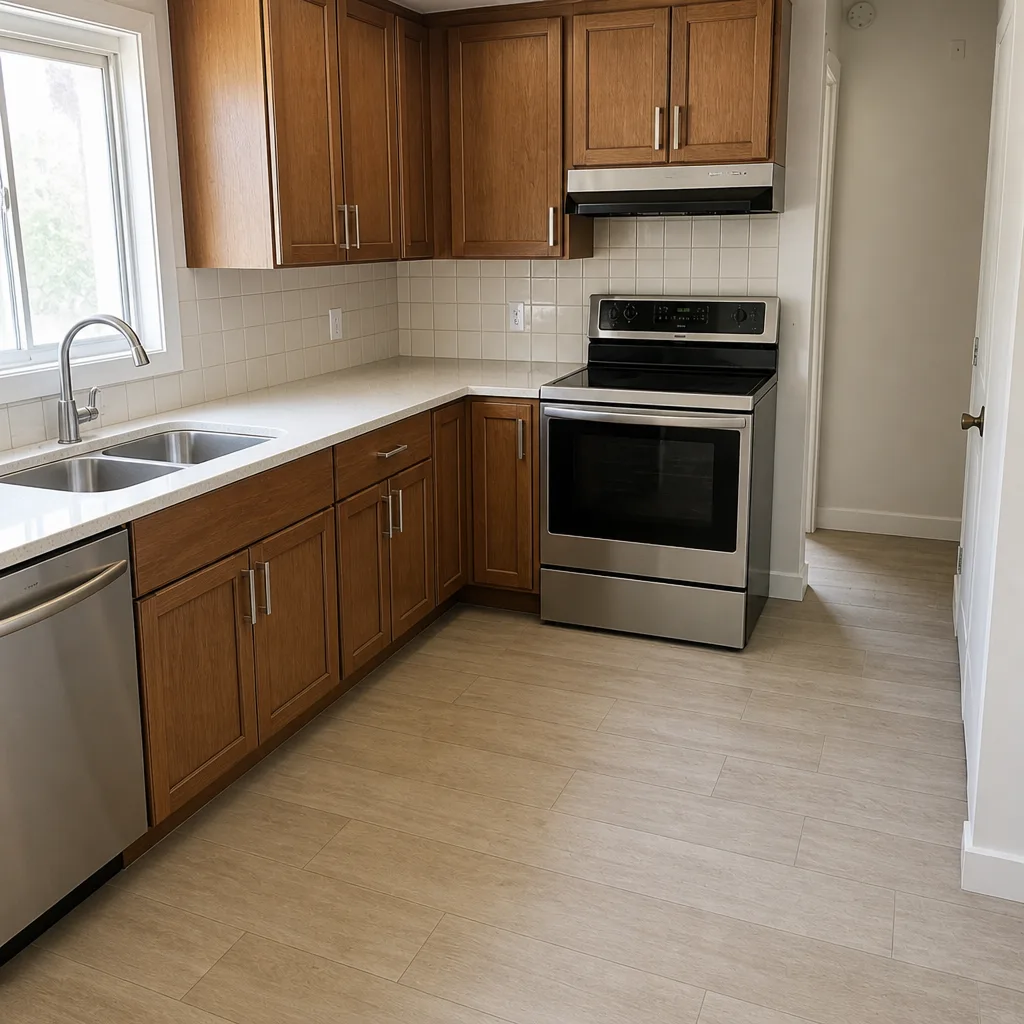 After
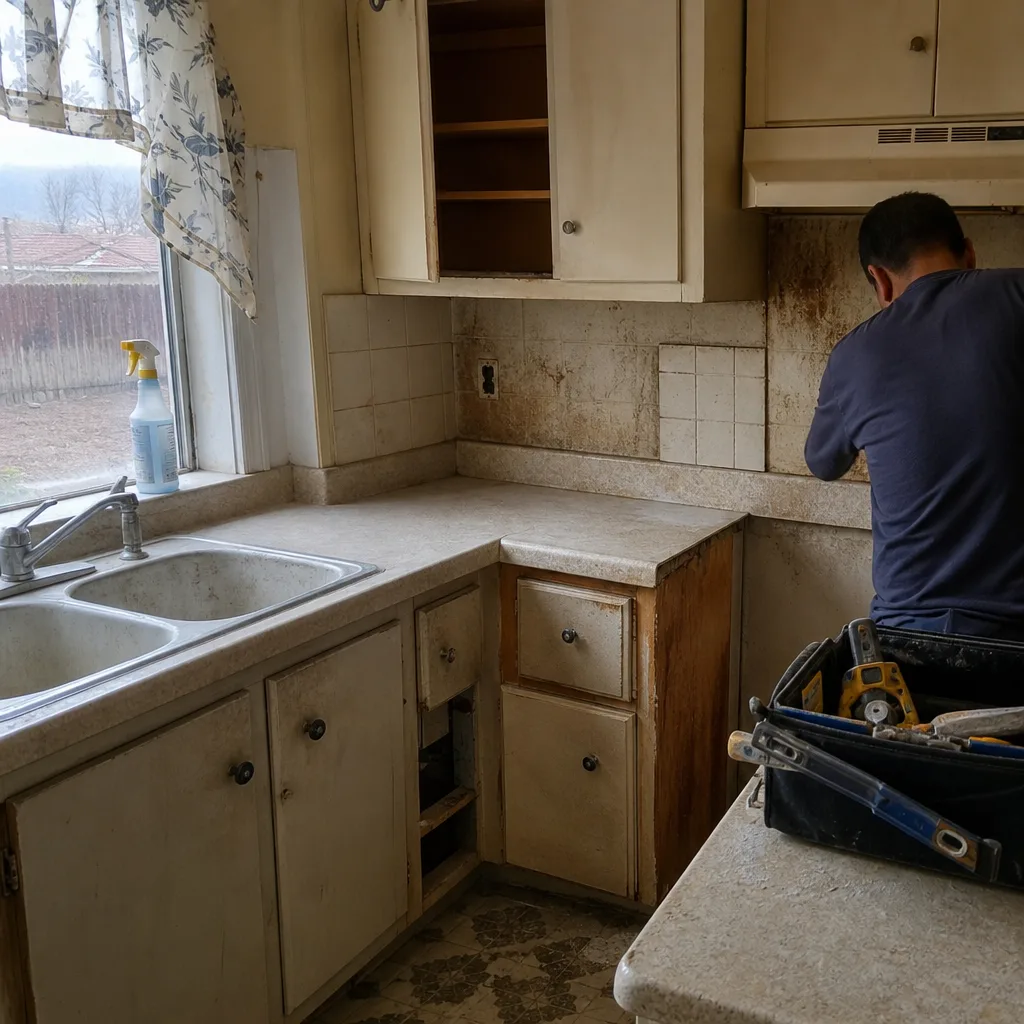 Before
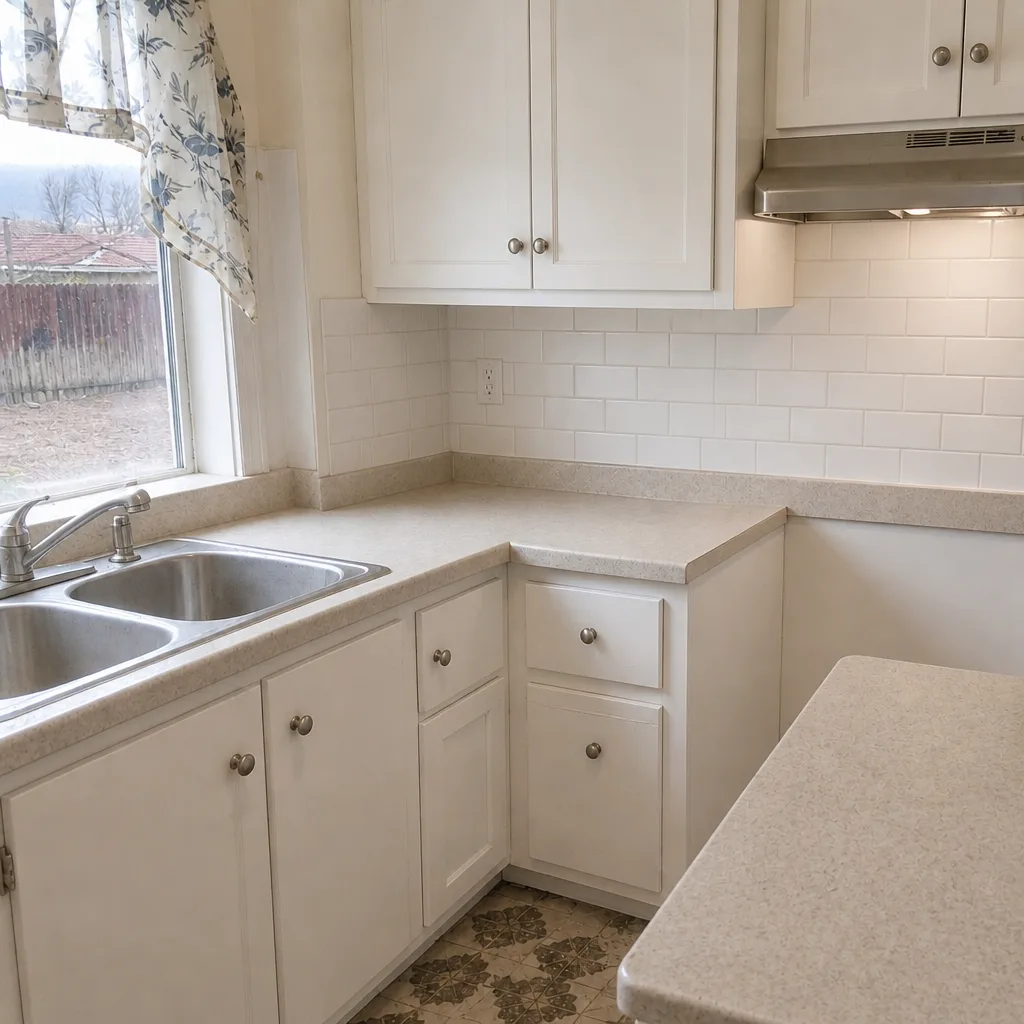 After
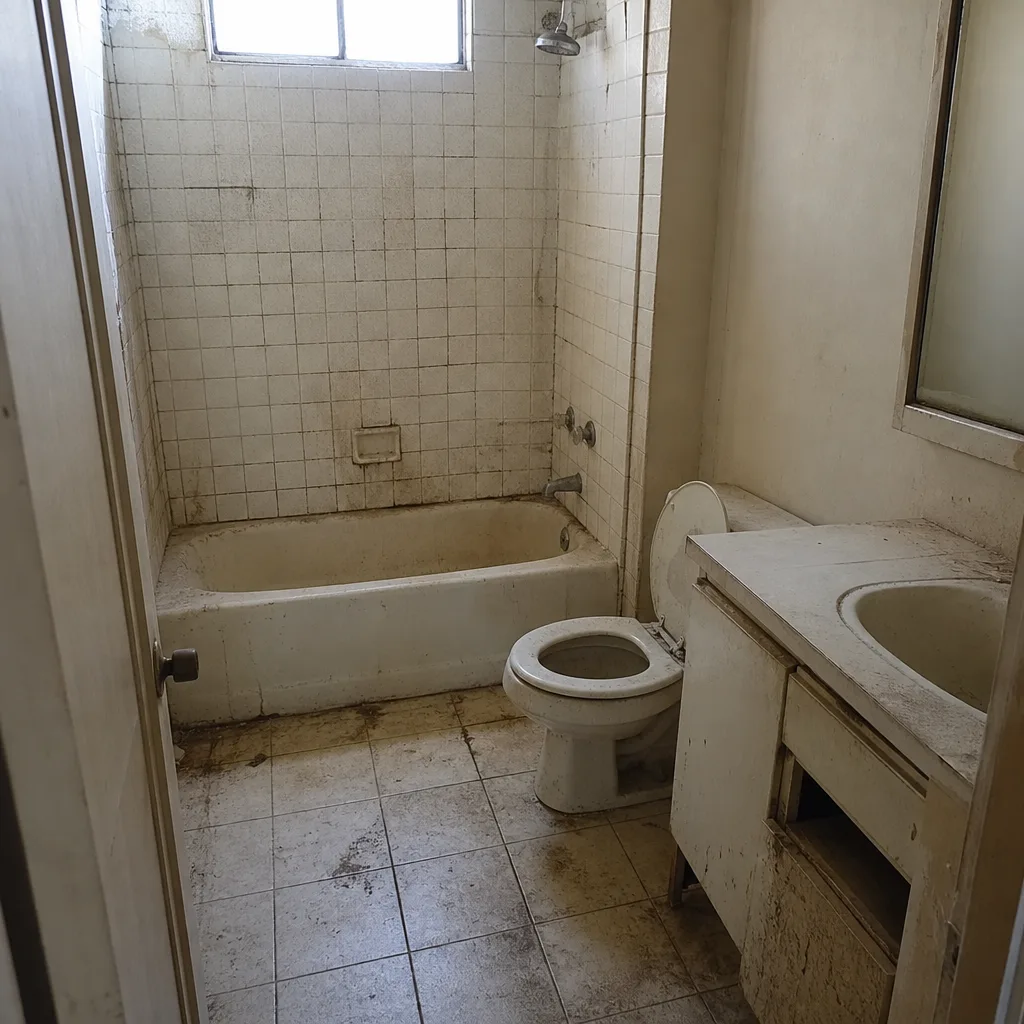 Before
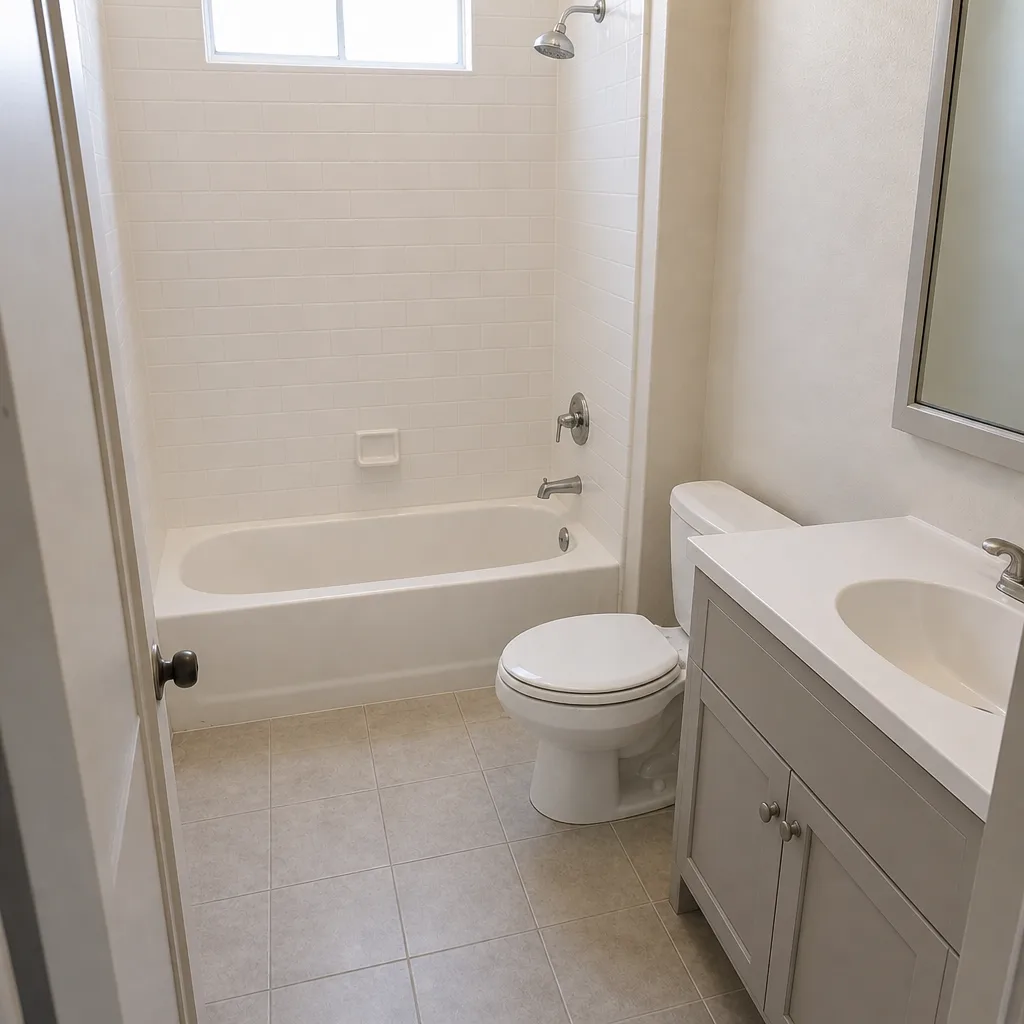 After
When to Call a Professional
Call a professional when the base is in doubt, when the site slopes toward the house, when the soil is the swelling clay Palmdale is known for, or when a permit and compaction inspection are involved. Also call if the driveway is longer than 600 sq ft, if it ties into an existing concrete apron or garage slab, or if you’re installing a Belgard or Techo-Bloc product that deserves a factory-spec base. The finish work is yours if you want it. The base is the part we’d hire out ourselves. Rowan Construction Group Palmdale offers free estimates in Palmdale: call (844) 320-8244.
If you’re also planning fencing or additions alongside the driveway, our crews handle Fence Installation in Palmdale and Home Additions & ADU in Palmdale under the same written-price discipline.
Frequently Asked Questions
Yes, if a professional has already excavated, graded and compacted the base. Layout, cutting with a rented wet saw, and joint sand installation are genuinely doable for a careful homeowner, at roughly 7 to 14 hours of labor per 100 sq ft. The base itself is the part that needs a plate compactor and graded experience. Call (844) 320-8244 for a base-only quote so you know the number before you start.
Because the base wasn’t compacted to the density that carries a car, usually from a single pass instead of four to six overlapping passes per lift. In Palmdale’s clay, that shortfall shows up faster than in sandy soil because the clay swells and shrinks with the seasons and pumps the base out from under the pavers. The fix is re-excavation and re-compaction, not a surface patch.
Plan on $10 to $18 per sq ft all-in, which is $4,000 to $7,200 for a 400 sq ft driveway including excavation, compaction, materials and installation. Belgard and Techo-Bloc lines sit at the upper end; basic concrete pavers at the lower. Rowan Construction Group Palmdale quotes a flat written price before any work starts, so the number is agreed before the first shovel. Call (844) 320-8244 for an exact figure.
Usually yes when the work changes grading or drainage toward the public right-of-way, and sometimes no when you’re re-laying the same footprint over the same base. Ask the city before you dig. A permit brings an inspection, and compaction testing on graded sites can’t be self-certified by a homeowner. Rowan pulls the permits and passes inspections as part of the job.
Yes, and it’s the option we recommend for hands-on homeowners. A base-only job on 400 sq ft in Palmdale runs roughly $2,500 to $4,000 for excavation, aggregate, compaction, permits and edge restraint. You buy the pavers and joint sand and lay the field. Total lands around $4,000 to $5,500. Not every contractor will structure a contract that way; we will, with a written scope that says where our work ends.
Belgard and Techo-Bloc are the two lines we specify most, both with published base and joint-sand specs that keep the install honest. For a Palmdale driveway in clay soil, ask for a product with a chunky edge and pair it with polymeric joint sand. The brand matters less than the base and the edge restraint. Call (844) 320-8244 and we’ll review a competitor’s quote line by line at no charge.
The Bottom Line
The DIY/professional line on a paver driveway isn’t about skill; it’s about equipment access and subgrade. A plate compactor at 150 to 200 pounds doing four to six overlapping passes per lift is what holds the base at roughly 95% Proctor density, and Palmdale’s clay makes that non-negotiable. Lay the pavers, cut them, sweep the joint sand: that’s your weekend. Excavate, compact, restrain the edges at depth: that’s the crew’s. The middle path (base by a contractor, pavers by you) is the honest compromise, running $4,000 to $5,500 for 400 sq ft instead of $2,000 to $2,700 that might fail. Every Rowan job starts with a flat written price, a free second opinion on any estimate you’re comparing, and a 365-Day Done Right Promise. See the full Driveway & Pavers in Palmdale service or start at our Rowan Construction Group Palmdale home page. Call (844) 320-8244 for a free estimate.
Written by the team at Rowan Construction Group Palmdale.