Last updated November 18, 2026
Free written scope consultation - allowances, timeline, and change-order rules on paper before a single trade is scheduled
Construction Cost Breakdown: The Palmdale Homeowner’s Reference for 2026
The national average cost-per-square-foot figure for a room addition gets cited so often it feels authoritative. It isn’t, at least not in Palmdale. That number excludes permit fees that in Los Angeles County can run $8 to $15 per square foot, a line item that moves a 400-square-foot addition estimate by $3,200 to $6,000 before a single tool is lifted. It also assumes labor rates and delivery costs that don’t match the Antelope Valley. What follows is a Palmdale-specific breakdown: real line items, real permit math, and the bid-reading skills that keep a project close to the number you agreed to.
Quick Answer
Most Palmdale construction projects in 2026 land in these ranges: a 400-square-foot room addition runs roughly $128,000 to $176,000 including permits; a detached ADU of 600 square feet runs $150,000 to $220,000; a driveway replacement with pavers runs $14,000 to $26,000; a full roof replacement on a 2,000-square-foot home runs $13,500 to $21,000; and a full kitchen remodel runs $42,000 to $78,000. The biggest swing factor in Palmdale isn’t labor or materials. It’s permit fees under Los Angeles County schedules and Title 24 energy compliance, which add costs many national guides leave out entirely.
Styles & brands we work with
- Kitchen remodeling
- Bathroom remodeling
- Home additions & ADU
- Roofing
- Windows & doors
- Driveway & pavers
- Fence
Table of Contents
- The Five Most Common Palmdale Projects, Priced
- Why Los Angeles County Permit Fees Move Your Number
- The Title 24 Cost Impact: Palmdale vs. Coastal California
- How to Read a Bid for the Eight Hidden Omissions
- What Change-Order Discipline Is Worth in Dollars
- Building a Defensible Contingency for Palmdale
- Soil Category and Pre-1980 Structures
- Common Mistakes to Avoid
The Five Most Common Palmdale Projects, Priced
These are the five projects we field the most questions about, with 2026 dollars broken into labor, material, and permit lines. Ranges reflect what Palmdale homeowners actually pay across neighborhoods from Rancho Vista to Anaverde, not a national composite. The permit estimates include Los Angeles County plan-check and inspection fees at typical square footages.
| Project | Labor | Materials | Permits & Fees | Total Range |
|---|---|---|---|---|
| Room addition, 400 sq ft | $58,000 – $78,000 | $62,000 – $84,000 | $8,000 – $14,000 | $128,000 – $176,000 |
| Detached ADU, 600 sq ft | $68,000 – $94,000 | $70,000 – $108,000 | $12,000 – $18,000 | $150,000 – $220,000 |
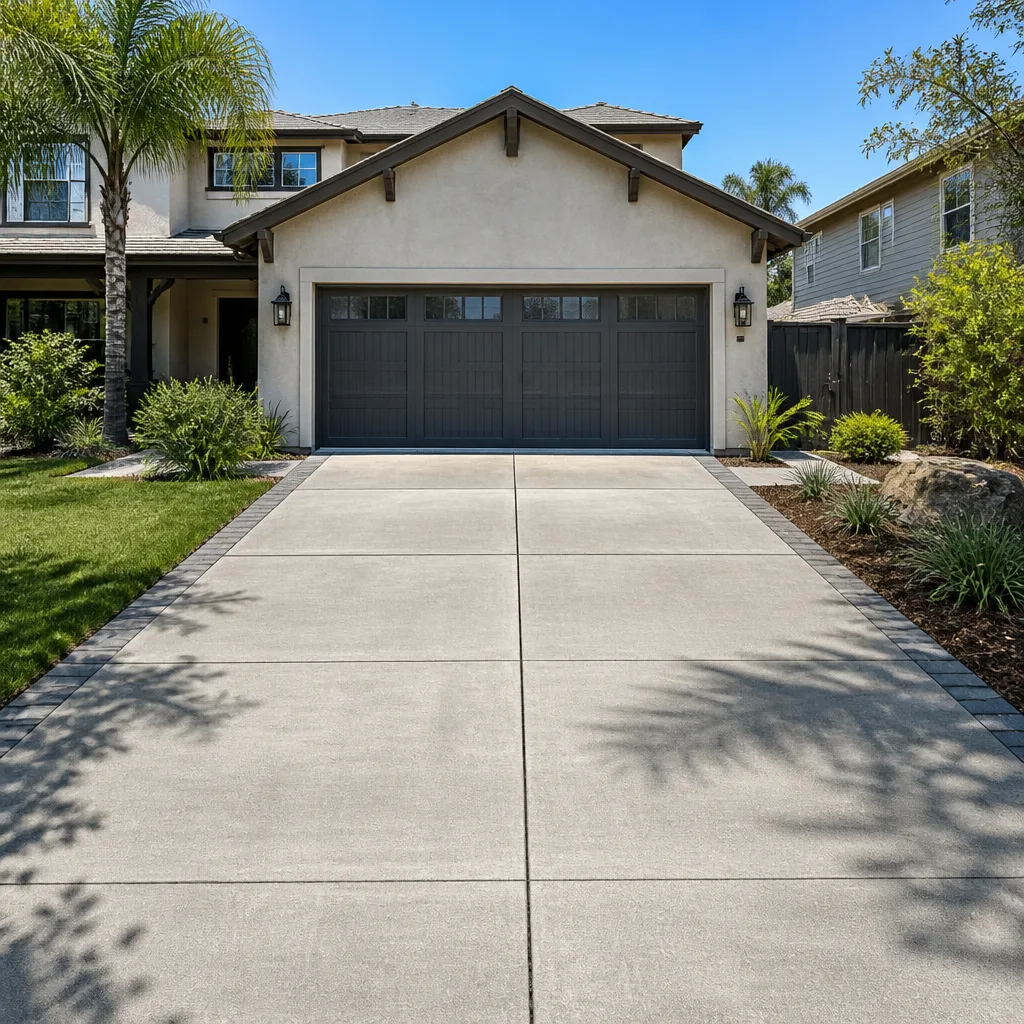
| Driveway, pavers, 600 sq ft | $6,200 – $11,000 | $7,000 – $13,500 | $800 – $1,500 | $14,000 – $26,000 |
| Roof replacement, 2,000 sq ft | $6,800 – $10,500 | $6,200 – $9,000 | $500 – $1,500 | $13,500 – $21,000 |
| Full kitchen remodel | $18,000 – $32,000 | $21,000 – $41,000 | $3,000 – $5,000 | $42,000 – $78,000 |
Two things push Palmdale numbers above national medians. First, material delivery: the Antelope Valley sits at the end of the supply chain for most Los Angeles distributors, and freight surcharges on cabinet runs, countertops, and roofing bundles add 4% to 9% over what a Santa Clarita or Burbank job pays. Second, labor availability for specialty trades swings with the aerospace and logistics employment cycles that dominate the Palmdale market, so electrical and HVAC subs price in a modest availability premium during high-demand quarters. Our technicians have up to 19 years of experience in this market, and freight and scheduling quirks come up on nearly every estimate.
Why Los Angeles County Permit Fees Move Your Number
Los Angeles County building permit fees scale with valuation and square footage, and for additions they typically land between $8 and $15 per square foot once plan check, inspection, and energy documentation are included. On a 400-square-foot Palmdale addition, that’s $3,200 to $6,000. National cost guides routinely omit this line, which is why their addition estimates come in low.
Here’s how permit costs break out on a typical Palmdale addition:
- Plan-check fee – based on valuation, often 15% to 25% of the total permit cost.
- Building permit – square-footage scaled; the largest single line.
- Electrical, plumbing, and mechanical sub-permits – issued separately, and frequently forgotten in DIY permit math.
- Energy compliance review – Title 24 documentation, addressed in the next section.
- Fire and access review – Palmdale sits in a high fire hazard severity zone in several foothill areas, which can trigger additional plan-review charges.
An honest bid states permit fees as a number, not as “plus permits, TBD.” We pull the permits and pass inspections on every project, and the fee is written into the quote before work starts under Clause 1 of the Haven Standard, which is the discipline that keeps the price from drifting. A signed, line-itemized permit estimate is the first thing to check on any contractor’s paperwork.
The Title 24 Cost Impact: Palmdale vs. Coastal California
Title 24 is California’s energy code, and it requires every addition to meet insulation, glazing, and documentation standards. In Palmdale’s climate zone, the requirements are different from coastal California, and in a few specific places they’re more expensive. Here’s the comparison that matters:
- Window glazing – Palmdale sits in a climate zone with high cooling demand, so dual-pane low-E glass with a low solar heat gain coefficient is effectively mandatory. Budget $450 to $750 per window installed versus $350 to $550 in a coastal zone, since the spec is tighter.
- Insulation – attic and wall R-values are higher here because of the summer heat and winter desert cold swings. Insulation upgrades add roughly $1,200 to $2,800 on a 400-square-foot addition over a coastal-equivalent build.
- HVAC sizing and ducting – high-desert temperature swings push higher-efficiency equipment and tighter duct sealing, adding $2,000 to $4,500 relative to a coastal baseline.
- Energy documentation – the Title 24 compliance report itself runs $400 to $900 depending on the project’s complexity, and it’s a required deliverable at plan check.
Net Title 24 impact on a standard Palmdale addition versus a coastal project of the same size: roughly $3,600 to $8,200 more, most of it in glazing and HVAC. This is not optional spend, and any bid that leaves it out is either padded somewhere else or about to send you a change order.
How to Read a Bid for the Eight Hidden Omissions
A bid can be low by $10,000 and still look complete. The trick is finding what wasn’t written. These eight line items frequently appear as silent assumptions rather than stated inclusions, and each becomes a change order the moment the assumption breaks.
- Temporary power and water – job-site electrical and water hookups. If the bid doesn’t state who pays, assume the answer is “you.”
- Debris haul and dumpster fees – demolition debris for a kitchen or addition runs $800 to $2,400 in Palmdale, and it’s a common omission.
- Permit fees – the line described above. It must be a dollar figure, not a placeholder.
- Inspection coordination – who schedules the county inspector, and who is on-site when they arrive. Uncoordinated inspections cause weeks of delay that can cost more than the coordination itself.
- Landscaping restoration – an addition or driveway tear-out disturbs planting beds, irrigation, and grade. The bid should state what gets restored and what doesn’t.
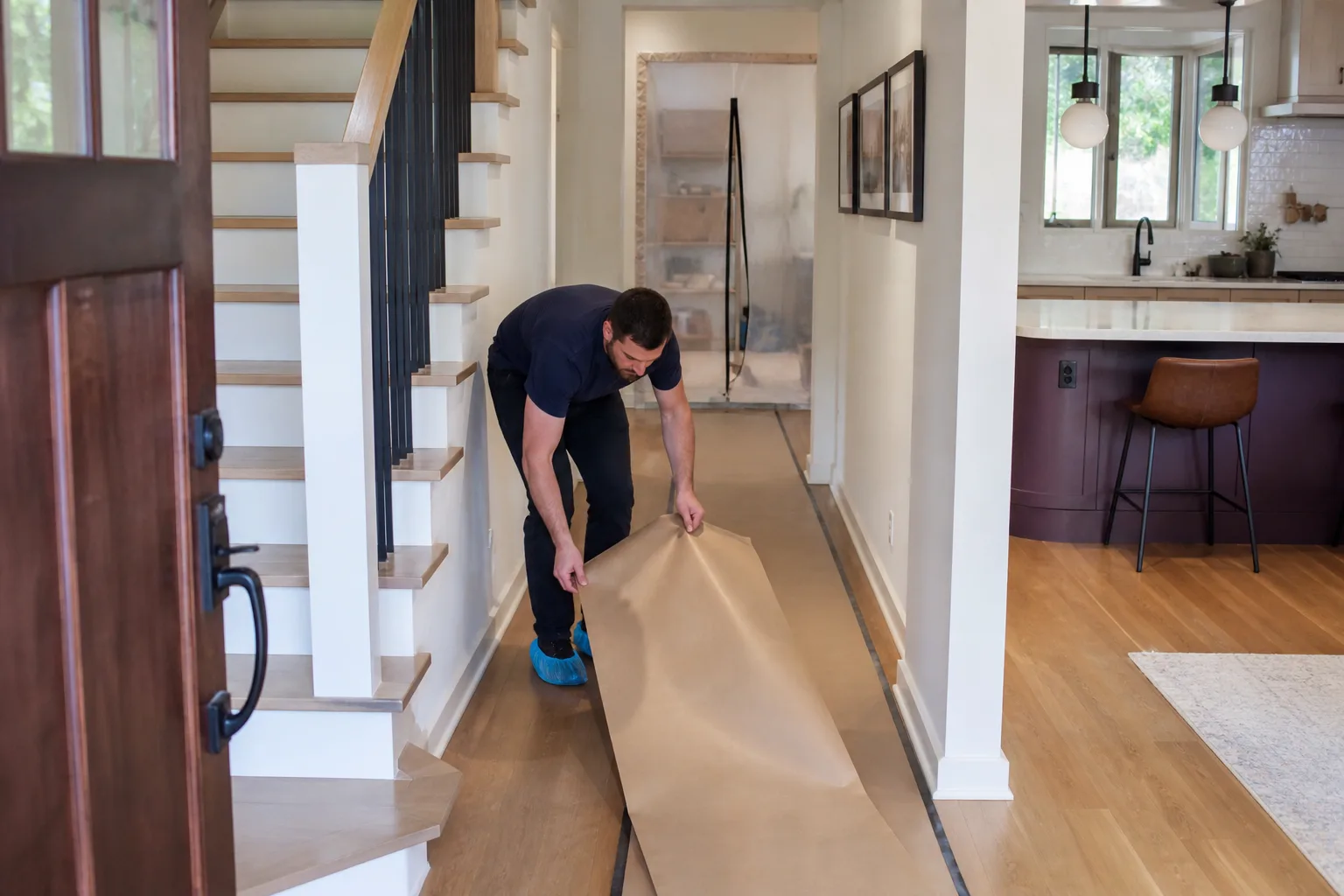
- Temporary protection – floor coverings, dust barriers, and window protection on a remodel. Small cost, big homeowner headache if omitted.
- Bond cost – a performance bond or license bond premium. If it’s not on the line, it’s not in the price.
- Overhead and markup – a stated percentage is normal and honest. An unstated one is buried in the subtotal where you can’t compare it.
When you bring a competitor’s written estimate, we’ll review it line by line at no charge and point out which of these eight appear as assumptions. That’s the Free Second Opinion, and it’s the fastest way to see whether two bids are actually for the same project.
What Change-Order Discipline Is Worth in Dollars
Budget overruns come from changes made without documentation. On a $100,000 baseline project, the difference between disciplined change orders and the handshake variety is stark: projects with signed change orders before work proceeds typically finish within 3% to 6% of the agreed number, or $3,000 to $6,000 over on a $100,000 job. Projects without that discipline routinely run 15% to 25% over, which is $15,000 to $25,000 on the same baseline.
The mechanism is simple. Every change has a written price and a written scope, and nothing proceeds until the change order is signed. The homeowner knows the moment the number moves. We’ve run every project this way since 2007 across more than 4,000 jobs, and the reason the practice matters more in Palmdale than in most markets is that hidden conditions are more common here. Foothill properties around Rancho Vista and Anaverde turn up rock during excavation at a higher rate than flat valley-floor lots, and every rock surprise is a change. The question is whether the change is $2,000 with a signature on it or $8,000 discovered after the fact.
Building a Defensible Contingency for Palmdale
Contingency isn’t a padded buffer. It’s a calculated reserve for the conditions you can name. In Palmdale, three inputs drive the right percentage: project type, soil category, and whether the structure predates 1980.
- Project type – interior remodels are lower risk (cosmetic discovery only); additions and ADUs are highest because they involve excavation, foundation, and utility tie-ins.
- Soil condition category – flat valley-floor lots with established grade require less contingency than sloped foothill lots with rock potential.
- Structure age – pre-1980 structures carry higher contingency because of wiring, plumbing, and framing surprises behind the walls.
Using those inputs, a defensible 2026 contingency for Palmdale projects ranges from 8% on a cosmetic kitchen refresh in a modern home to 20% on a foothill ADU in a pre-1980 structure. As a rule of thumb:
- Interior remodel, post-1980 structure, flat lot – 8% to 10%
- Addition, post-1980 structure, flat lot – 12% to 15%
- Addition or ADU, pre-1980 structure, sloped lot – 18% to 20%
Soil Category and Pre-1980 Structures
Palmdale’s development history is split down the middle. The core neighborhoods built between the mid-1950s and the late 1970s sit on flat valley-floor lots with graded soils, while the newer foothill subdivisions to the west and south sit on slopes where rock at depth is common. During foundation excavation, rock removal can add $1,800 to $6,500 to an addition budget depending on volume, and every bid should state whether the excavator includes rock removal or bills it separately.
Pre-1980 structures carry their own line items. Galvanized plumbing replacement, aluminum wiring remediation, and framing that doesn’t match current seismic shear requirements all show up in Palmdale homes of that vintage. A defensible bid for a renovation in one of these homes includes a line item for “hidden conditions allowance” with a dollar cap. If the bid can’t name the cap, the risk has just been transferred to you. We run into this on older Palmdale homes constantly, and the fix is documentation, not guesswork: the photo record from the first visit tells you what condition the structure is actually in before a wall comes down.
Common Mistakes to Avoid
- Using national cost-per-square-foot averages. They exclude permit fees that run $8 to $15 per square foot in Los Angeles County and miss the Antelope Valley freight premium on materials. A national number can be low by double digits on an addition.
- Accepting a bid without a written permit line. “Plus permits” is an open-ended cost. Palmdale permitting can add $3,200 to $6,000 on a 400-square-foot addition, and that number belongs in the quote.
- Skipping the Title 24 line. If energy compliance isn’t in the bid, it’s coming as a change order.
- Assuming the lowest bid is the cheapest. The eight omissions above explain most of the gap between the low bid and the honest one. Compare line items, not totals.
- Underestimating contingency. A 5% reserve on a sloped-lot ADU in Palmdale is not a contingency, it’s a hope. Use the framework above.
- Skipping the pre-1980 inspection. In older Palmdale neighborhoods, wiring and plumbing conditions behind the walls should be photo-documented before demolition so the change order is based on evidence, not surprise.
- Accepting verbal changes. A phone conversation about “a little more tile” is a cost you’ll discover at the end. A signed change order is a number you agreed to.
See the difference
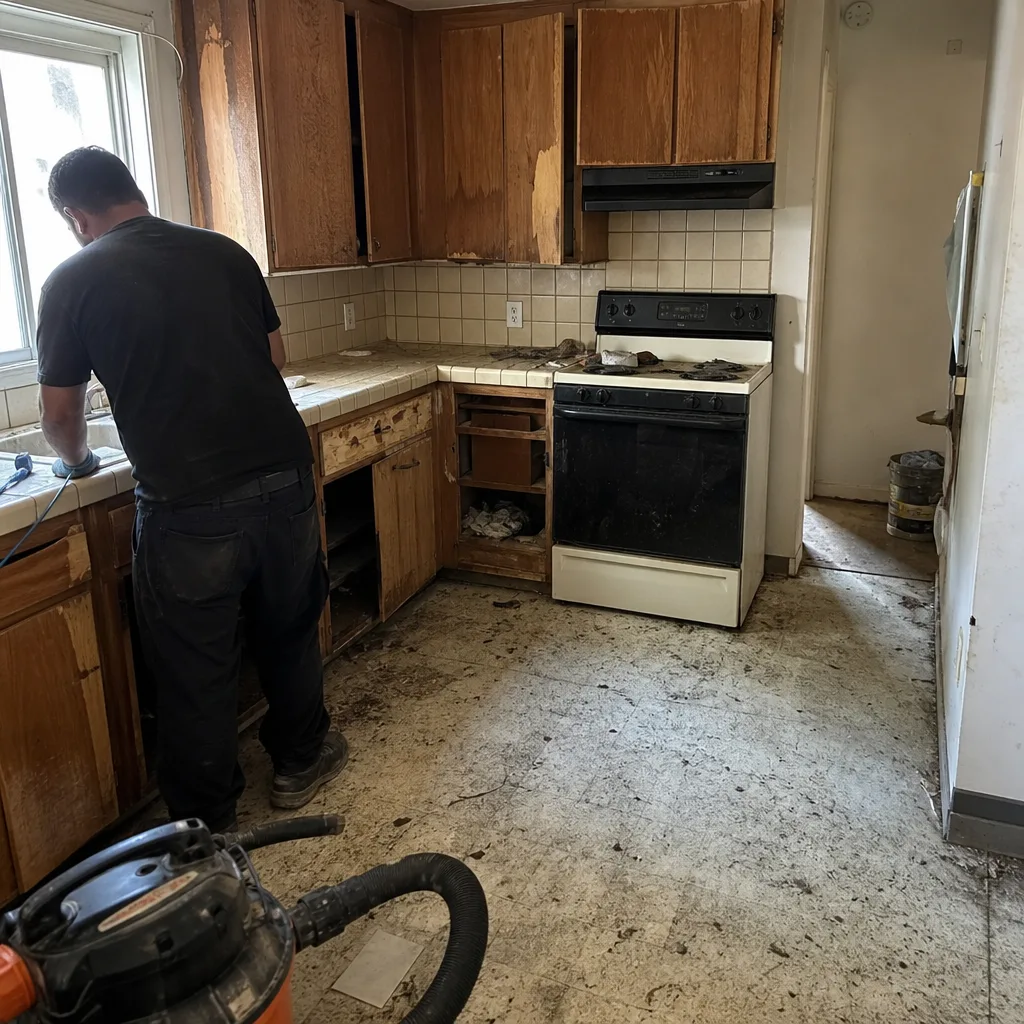 Before
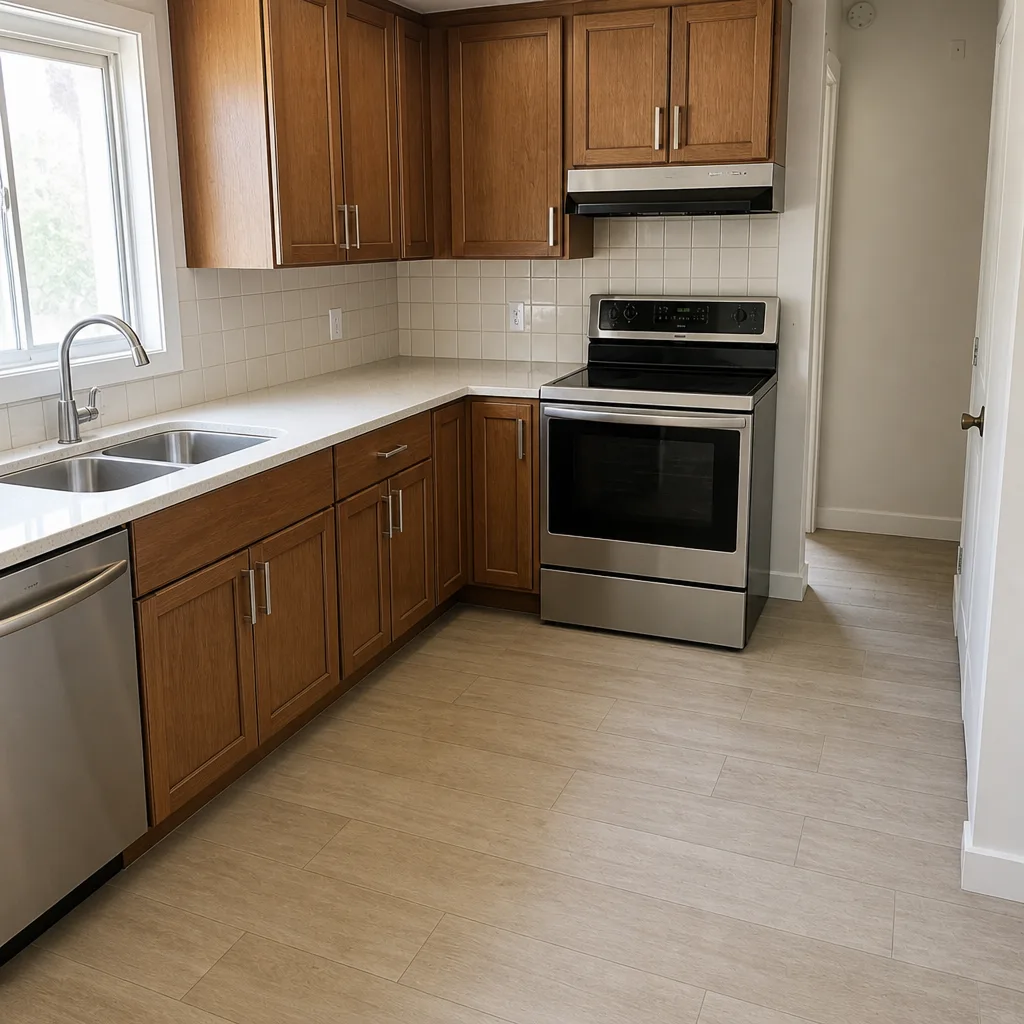 After
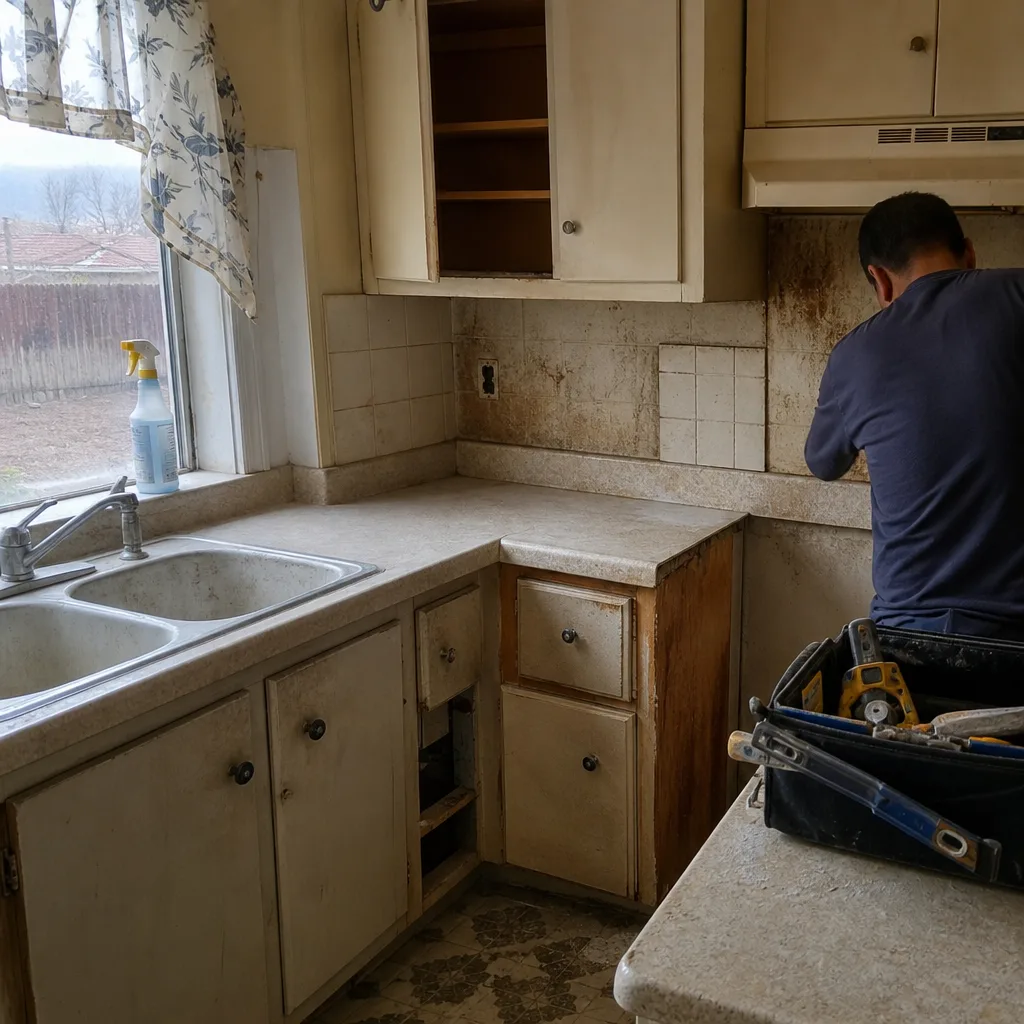 Before
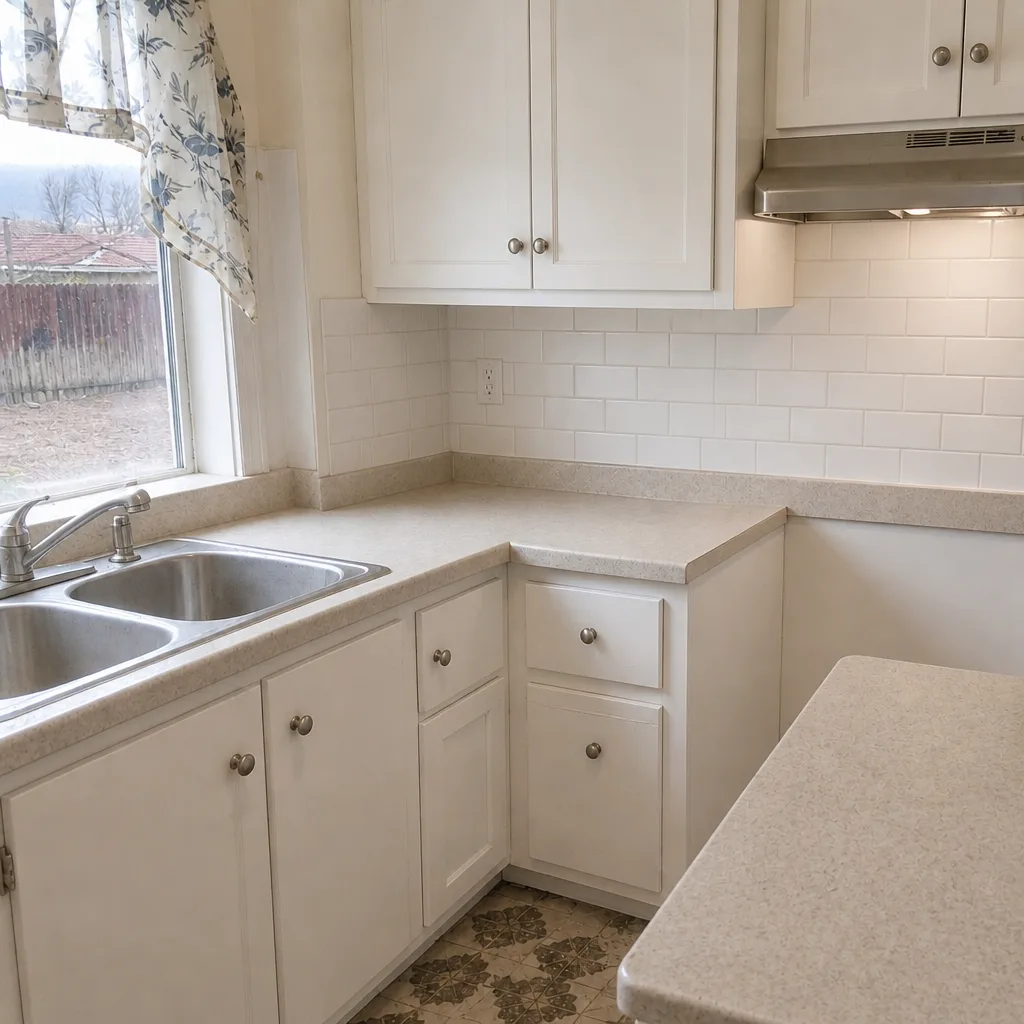 After
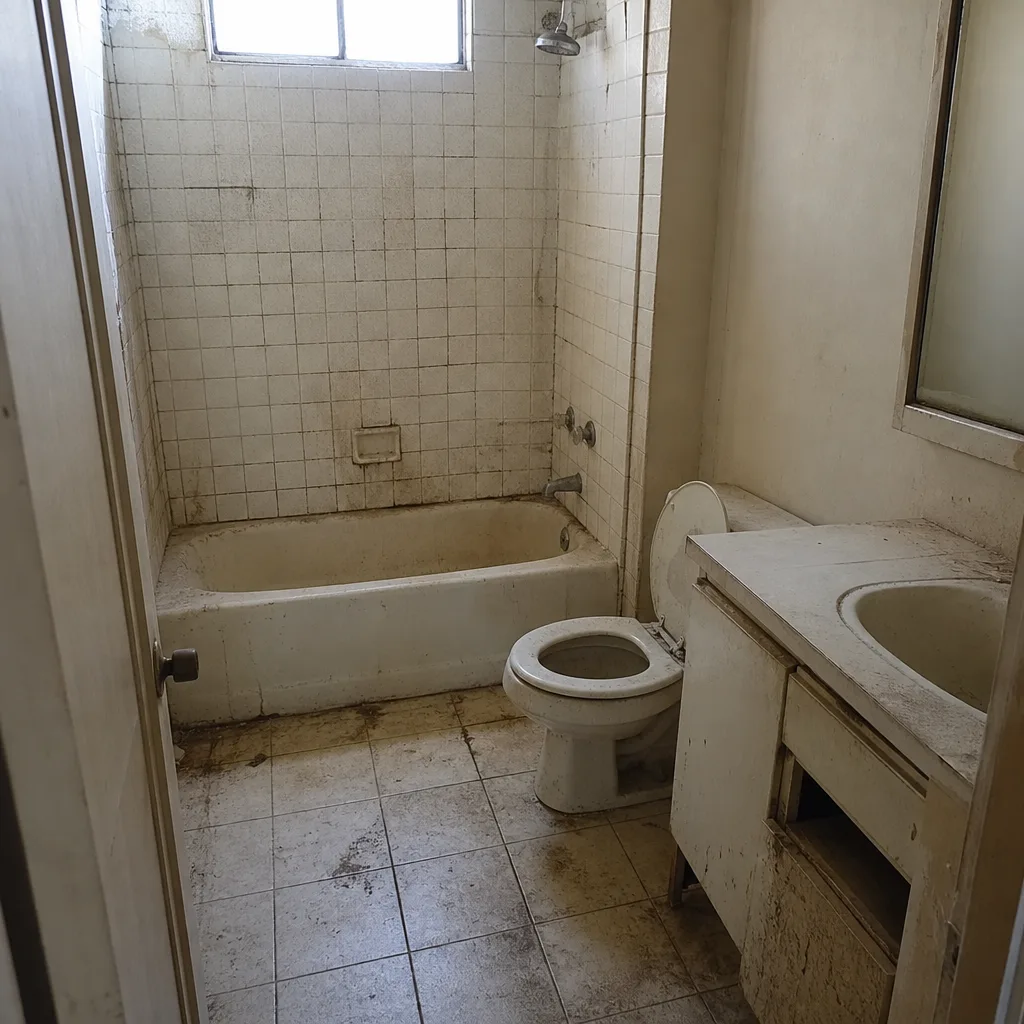 Before
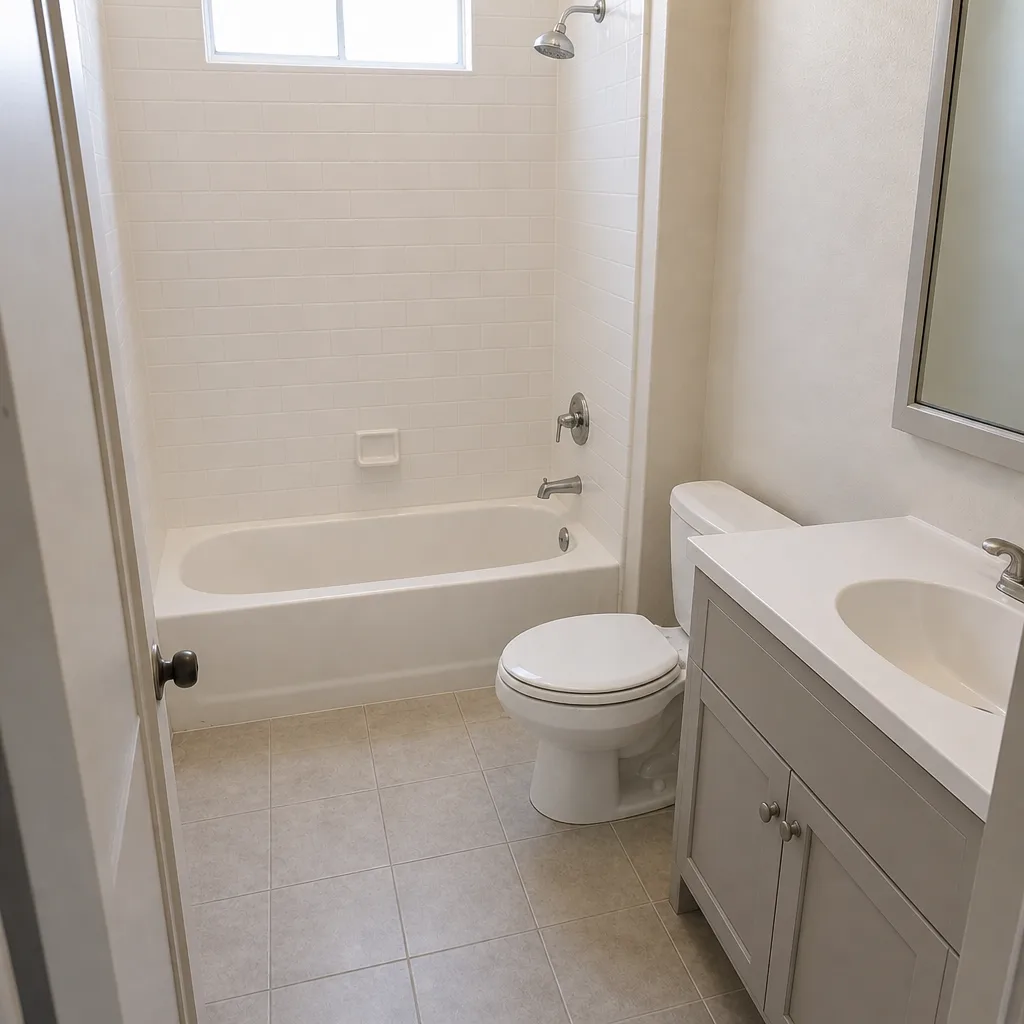 After
When to Call a Professional
Call a professional contractor when any of these apply: the project requires a permit (any addition, ADU, or structural change); the work involves electrical panels, gas lines, or load-bearing walls; you’re renovating a pre-1980 Palmdale home where wiring and plumbing may be at end of life; or your bid includes any of the eight silent omissions above. Roofing, driveways, and fences are often bid competitively, but the documentation discipline still matters. Rowan Construction Group Palmdale offers free estimates in Palmdale, with a written price before any work starts. Call (844) 320-8244 to schedule yours, or review the Rowan Construction Group Palmdale home page for the full list of trades.
Frequently Asked Questions
A 400-square-foot room addition in Palmdale typically runs $128,000 to $176,000 including Los Angeles County permit fees and Title 24 compliance. The permit line alone is $8,000 to $14,000, and national averages usually leave it out. Call (844) 320-8244 for a written line-item quote on your specific project.
Three things: Los Angeles County permit fees ($8 to $15 per square foot on additions), a 4% to 9% material freight premium because Palmdale sits at the end of the regional supply chain, and Title 24 energy requirements that add $3,600 to $8,200 over a coastal project of the same size. The underlying labor rates aren’t the problem. The overhead lines are. Call (844) 320-8244 to compare a local bid against a national estimate.
Yes. We pull the permits and coordinate the county inspections on every project, and the fee is written into the quote before work begins. Under Clause 1 of the Haven Standard, the price is written before anyone starts, and permit fees are never a “TBD” line. Call (844) 320-8244 to schedule a free estimate.
Not without your signature. Every change gets a written price and a written scope, and no work proceeds until the change order is signed. That discipline is why projects finish within a few percent of the agreed number rather than 15% to 25% over. Call (844) 320-8244 for a written quote with the change-order process spelled out.
A detached ADU of 600 square feet typically takes 6 to 9 months in Palmdale once permits clear, with plan check adding 8 to 14 weeks at Los Angeles County depending on the current queue. Foothill lots with rock potential can push both figures. For a project-specific timeline, see Home Additions & ADU in Palmdale or call (844) 320-8244.
A paver driveway of 600 square feet runs $14,000 to $26,000 in 2026, and fence installation is quoted by linear foot with material selection driving most of the spread. Both are bid with a flat written price before work starts. For current numbers, see Driveway & Pavers in Palmdale and Fence Installation in Palmdale, or call (844) 320-8244 for a free estimate.
The Bottom Line
Palmdale construction costs land higher than national averages for three reasons that every cost guide should name: Los Angeles County permit fees, the Antelope Valley freight premium, and Title 24 energy compliance. Read every bid for the eight omissions, insist on a written permit line, calculate your contingency from project type, soil, and structure age, and require a signed change order before any change proceeds. That last discipline alone is worth $12,000 to $19,000 on a $100,000 project. Rowan Construction Group Palmdale puts a written price before any work starts, on every trade, and offers a free second opinion on any competitor’s estimate. Call (844) 320-8244 for your free estimate, and if you’re planning a larger build, review our Home Additions & ADU in Palmdale guide first.
Written by the team at Rowan Construction Group Palmdale.