Last updated November 18, 2026


Free written scope consultation - allowances, timeline, and change-order rules on paper before a single trade is scheduled
Bathroom Remodeling Warning Signs Every Homeowner Should Know
A contractor who quotes a bathroom remodel without asking the square footage of the shower floor, the existing drain location, or whether the wall framing is metal or wood stud is pricing from assumption. Every assumption becomes a change order. That’s the part most homeowners miss: the red flags that predict a cost overrun or a leaking shower pan show up weeks before demolition, in the contract language and the questions the contractor does and doesn’t ask. This guide is an audit checklist for the paperwork and job-site behavior that separate a builder from a talker, written from our experience across Palmdale bathrooms where hard water, expansive soil, and older tract plumbing punish sloppy work.
Quick Answer
The biggest bathroom remodeling warning signs are a vague written scope, no brand-named waterproofing membrane, no change order clause, and a deposit request above 10% or $1,000, which is an actual violation of California Business and Professions Code §7159. A contractor who can’t name the membrane, the cure times, and the inspection milestones before you sign is a contractor whose assumptions will land on your invoice.
Styles & brands we work with
- Kitchen remodeling
- Bathroom remodeling
- Home additions & ADU
- Roofing
- Windows & doors
- Driveway & pavers
- Fence
Table of Contents
- Contract omissions that predict overruns
- Job-site behaviors that signal moisture problems
- How to verify a California license in three minutes
- The 10% deposit rule and the change order clause
- Subcontractor-heavy projects and warranty accountability
- The questions a real contractor asks first
- Common mistakes to avoid
- Frequently asked questions
Contract Omissions That Predict Cost Overruns
The contract is where a remodel is won or lost. A written scope that names products, brands, and inspection points is a promise you can hold someone to. A scope that says “tile shower” and nothing else is a placeholder for a future argument. Here are five omissions we look for when a homeowner brings a competitor’s quote for a free second opinion, and each one has a specific fix.
- No waterproofing membrane specified by brand. The shower’s actual defense against moisture is a sheet or liquid membrane behind the tile, not the tile itself. A real scope names it: Schluter Kerdi, Laticrete Hydro Ban, Wedi board, MAPEI Mapelastic. “Waterproofed per code” is not a brand and not a spec.
- No allowance line items for tile and fixtures. Allowances are dollar amounts set aside for materials you haven’t picked yet. A quote with a $4,000 tile allowance that reads “or TBD” tells you nothing about what happens when you fall in love with a $14-per-square-foot porcelain. Ask for the allowance number in writing and what triggers a change order above it.
- No change order clause. The clause should state that no additional work proceeds, and no additional money is owed, until a change order is signed by both parties. A contractor who resists putting this in writing is telling you how the project will end.
- No inspection milestone listed. Most California bathroom remodels need rough-in plumbing and electrical inspections before the walls close. The contract should list when the inspector comes and who schedules it. If inspections aren’t mentioned, they may be skipped.
- No lien waiver process described. A preliminary notice and conditional lien waivers protect you from paying twice if a subcontractor goes unpaid. This is dry reading and it matters. Ask how the contractor documents that subs are paid before you release final payment.
A written price with a written scope and a written warranty is the standard we hold. Under Clause 1, the price is written before anyone starts, which is why we quote flat prices instead of hourly rates.
Job-Site Behaviors That Signal a Moisture Problem Will Follow
Once the walls are open, the visible signals get more useful than the paperwork. Water damage in a bathroom almost always traces back to one of four shortcuts, and each one is observable if you know what to look at. You don’t need to do the work. You need to recognize the signs during a walkthrough.
- Skipping the flood test on a shower pan. A properly built shower pan gets filled with water to the curb height and left for at least 24 hours before tile goes down. If your contractor tiles the pan without a documented flood test, ask why. The photo record on every visit should show the water sitting there.
- Grout applied before the mortar cures. Thinset needs its cure window, usually 24 hours, before grout goes in. Grout over uncured mortar traps moisture and cracks within a season. Watch the schedule, not the wall.
- Caulk over damp surfaces. Silicone over a wet joint fails, then grows mold behind it. A careful crew dries the joint and confirms the moisture reading before caulking. A rushed crew caulks on the way out the door.
- Tile set directly on drywall in a wet area. Cement board or a bonded membrane is the substrate for a wet wall. Drywall is cheaper. It’s also the reason many Palmdale bathrooms from the 1980s and 1990s have soft corners in the shower.
In Palmdale, our hard water accelerates the failure. Mineral-heavy water deposits on grout and feeds efflorescence (the white powder you see on tile edges), which is a warning sign of moisture moving through the assembly rather than a cosmetic issue. A bathroom built with a membrane and cured correctly handles hard water far better than one without.
How to Verify a California Contractor’s License in Three Minutes
California makes this easy and free, and a surprising number of homeowners never do it. The Contractors State License Board (CSLB) runs a public lookup at cslb.ca.gov where you can confirm a license is active, current, and cleared for the work being quoted. It takes about three minutes and it will save you from a misclassification on the first phone call.
- Go to cslb.ca.gov and open the “Check a Contractor License” lookup.
- Enter the contractor’s name or license number into the search field.
- Read the license status first. Active, expired, suspended, or cancelled are four different situations.
- Check the classification. A B (General Building) license covers whole-house and multi-trade work. A C-36 (Plumbing) covers plumbing. A C-20 (HVAC) covers heating and air. Bathroom remodels that move drain locations, add a shower valve, or relocate a vent typically need a B license working with C-36 specialists, or a properly licensed combination.
- Check the workers’ compensation and bond status on the same page.
- Look for the disciplinary history tab. It’s public and it’s honest.
Why this matters across scope: a bathroom that replaces a tub with a curbless shower involves plumbing relocation and often framing. A handyman license isn’t licensed for that work in California, and a B license without plumbing coverage requires a licensed subcontractor for the plumbing. Our crews are background-checked and uniformed, and each visit includes a documented photo record as a standard deliverable, not an add-on.
The 10% Deposit Rule and Why the Change Order Clause Matters
California limits what a contractor can take up front. Under Business and Professions Code §7159, a home improvement contractor cannot request or accept a down payment exceeding 10% of the contract price or $1,000, whichever is less. A request for 30% upfront is not a preference or a market convention. It’s a legal violation, and it’s one of the strongest early signals that the project will run into trouble.
A few things to understand about the deposit rule and what follows it:
- The cap is a floor, not a target. Plenty of reputable contractors take a smaller deposit and request progress payments at defined milestones, such as rough-in complete or inspections passed.
- Progress payments should be tied to visible work. “Framing complete and inspected” is a milestone. “Week three” is not.
- The change order clause is the second half of the promise. A deposit rule protects you at the start. The change order clause protects you at the finish, because no additional money is owed until you sign off on the additional scope in writing.
- Written is the standard, not the exception. Everything, from the deposit to the change order, belongs in the signed document, not in a text thread.
Our written flat price has kept projects within a few percent of the number the customer agreed to, across 4,000-plus jobs. That number is a product of the discipline, not a marketing claim.
Subcontractor-Heavy Projects and Warranty Accountability
Plumbing, electrical, drywall, tile, glass, and painting can each land with a different subcontractor on a single bathroom. That’s normal and often the right way to build. The question is who holds the warranty when the shower valve leaks a year after the sign-off, and whether that warranty covers subcontractor work in writing.
A general contractor who can’t state, in the written warranty, that it covers all sub work has handed you a chain of phone calls. What to demand:
- The GC’s warranty scope, in writing, naming subcontractor work. The warranty should state that the GC is the single point of contact for defects, regardless of who installed the component.
- The manufacturer’s warranty for the products, documented. A Toto toilet, a Kohler shower valve, and a Cambria countertop all carry manufacturer warranties, and you should leave with the paperwork in hand.
- A service commitment for the first year. The 365-Day Done Right Promise is our version: if it is not done right, we make it right, backed by a system rather than a handshake.
- The plumber’s license number documented on the project file. That record lets you confirm the plumbing sub’s license independently if you ever need to.
Lien waivers are the quiet hero in this section. A conditional lien waiver signed by each sub before a progress payment is your proof that the labor actually got paid, and it protects your title if the GC’s bookkeeping goes sideways. Ask for them at every payment, not just the last one.
What a Palmdale Bathroom Actually Has to Handle
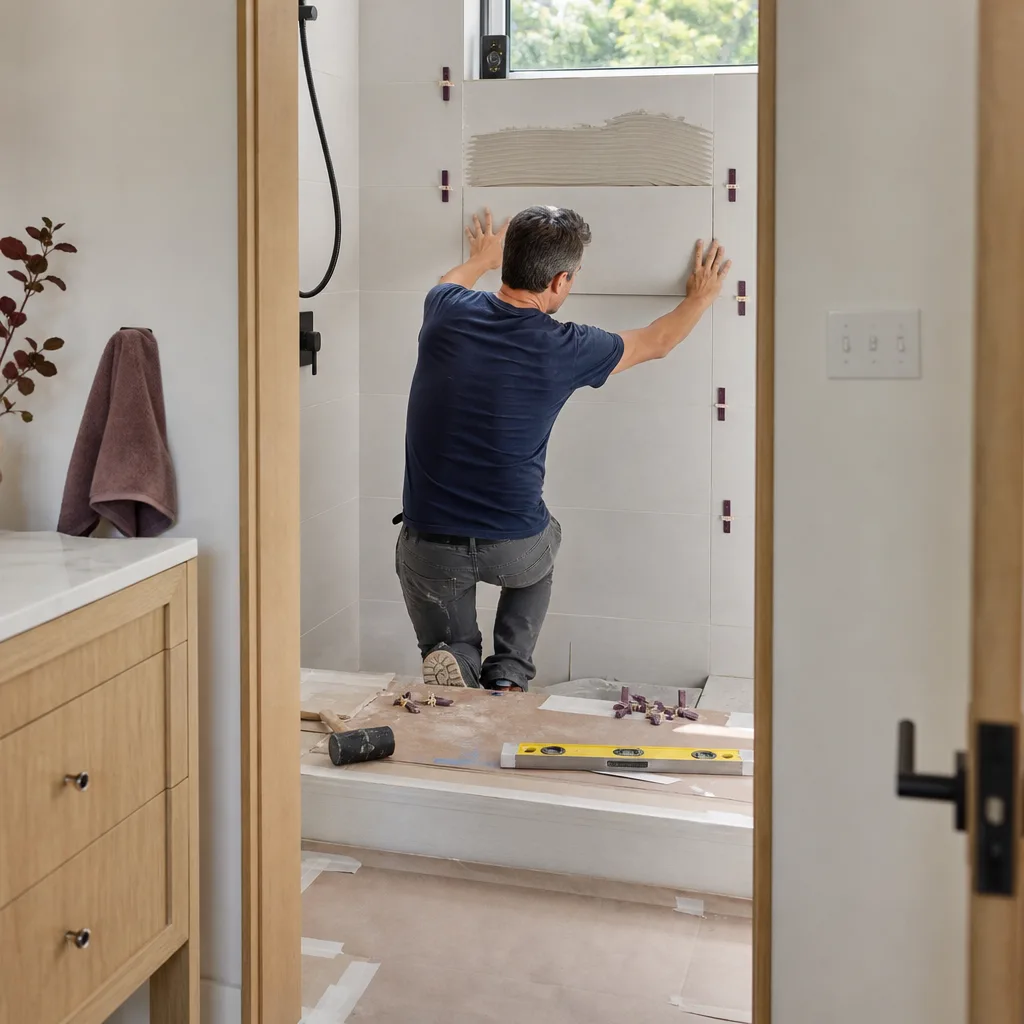
Palmdale’s conditions write their own checklist. The Antelope Valley’s dry climate and the region’s hard water both punish assemblies that aren’t designed for them, and the housing stock tells the rest of the story. Plenty of the tract homes built through the 1980s and 1990s in neighborhoods like Rancho Vista, Marie Kerr, and the areas near Palmdale Boulevard have original plumbing, cast-iron drain lines starting to scale, and pressure-balanced shower valves that are past their service life.
What we look at specifically:
- Water hardness. The Antelope Valley’s municipal water runs hard. That means mineral scale on fixtures and grout, and it accelerates failure of cheap cartridges and builder-grade valves. Kohler and Toto fixtures hold up better against deposits than the budget alternatives.
- Soil and foundation movement. Expansive soil in parts of Palmdale means the slab moves. A bathroom tile job that skips an uncoupling membrane over a slab will crack along the grout lines within a few years. Schluter Ditra or a comparable uncoupling layer should be named in the scope.
- Drain location and slope. Existing drain locations in older Palmdale bathrooms often require relocating the drain for a curbless shower. That’s plumbing work, not cosmetic, and should be priced as a line item, not absorbed into a vague “shower” allowance.
- Ventilation and moisture load. A bathroom without a properly sized exhaust fan in the Antelope Valley’s dry heat still accumulates moisture from showers. A quiet Panasonic Whisper fan is a small line item that prevents big damage.
Adjacent work often comes up when the bathroom is opened up. If the project turns into a larger scope, the same written-price standard applies to our home additions and ADU work in Palmdale, and the same disciplined approach applies to exterior projects like a driveway and pavers installation in Palmdale when the front of the house is next on your list.
The Questions a Real Contractor Asks First
Skip the pitch and listen to the questions. A contractor who knows what they’re doing will ask before they quote:
- What’s the square footage of the shower floor and the wall height?
- Where’s the existing drain, and is it slab-on-grade or raised?
- Are the walls framed with wood or metal studs?
- What’s the age of the plumbing, and has the shower valve been replaced?
- Is there existing tile, and does it need to come down to the studs?
- What’s the current exhaust setup, and does it vent to the exterior?
If a contractor doesn’t ask any of those questions and hands you a number, they are pricing from assumption. Every assumption becomes a change order, and the change order is how a $24,000 bathroom becomes a $32,000 bathroom without the homeowner ever seeing the gap coming. Across our bathroom and other residential trades, we ask the questions first and quote from the answers. Our technicians have up to 19 years of experience, and the ones who have been doing this longest ask the most questions.
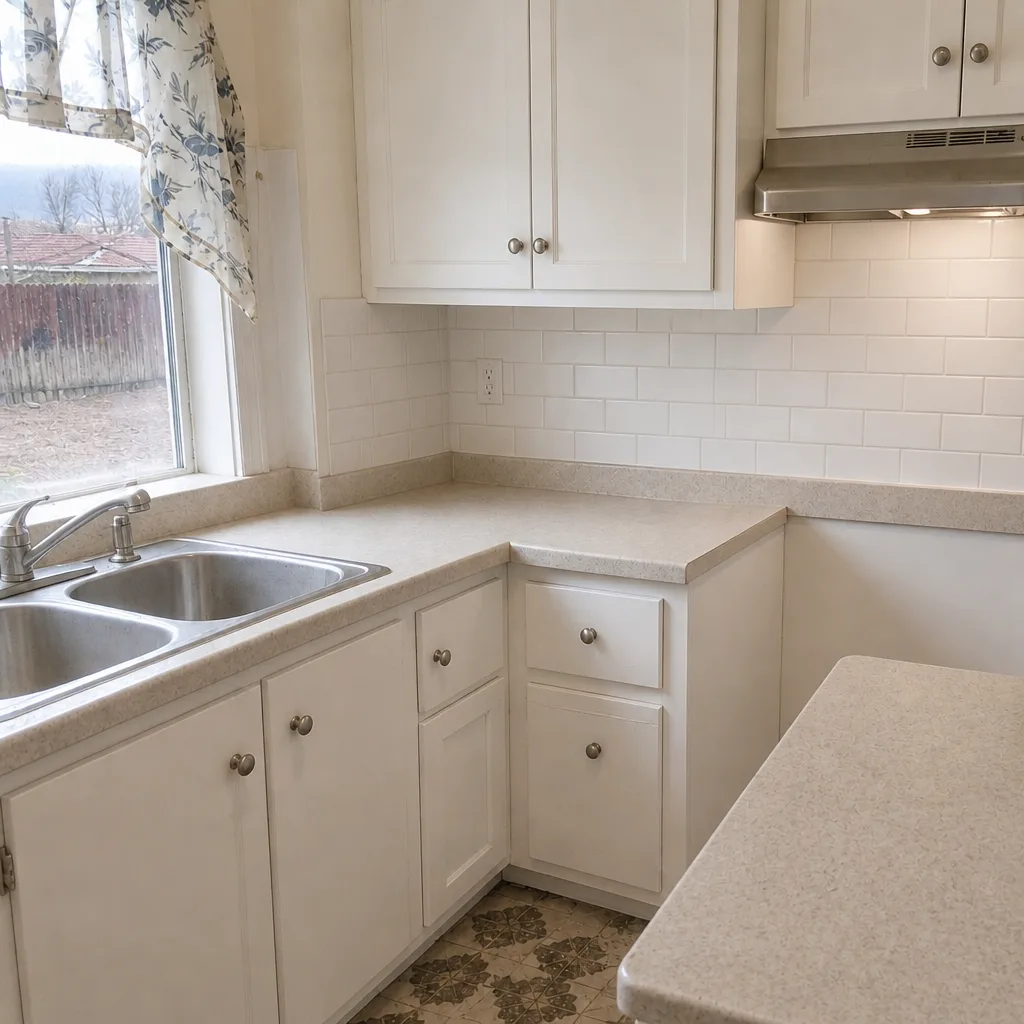
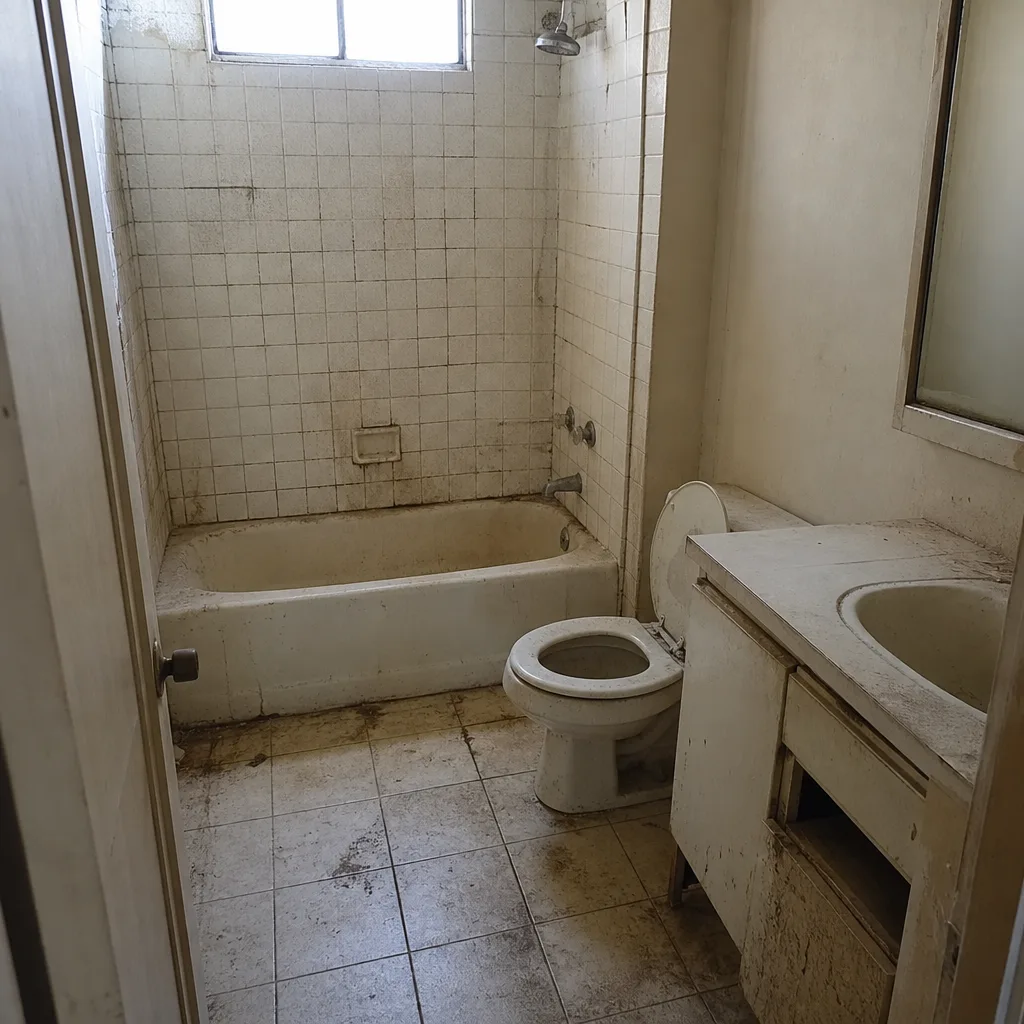
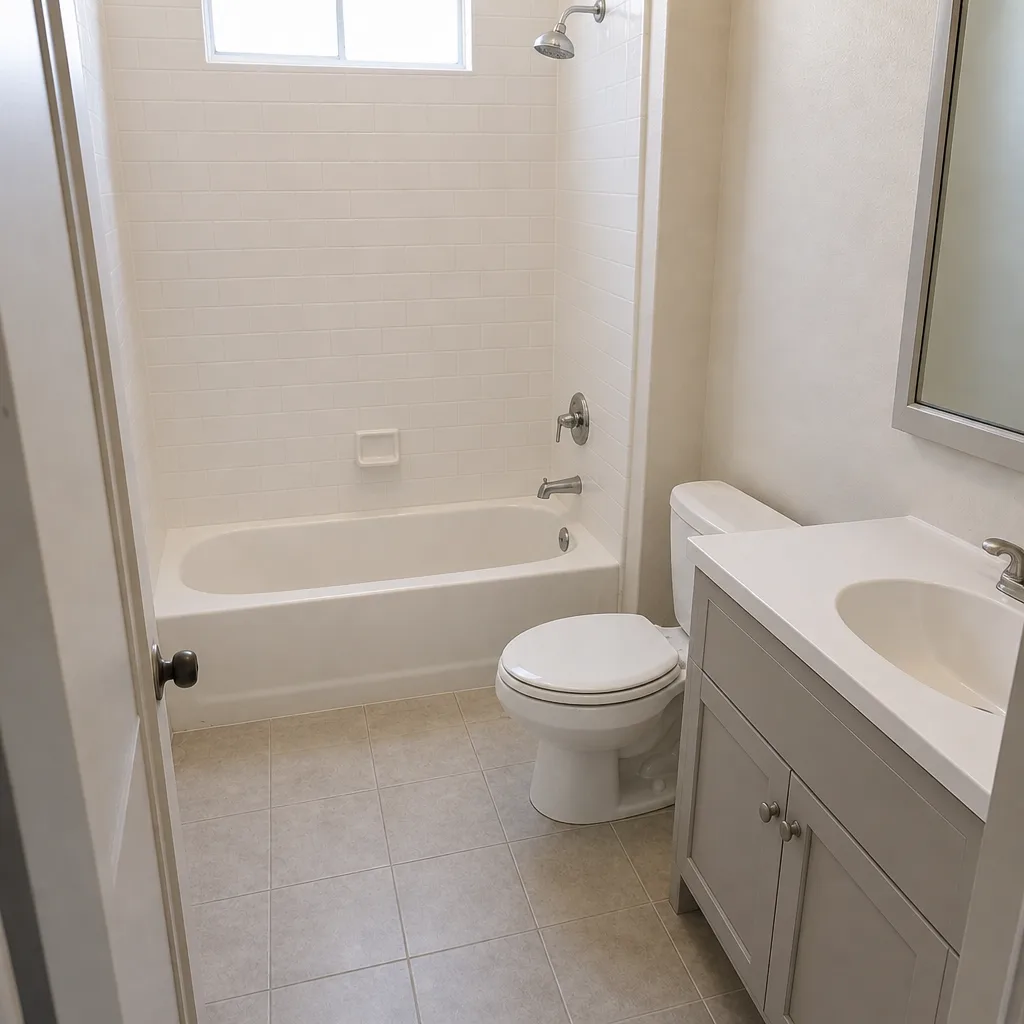
See the difference
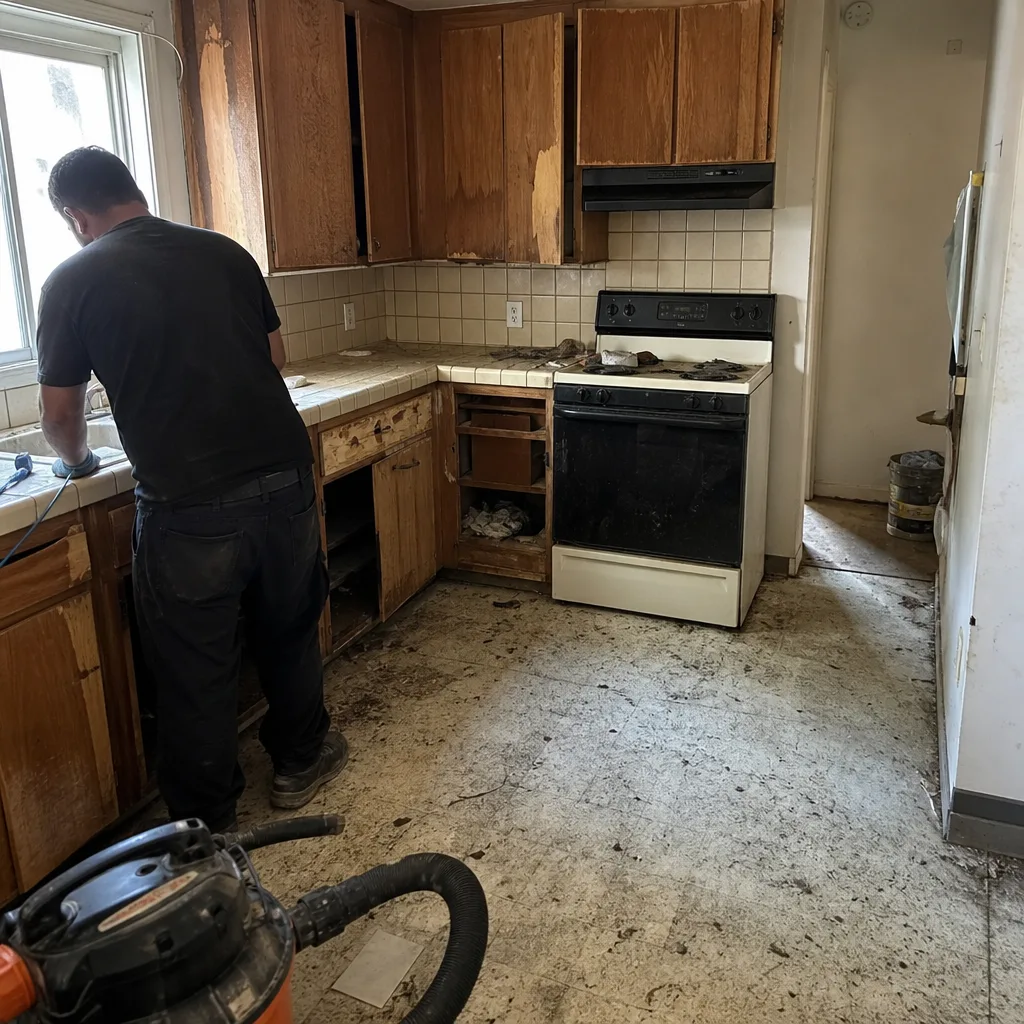 Before
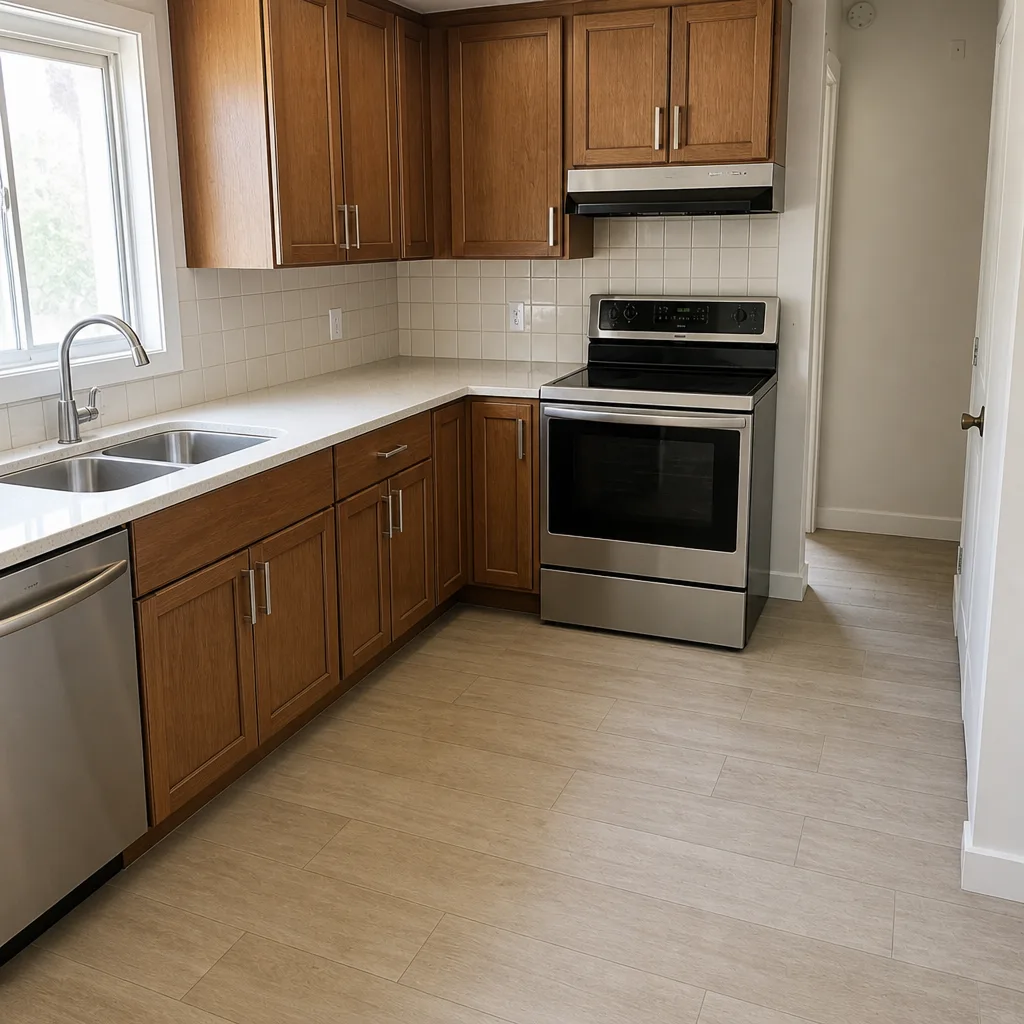 After
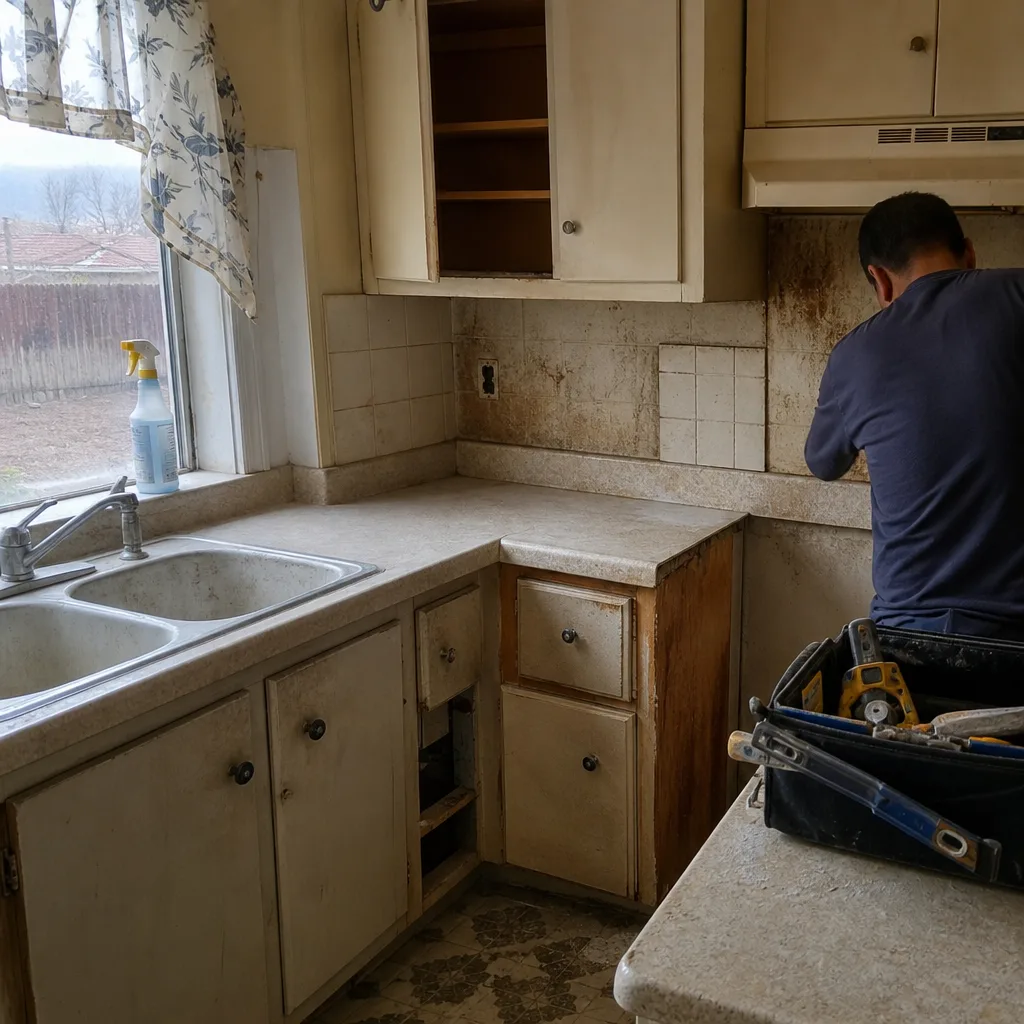 Before
 After
 Before
 After
Common Mistakes to Avoid
- Choosing on price alone from three quotes. Screenshot the three quoted numbers and compare them line by line. The lowest quote is often the one with the most assumptions baked in, and in Palmdale the tile allowance difference alone can be $6,000.
- Skipping the CSLB lookup. Three minutes on cslb.ca.gov reveals license status, classification, bond, and disciplinary history. Skipping it is one of the most expensive shortcuts a homeowner can take on a Palmdale bathroom.
- Accepting a verbal change order. A verbal agreement to “just a little extra” framing is how projects drift. No work proceeds on a change until the change order is signed, and you should expect that from any contractor you hire.
- Not requesting the photo record. Pictures of what was found behind the wall and what the flood test showed are your proof. Ask upfront whether photos are included or an upsell.
- Paying the final invoice without lien waivers. Releasing final payment without signed waivers from each sub creates exposure you can’t undo.
- Ignoring the shower pan detail. A pre-sloped pan, a cured membrane, and a 24-hour flood test are unglamorous and the single most important line in a tile shower.
- Choosing a contractor who won’t put the price in writing first. “Call for a quote” isn’t a process, it’s a warning. Any contractor who won’t commit a number to writing before signing is asking you to trust a vibe.
When to Call a Professional
Some bathroom issues call for a contractor even before you’re planning a remodel. Call a professional if you see a soft spot in the subfloor near the toilet, if the shower pan is holding water past the drain, if you’re seeing efflorescence climbing the grout lines, if the water heater or shower valve is over ten years old and starting to give you temperature swings, or if you’re buying a Palmdale home built before 1995 and the bathroom hasn’t been updated. Electrical and plumbing work behind the wall should only ever go to a licensed professional, and in a wet location, that’s not optional. Rowan Construction Group Palmdale offers free estimates in Palmdale; call (844) 320-8244 to schedule a walkthrough and a written scope before anything gets touched.
Frequently Asked Questions
A written quote with no brand-named waterproofing membrane and no allowance line items. When the scope says “tile shower” and nothing more, every material decision becomes a change order priced after the fact. Ask for the membrane brand, the tile allowance, and the fixture allowance in dollars before you sign. Call (844) 320-8244 for a free second opinion on any written estimate, and we’ll review it line by line at no charge.
No. Under Business and Professions Code §7159, a home improvement contractor cannot request or accept a down payment exceeding 10% of the contract price or $1,000, whichever is less. A larger deposit request is a violation, not a negotiating position. Call (844) 320-8244 with the quote and we’ll walk through the numbers with you.
Go to cslb.ca.gov and search by name or license number. Confirm the license is active, check the classification (B for general building, C-36 for plumbing, C-20 for HVAC), review the bond and workers’ comp status, and look at the disciplinary history tab. The whole process takes about three minutes. Call (844) 320-8244 if you’d like us to walk you through the classifications for a specific bathroom scope.
It depends on the shower configuration and how much plumbing relocation the drain demands. A cosmetic refresh with new fixtures in the same layout is a different project from a curbless shower that moves the drain and adds an uncoupling membrane over slab. The right first step is a written scope and a flat price with line items. Call (844) 320-8244 for a free estimate in Palmdale – the number is written before any work starts.
A flood test fills the shower pan with water to the curb height and holds it for at least 24 hours to prove the waterproofing has no leaks before tile goes down. Skipping it means discovering the leak after the tile is grouted, which means demo. Ask for the photo record of the flood test in your project file. Call (844) 320-8244 for a free estimate that includes a documented photo record on every visit.
Often, yes. Plumbing relocations, new shower valves, and electrical work generally require permits and inspections in Palmdale, and a contractor who wants to skip them is one to walk away from. A written scope should name the inspection milestones and say who schedules them. Call (844) 320-8244 for a free estimate and a clear list of what your specific project requires.
The Bottom Line
Most bathroom remodel red flags show up in the paperwork and the questions, weeks before anyone opens a wall. Audit the contract for a brand-named membrane, dollar allowances, a change order clause, inspection milestones, and lien waivers. Verify the license at cslb.ca.gov, refuse any deposit over 10% or $1,000, and confirm in writing that the GC’s warranty covers subcontractor work. Then watch the job site: the flood test, the cure times, the caulking on dry surfaces. If you want to see how Palmdale bathroom work gets documented, start at the Rowan Construction Group Palmdale home page, and if fencing or exterior work is coming up too, our fence installation services in Palmdale follow the same discipline. Call (844) 320-8244 for a free estimate, and bring a competitor’s quote for a free second opinion on the numbers.
Written by the team at Rowan Construction Group Palmdale.