Last updated November 18, 2026
Free written scope consultation - allowances, timeline, and change-order rules on paper before a single trade is scheduled
The Complete Fence Installation Guide for Palmdale Homeowners
Most fence guides tell you to dig a hole and set a post. In Palmdale, that advice fails on the first day. Caliche – a calcium carbonate hardpan layer that sits 12 to 24 inches below grade across much of the Antelope Valley – is hard enough that a standard clamshell post-hole digger simply cannot finish the job on most lots. You need a rotary hammer or a pneumatic rock bar to reach code depth. Add LA County height limits, HOA CC&Rs, and wind gusts that regularly top 100 mph, and fence installation in Palmdale becomes a three-front problem. This guide covers all three: the soil, the code, and the covenants. By the end, you’ll know what your fence should cost, how it should be built, and what paperwork needs to happen before anyone touches a shovel.
Quick Answer
A Palmdale fence installation typically runs $32 to $78 per linear foot installed, depending on material, and takes 2 to 5 days for a standard residential lot. The three factors that most often blow up a Palmdale fence budget are caliche soil requiring drilled or driven footings, LA County permit thresholds by yard position, and HOA material restrictions discovered after the fence was already ordered. Get all three answered before you buy a single panel.
Styles & brands we work with
- Kitchen remodeling
- Bathroom remodeling
- Home additions & ADU
- Roofing
- Windows & doors
- Driveway & pavers
- Fence
Table of Contents
- Why Caliche Soil Changes Everything About Post Setting
- LA County Fence Height Limits and Permit Triggers
- Wind Load Requirements for the AV-20 Zone
- The Palmdale HOA Fence Checklist
- Material Cost Comparison for a 150-Foot Fence
- The 8-Step Installation Process, Start to Finish
- Common Mistakes to Avoid
Why Caliche Soil Changes Everything About Post Setting
In our experience across Palmdale lots from Rancho Vista to Anaverde, roughly four out of five properties hit caliche within the first two feet of digging. Caliche forms when calcium carbonate leaches down through the soil profile and re-cements as a near-concrete layer. It’s not rock you can pry out with a bar and patience. It’s a continuous shelf, often 6 to 18 inches thick, and it’s why we’ve watched homeowners burn an entire weekend trying to hand-dig post holes that a machine would open in minutes.
There are two code-compliant methods for getting a post through the caliche layer:
- Drilled concrete footings. A rotary hammer drill opens through the caliche, the hole is widened to the code diameter (typically 8 to 12 inches), and the post is set in poured concrete with a gravel base for drainage. Cost runs $45 to $85 more per post compared to a standard soil dig because of the drill time and concrete volume.
- Driven steel posts with caliche anchors. A post driver sets a galvanized steel post directly through the caliche, then a plate anchor expands below the hardpan to lock it in place. This method runs $35 to $60 more per post than a standard dig, and it’s faster, but it doesn’t work with wood posts and it limits your material choices.
Either method works. What does not work is a shallow hole that floats above the caliche and gets backfilled with soil. That post will heave within two seasons and pull your fencing out of alignment. If a contractor hands you a quote without mentioning caliche, that’s a signal they haven’t dug a hole in Palmdale yet.
LA County Fence Height Limits and Permit Triggers
Los Angeles County code sets fence height limits by where the fence sits on the lot, not by lot size. The three positions behave differently, and the differences matter because most Palmdale lots are graded so the rear yard isn’t always obvious from the street.
- Front yard (between the house and the property line closest to the street): 42 inches maximum for a solid fence, unless you meet setback and sight-distance requirements, in which case up to 6 feet is allowed for open materials like wrought iron or chain link with slats. A solid 6-foot wood fence in a front yard is almost always a violation without a variance.
- Side yard (interior side lot lines): 6 feet maximum, with an additional 1 foot permitted for lattice or decorative top features that maintain 50% open area.
- Rear yard: 6 feet maximum for solid fencing, up to 8 feet for open materials.
Permits are triggered by three conditions: any fence over 6 feet tall, any fence within a designated sight-distance triangle at a corner or driveway, and any CMU block wall over 3 feet, which is treated as a structural element and requires engineering. Palmdale sits inside LA County jurisdiction for most residential parcels, though some newer developments fall under city of Palmdale review, so confirm which authority governs your address before ordering materials. A 6-foot rear fence on a standard lot typically doesn’t need a permit. A 6-foot front-yard wood fence almost certainly will be rejected.
Wind Load Requirements for the AV-20 Zone
The Antelope Valley sits in wind exposure zone AV-20, where design wind speeds run 110 to 130 mph in the higher-elevation pockets. That’s not a technicality – it’s why we’ve seen Palmdale wood fences built to the wrong spec go flat in a single March wind event. The wind specification drives three numbers, and all three change what your fence costs.
- Post spacing: 6 feet on center maximum for a 6-foot solid wood fence in AV-20. The default 8-foot spacing that passes in other parts of LA County does not hold here. Tighter spacing adds roughly 10 to 15% to your materials and labor.
- Post embedment depth: 24 inches minimum below grade for wood posts, 30 inches for vinyl, and 36 inches for wrought iron posts set in concrete. Caliche counts as bearing material, so embedment into the caliche layer is counted, not excluded.
- Material-specific structural requirements: CMU block walls need steel reinforcement and bond beams at a minimum 4-foot height in AV-20. Wood needs hurricane ties or equivalent at the top rail. Vinyl panels need wind-rated grades – the entry-level “builder grade” that Home Depot stocks is not rated for this zone. Wrought iron needs concrete footings, not dug-and-tamped soil.
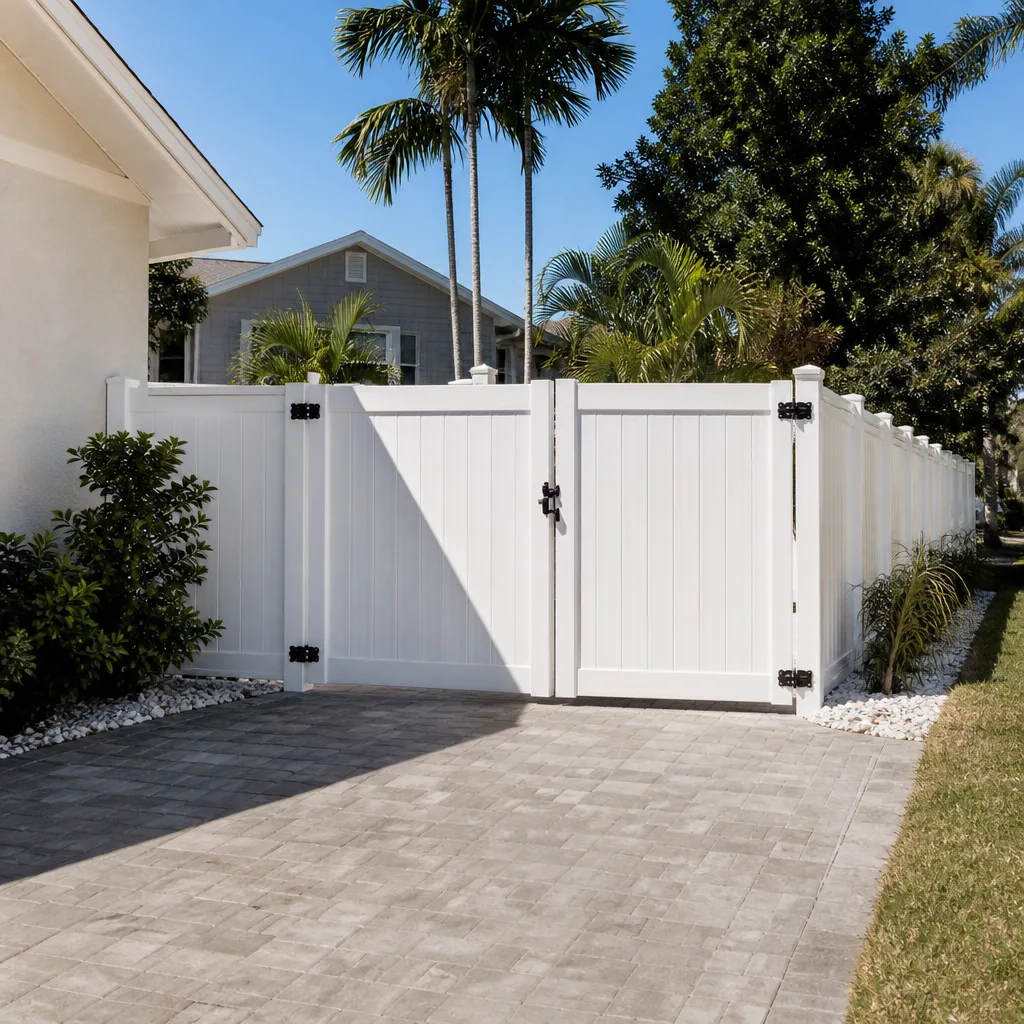
One of the practical consequences: a vinyl fence that costs $48 per linear foot in most California markets costs more here because you need the wind-rated grade to pass, and the entry grade simply doesn’t. We spec Ameristar wrought iron and ViewLux vinyl for Palmdale wind exposure – both are tested to the zone, and both carry the load documentation you’ll want if an HOA or a future buyer asks.
The Palmdale HOA Fence Checklist
If your home is in one of the master-planned Palmdale communities – Rancho Vista, Anaverde, or the Quartz Hill corridor – your HOA CC&Rs will restrict five things almost universally. Pull the CC&Rs before you buy a single panel. The relevant section is usually titled “Architectural Standards” or “Fencing,” and it’s typically in the 30 to 50-page range of the governing documents.
- Height. Most Palmdale-area CC&Rs cap fences at 6 feet in the rear and 4 feet in the front, which is tighter than county code. CCRs always win in a conflict.
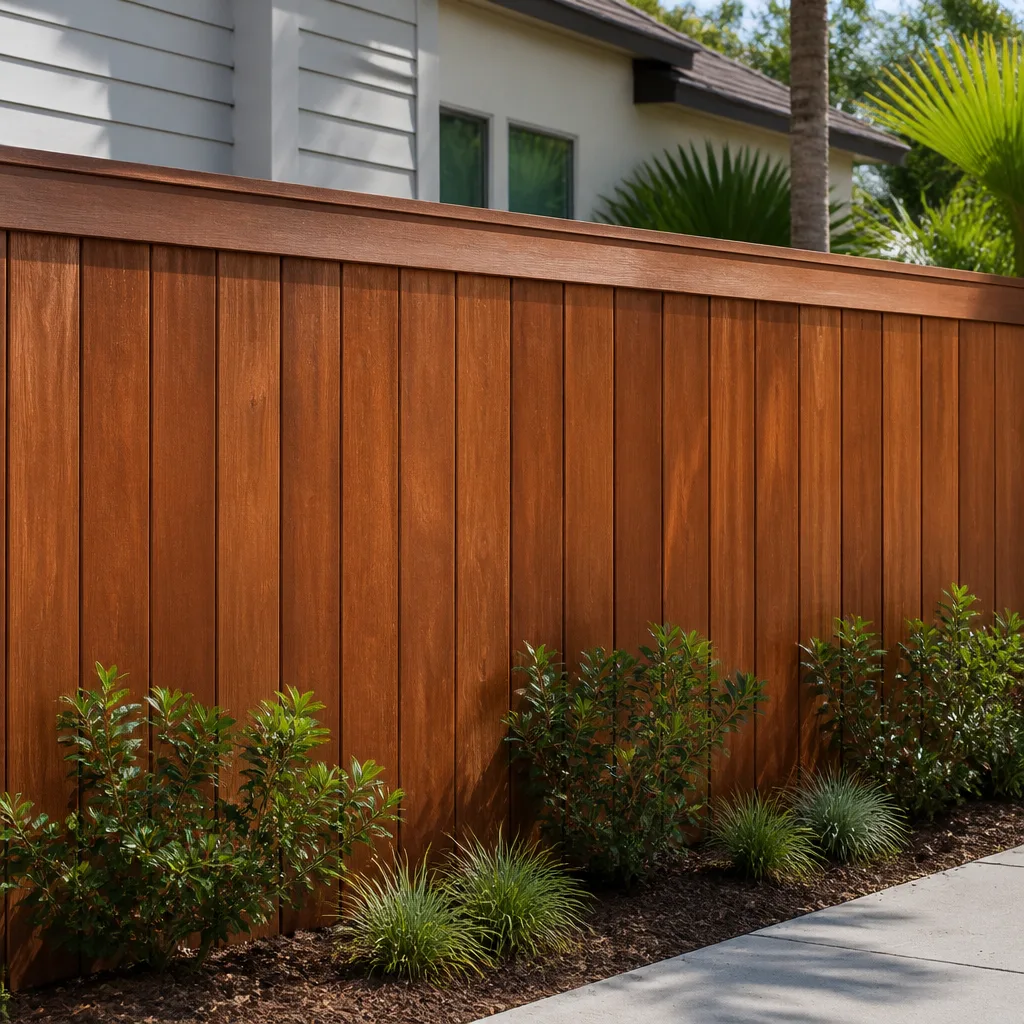
- Material. Many HOAs prohibit chain link entirely and restrict wood to cedar or redwood; pressure-treated pine is sometimes prohibited because of the visible green tint in the first year.
- Color. The most common restriction is a specific stain tone (typically a “natural cedar” or “redwood” tone) for wood, and a specific color family for vinyl and block. Paint-color matching matters, and buying vinyl in the wrong shade is a rejected install.
- Street-facing finish. Nearly every Palmdale CC&R requires the “good side” of the fence to face the street or any common area. This affects which side the framing goes on, which affects gate placement, which affects labor.
- Gate hardware. Gate design, hardware finish, and swing direction are commonly specified, and architectural review is typically required before a gate change.
Send the architectural request before you order materials. Approval usually takes 2 to 4 weeks in Palmdale-area HOAs, and starting a fence without it can mean tearing it down.
Material Cost Comparison for a 150-Foot Fence
Here’s what a 150-linear-foot fence costs in Palmdale dollars as of the current market. Installed prices include materials, labor, post setting through caliche, and cleanup. Variables that move the number are: yard slope, gate count and hardware grade, street-facing finish requirements, HOA color matching, and whether any permit is required.
| Material | Installed $/linear ft | 150-ft total | Notes |
|---|---|---|---|
| Cedar dog-ear privacy fence (6 ft) | $38 – $52 | $5,700 – $7,800 | Most common Palmdale spec. Handles UV degradation with annual sealing. |
| Pressure-treated pine (6 ft) | $28 – $42 | $4,200 – $6,300 | Cheapest wood option, but the green tint fades unevenly in Palmdale sun. |
| Vinyl, entry grade | $32 – $44 | $4,800 – $6,600 | Not rated for AV-20 wind. Skip this grade in Palmdale. |
| Vinyl, wind-rated mid grade | $46 – $62 | $6,900 – $9,300 | The baseline valid vinyl spec for this zone. |
| Vinyl, premium (reinforced) | $62 – $82 | $9,300 – $12,300 | Reinforced rails, heavier posts, the longest UV warranty. |
| Wrought iron (Ameristar or Master Halco) | $48 – $72 | $7,200 – $10,800 | Requires concrete footings, not soil set. Best wind performance. |
| CMU block wall (6 ft, reinforced) | $65 – $95 | $9,750 – $14,250 | Requires permit and engineering. Highest wind resistance, highest repair cost if cracked. |
| Barrette steel/aluminum ornamental | $55 – $75 | $8,250 – $11,250 | Rare in Palmdale but growing; strong wind rating, low maintenance. |
The biggest surprise for most Palmdale homeowners is that the difference between entry-grade vinyl and wind-rated vinyl is $14 to $18 per linear foot, which is the difference between a fence that lasts one wind season and one that lasts twenty. Under our Fence Installation in Palmdale service, we name the material grade and wind rating in the written quote so it’s clear what you’re paying for.
The 8-Step Installation Process, Start to Finish
Here’s what a proper Palmdale fence install looks like, in order. Any step skipped is a future repair call.
- Verify property lines. Pull your plat or call a licensed surveyor. Palmdale has several subdivisions where the visible fence is 6 to 18 inches off the actual lot line.
- Call 811 for underground utilities. Free, required, and it takes 2 to 3 business days. Water, gas, and irrigation lines run close to fence lines in most Palmdale lots.
- Check CC&Rs and confirm height/material requirements. Submit the architectural request if your HOA requires it. Wait for written approval.
- Probe for caliche. A post-hole digger or soil probe tells you in 10 minutes whether you’re drilling, driving, or standard-digging.
- Set corner and terminal posts first. Concrete-set with a gravel base for drainage. Let cure 24 to 48 hours before attaching rails.
- String-line the run and set intermediate posts. 6 feet on center in AV-20. Verify every post is plumb to a 4-foot level and square across.
- Hang rails, then panels, then gate. Panels go “good side out” per CC&Rs. Gate hardware is the step most often rushed and most often wrong.
- Final inspection and cleanup. Permit sign-off if required, hardware torque-check, and a walkthrough with the homeowner to note anything amiss. That last photo is the record of what was installed.
Common Mistakes to Avoid
- Skipping the caliche probe. A contractor who quotes without checking for hardpan will discover it mid-job and hand you a change order. Get the caliche condition named in the written price before work starts.
- Ordering the entry-grade vinyl. It’s cheaper and it will fail in the first AV-20 wind event. Palmdale vinyl requires the wind-rated grade.
- Setting posts 8 feet on center. Standard in most of LA County, wrong for AV-20. 6 feet is the number here.
- Ignoring CC&Rs until the fence is up. The most expensive mistake in Palmdale HOA communities. Pull the architectural standards before you order.
- Building past the property line. Palmdale lot lines in newer subdivisions don’t always follow the visible fence. A survey is cheaper than a boundary dispute.
- Putting a solid 6-foot fence in the front yard. Almost always a code violation. 42 inches is the front-yard default for solid fencing in unincorporated LA County.
- Choosing pressure-treated pine in the Palmdale sun without sealing. It’s fine as a budget choice, but it greys and checks within two summers without a sealer coat.
If a fence build is part of a larger yard project, it’s worth coordinating it with hardscape at the same time. Our Driveway & Pavers in Palmdale page covers how grading and drainage interact with fence footings. And if you’re planning a yard structure or detached unit that will share a fence line, see Home Additions & ADU in Palmdale for how those plans affect setbacks.
See the difference
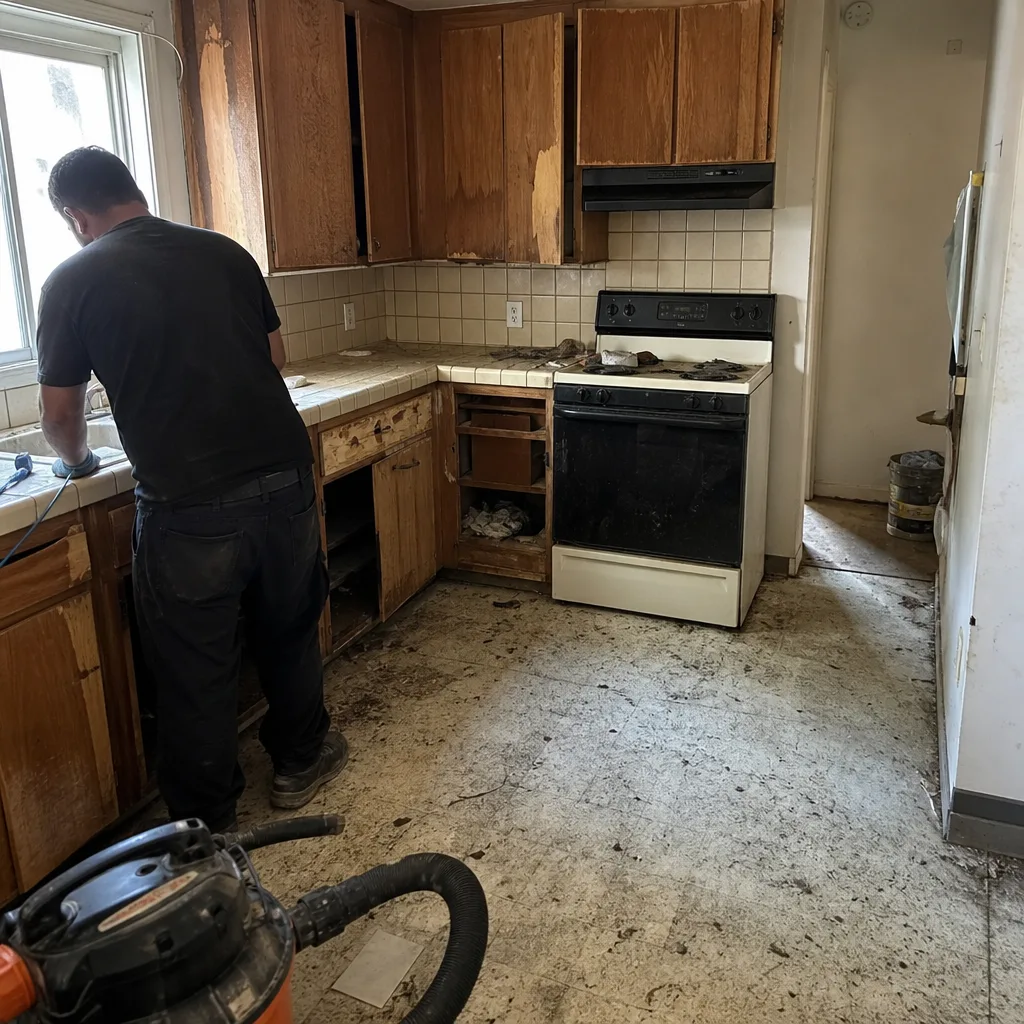 Before
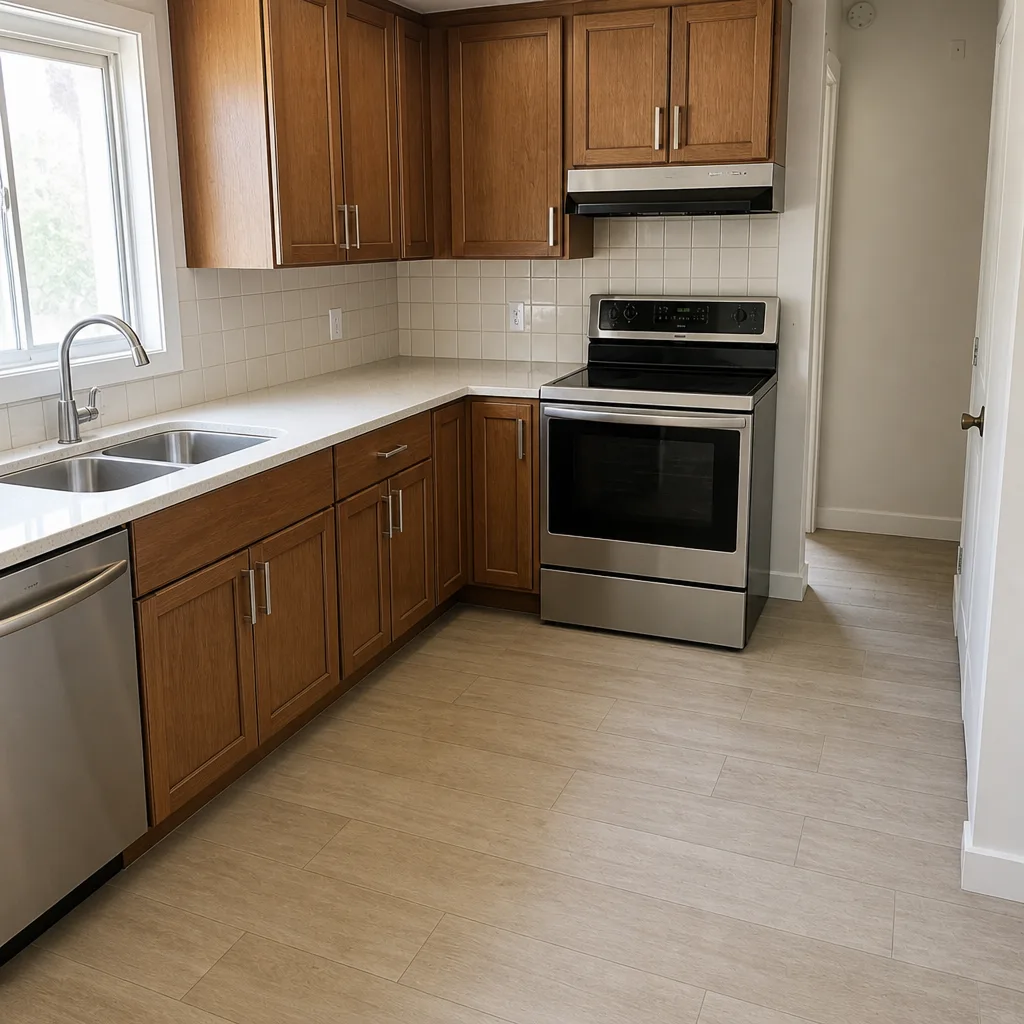 After
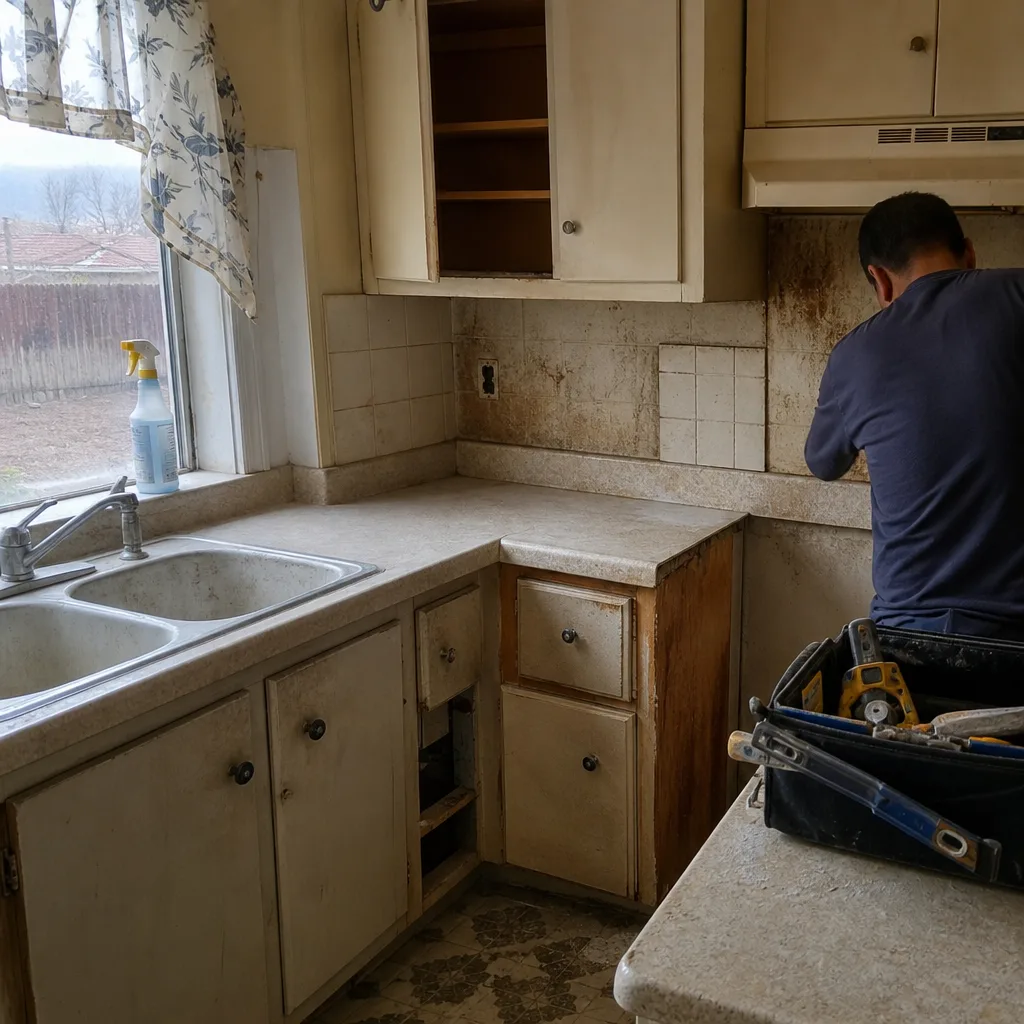 Before
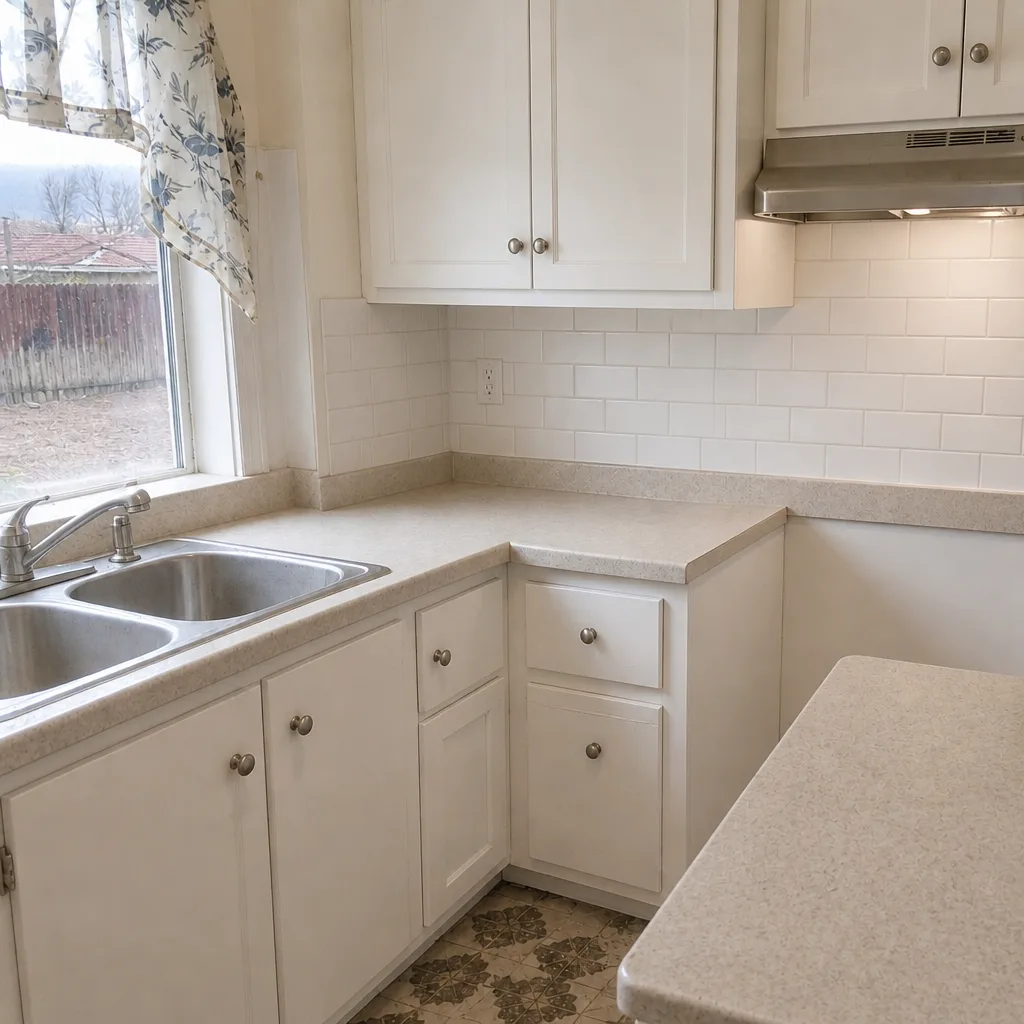 After
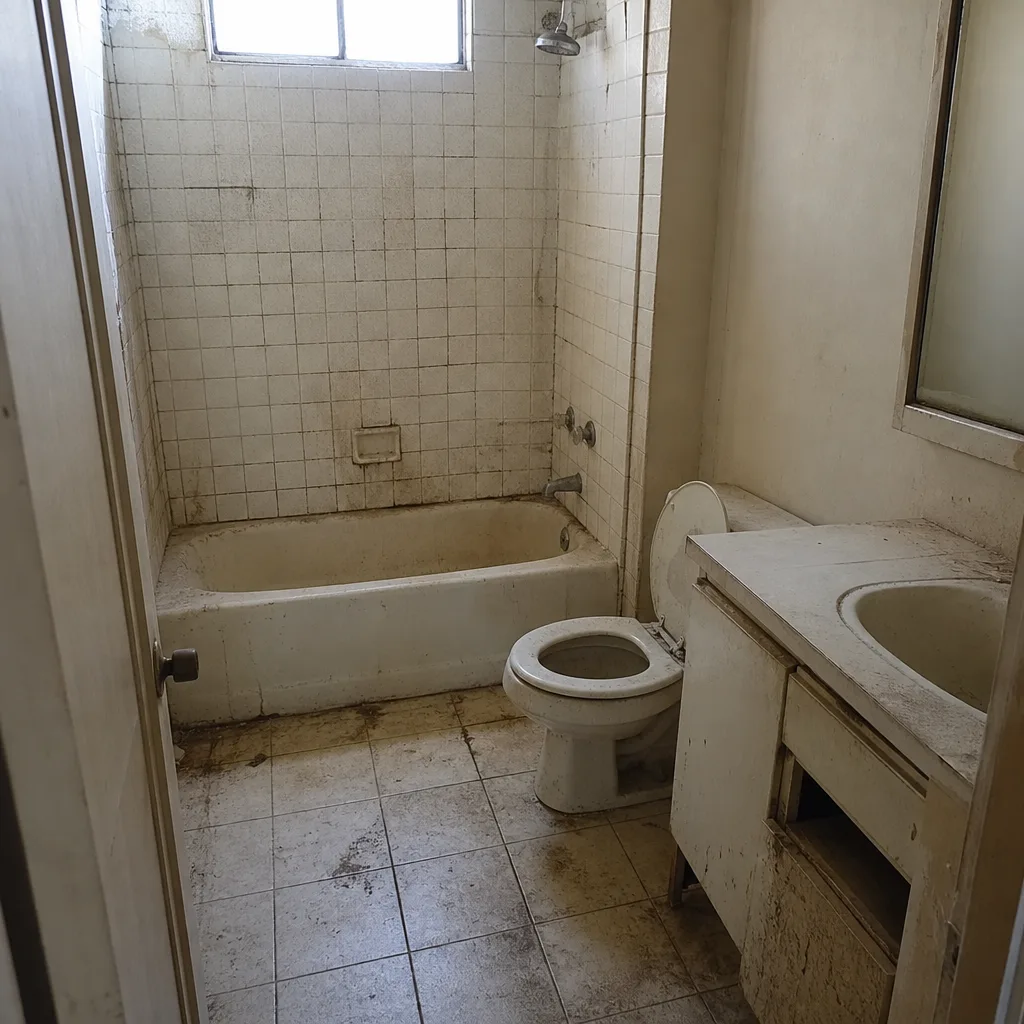 Before
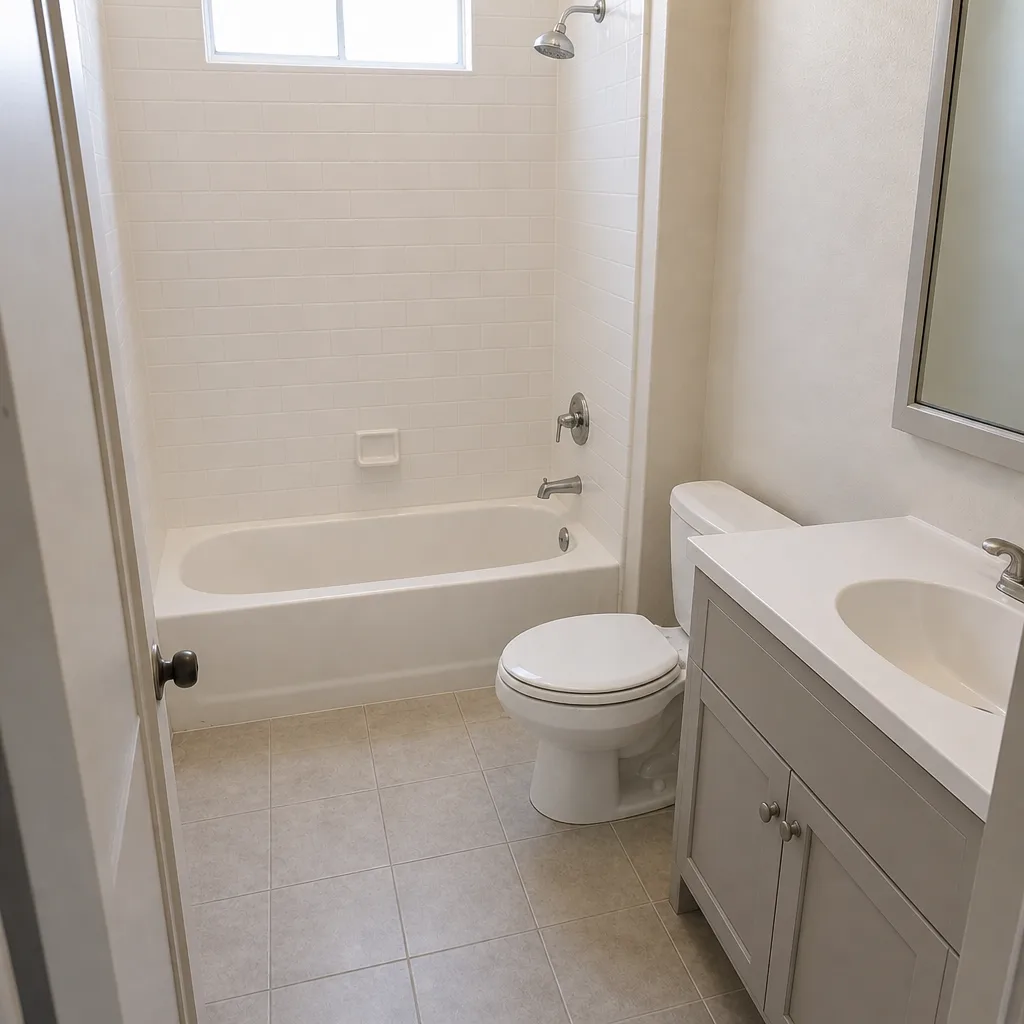 After
When to Call a Professional
Fence installation looks like a weekend project until the caliche probe hits at 14 inches, the HOA architectural packet needs a 4-week turnaround, or the first AV-20 wind event rips a rail loose because the post wasn’t set deep enough. The scenarios where we strongly recommend hiring out: any fence with a front-yard setback requirement, any CMU block wall over 3 feet (permit and engineering required), any fence on a property with CC&Rs, and any lot where the caliche is present in the first 24 inches. Rowan Construction Group Palmdale offers free estimates in Palmdale – call (844) 320-8244. We name the caliche condition, the wind rating, and the material grade in the written price before any work starts, and every project carries the 365-Day Done Right Promise. If a competitor has already quoted the job, we’ll review their estimate line by line at no charge as our Free Second Opinion – a lot of Palmdale fence quotes we see are missing the caliche surcharge or specifying vinyl that isn’t rated for this zone.
Frequently Asked Questions
Fence installation in Palmdale runs $32 to $78 per linear foot installed, or roughly $4,800 to $11,700 for a typical 150-foot residential fence. The spread reflects material choice, wind-rated spec requirements, and whether the lot has caliche requiring drilled or driven footings. Call (844) 320-8244 for an exact quote with the material grade and wind rating named in writing – estimates are free.
You need a permit for any fence over 6 feet tall, any fence in a sight-distance triangle, and any CMU block wall over 3 feet in unincorporated LA County. A standard 6-foot rear-yard wood fence typically doesn’t require one. Whether your address sits in county or city jurisdiction depends on the subdivision – confirm before ordering materials.
Caliche is a calcium carbonate hardpan that sits 12 to 24 inches below grade across most of the Antelope Valley. Roughly four out of five Palmdale lots have it in the first two feet. A 10-minute probe with a soil bar tells you; if you hit hardpan, expect $35 to $85 more per post for drilled or driven footings.
Wrought iron set in concrete footings and reinforced CMU block perform best in AV-20 wind exposure, with wind-rated mid-grade or premium vinyl a close third. Entry-grade vinyl and 8-foot post spacing are the two most common wind failures we see in Palmdale.
A 150-foot residential fence typically takes 2 to 5 working days once materials are on site and any HOA architectural approval is in hand. Add 2 to 4 weeks for HOA review if applicable, and 2 to 3 business days for the 811 utility mark-out. Call (844) 320-8244 for a written schedule with your quote.
Only with a driven steel post and caliche anchor, which sets through the hardpan and plate-anchors below it. Wood posts require a drilled footing to get to code depth. A shallow hole that floats above the caliche will heave within two seasons.
The Bottom Line
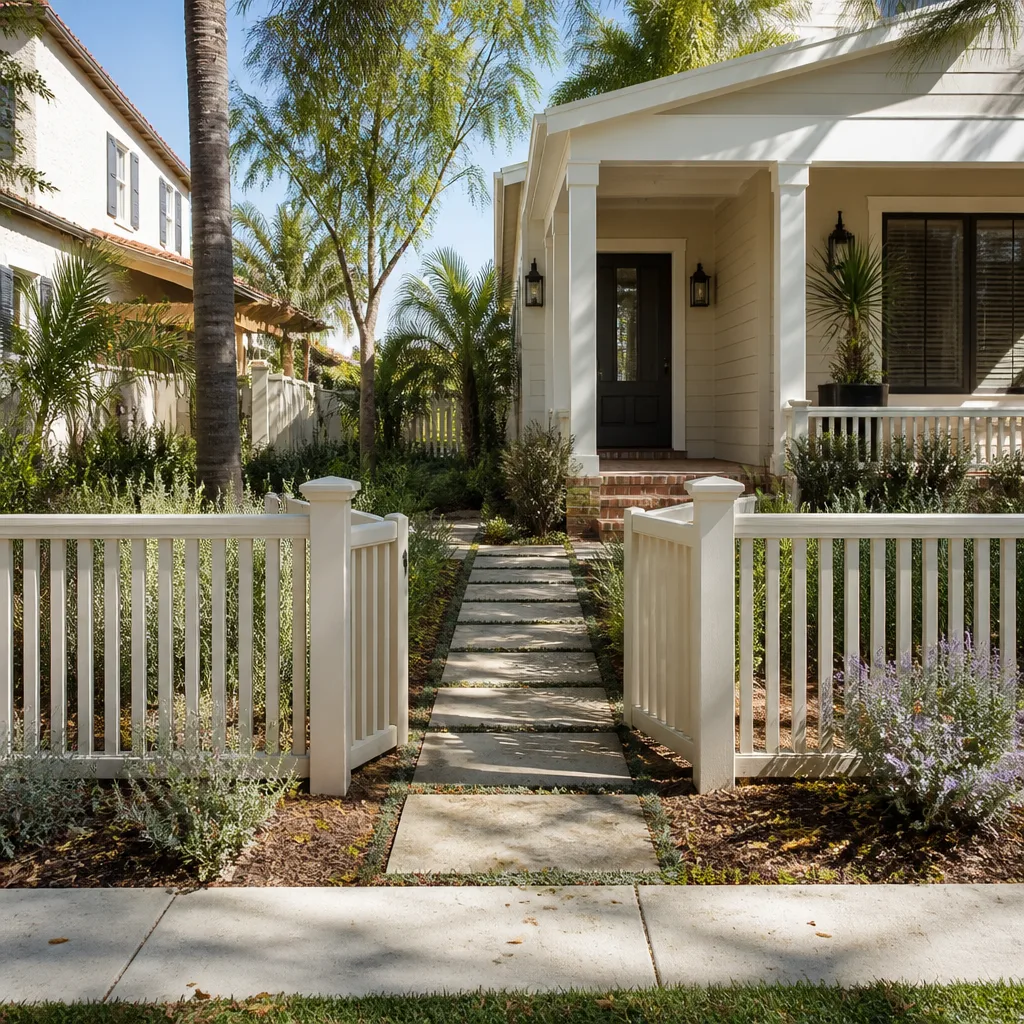
Fence installation in Palmdale is governed by three rule sets that don’t talk to each other: LA County code (height limits by yard position and permit triggers), HOA CC&Rs (height, material, color, street-facing finish, and hardware restrictions), and the Antelope Valley’s physical conditions (caliche at 12 to 24 inches, AV-20 wind zone with 6-foot post spacing and 24-to-36-inch embedment). Budget $32 to $78 per linear foot depending on material, add $35 to $85 per post if caliche is present, and pull your CC&Rs before you order panels. A contractor who names all three in the written quote is the one who has done this job in Palmdale before. See our Rowan Construction Group Palmdale home page for the full list of trades, and call (844) 320-8244 for a free estimate whenever you’re ready to put a number on paper.
Written by the team at Rowan Construction Group Palmdale.