Last updated November 18, 2026
Free written scope consultation - allowances, timeline, and change-order rules on paper before a single trade is scheduled
DIY vs Professional Bathroom Remodeling: What’s Safe to Do Yourself
A homeowner who tiles their own shower saves $1,200 to $2,500 in labor. If that same shower was built without a City of Palmdale building inspection, the savings can turn into a $5,000 to $15,000 disclosure obligation at resale, and an insurance adjuster who denies a water-damage claim months later. That gap between what you save up front and what you owe later is the whole conversation. This guide draws the line between the bathroom work you can legally and safely do yourself and the work that belongs behind a permitted, inspected, documented wall. We’ll cover Palmdale permit rules, why waterproofing fails invisibly, real Antelope Valley labor rates, and a go/no-go table you can use this weekend.
Quick Answer
Cosmetic bathroom work (paint, caulk, vanity hardware, mirrors, swapping a light fixture on an existing circuit) is safe and usually legal to do yourself without a City of Palmdale permit. Systems work (moving or adding plumbing supply lines, new electrical circuits including GFCI, shower pan and waterproofing membrane, any structural wall change) requires a permit and an inspection in Palmdale, and it is where DIY mistakes create water damage, failed inspections, and insurance disputes that surface long after the job looks finished.
Styles & brands we work with
- Kitchen remodeling
- Bathroom remodeling
- Home additions & ADU
- Roofing
- Windows & doors
- Driveway & pavers
- Fence
Table of Contents
- Where the City of Palmdale Draws the Permit Line
- The Waterproofing Membrane: The Task DIYers Get Wrong Most
- What Each Sub-Trade Actually Costs in the Antelope Valley
- What Unpermitted Work Does to Your California Homeowner’s Policy
- Go/No-Go Table: Bathroom Tasks Rated by Risk
- The Resale Disclosure Problem Nobody Warns You About
- Why Palmdale’s Climate Changes the Math
- Common Mistakes to Avoid
Where the City of Palmdale Draws the Permit Line
Palmdale follows the California Building Standards Code, which means the permit triggers are the same categories you’ll find across the state, administered through the City of Palmdale’s building division. The clearest way to think about it: anything that touches water supply, drain lines, electrical circuits, or load-bearing structure is a permitted scope. Everything that sits on top of those systems is not.
Here’s the practical breakdown for a Palmdale bathroom:
- Permit required: Adding or relocating a sink, toilet, or shower drain. Moving a supply line. Running a new electrical circuit. Adding a GFCI outlet. Replacing a shower pan or rebuilding a wet wall. Removing or modifying any wall that carries load. Adding a vent fan that requires a new circuit.
- No permit required (owner-performed, legally): Repainting. Recaulking tub and shower joints. Replacing a vanity faucet on an existing supply and drain. Swapping cabinet hardware. Hanging a mirror. Replacing a toilet with an identical rough-in on the existing flange and supply. Installing a new vanity cabinet that connects to existing shutoffs.
One rule that catches people: replacing a fixture is not the same as relocating one. Same location, same connection, no permit. New location, new hole in the slab or stud bay, permit. If you’re ever unsure, call the City of Palmdale building counter and ask. The call is free. The unpermitted work is not.
The Waterproofing Membrane: The Task DIYers Get Wrong Most
Waterproofing is the single bathroom task where the failure has no visible warning. A bad tile job looks bad immediately. A bad membrane install looks perfect for six to eighteen months, then the grout cracks, the drywall behind the shower turns soft, and the subfloor at the shower curb starts to give. By then you’ve demoed the tile you just paid to set.
The three membranes you’ll see quoted on Palmdale bathroom jobs are Schluter Kerdi (a sheet-applied polyethylene membrane bonded with thinset), RedGard (a liquid-applied elastomeric coating rolled or sprayed on), and Wedi (a cement-faced foam board with sealed joints). Each has a manufacturer specification you have to follow exactly: Kerdi needs a specific thinset and a 2-inch minimum overlap on every seam. RedGard needs a wet-film thickness measured with a gauge, typically two coats minimum, and a fabric-reinforced corner. Wedi needs the joint sealant and the correct fastener pattern.
What goes wrong for DIYers:
- RedGard applied too thin. One coat rolled on with a nap roller looks opaque but measures well under the required wet-film thickness. Water passes through in a year.
- Kerdi seams not overlapped in the wet zone. A 1-inch overlap instead of 2 inches, or a seam pressed with too little thinset, is a pinhole leak that only shows when the shower runs 10 minutes or more.
- No pre-slope under a traditional pan. The liner sits flat on the subfloor, water pools, and the mortar bed above it stays damp year-round, feeding mold into the framing.
- Bench and niche corners ignored. The corners of a shower bench are the highest-stress point in the entire enclosure and the first place a membrane failure shows.
This is why we don’t recommend DIY waterproofing even for a confident homeowner. It’s not a skill question. It’s a visibility question. You can’t see the failure until the damage is already twelve months deep, and by then the repair costs more than the original job.
What Each Sub-Trade Actually Costs in the Antelope Valley
An honest DIY savings calculation needs an honest labor number. Here are the ranges we see on Antelope Valley bathroom jobs, before materials:
- Tile setter (shower walls and floor): $8 to $15 per square foot installed, depending on tile size, layout complexity, and whether a deco band or herringbone pattern is involved.
- Licensed plumber: $95 to $145 per hour in the Antelope Valley, with a two-hour minimum common for small rough-in work.
- Licensed electrician: $85 to $130 per hour for GFCI circuits, vent fan wiring, and panel work.
- Drywall and patch: $65 to $95 per hour, or $400 to $900 flat for a typical bathroom patch and texture match.
- Waterproofing labor: frequently bundled into the tile setter’s square-foot rate, but if quoted separately runs $3 to $6 per square foot of shower surface.
Run the numbers before you commit. A 40-square-foot shower wall at $12 per square foot is $480 in tile labor. If a DIY install fails in two years and the shower has to be rebuilt, you’re paying the tile setter $480 again plus demo, plus drywall repair, plus the original tile you already bought. On a shower, the DIY savings almost never survive an honest risk-weighted calculation. On paint, trim, and a vanity swap, the math is straightforwardly in your favor.
What Unpermitted Work Does to Your California Homeowner’s Policy
California homeowner’s policies are written to cover sudden and accidental water damage. They don’t cover ongoing seepage or construction defects, and here’s the part most people don’t know: they don’t have to cover anything when the loss traces back to unpermitted work that the insurer can document as non-compliant construction. That’s not a clause every carrier enforces the same way, but it’s a clause that exists and gets used.
When an adjuster opens a water-damage claim on a bathroom, they look at three things:
- Permit history. They pull the permit record for the address. If the bathroom was remodeled without one, the adjuster notes it.
- The point of failure. Adjusters scope the loss to the source. A supply line that burst in the wall is one thing. A shower pan that was installed without a pre-slope and leaked for a year is another.
- Documentation of the work. Who did it, when, and to what standard. Unpermitted work has no paper trail. That’s the gap.
What a Palmdale policyholder should take away: the permit and inspection record is your insurance. It’s the paper that says the work met code, that a municipal inspector saw it, and that the shower pan was built to a standard. When a claim happens, that record is the first thing your adjuster wants and the first thing you’ll wish you had.
Go/No-Go Table: Bathroom Tasks Rated by Risk
Here’s the decision table. Use it as a starting point, not a substitute for a permit check with the City of Palmdale.
- Paint and trim: DIY. No permit. Risk: low. Worst case is a repaint.
- Caulk and grout refresh: DIY. No permit. Risk: low if you use a mold-resistant silicone in wet zones and cut out old caulk cleanly.
- Vanity hardware, mirror, towel bars: DIY. No permit. Risk: low. Use proper anchors in drywall and stud-find before drilling.
- Faucet swap on existing connections: DIY. No permit. Risk: low to medium. Use plumber’s tape, don’t overtighten, and know where your shutoff is.
- Toilet swap, same rough-in: DIY. No permit. Risk: medium. Flange and wax ring are the two failure points; get both right.
- GFCI outlet addition: No-go. Permit required. Risk: high. Wrong wiring on a GFCI in a wet zone is a shock hazard.
- New electrical circuit or vent fan wiring: No-go. Permit required. Risk: high.
- Plumbing supply or drain relocation: No-go. Permit required. Risk: high. Code requires specific fitting types, slope, and venting.
- Shower pan and waterproofing membrane: No-go. Permit required. Risk: very high. Failure is invisible for months and expensive when found.
- Structural wall change (moving a wall, widening a doorway): No-go. Permit required. Risk: very high. Load path changes affect the whole house.
The Resale Disclosure Problem Nobody Warns You About
California requires sellers to disclose known material defects on the Transfer Disclosure Statement. Unpermitted work is a material fact. A buyer’s inspector will note the difference between a permitted remodel (visible in the City of Palmdale permit record) and a bathroom that looks new but has no permit trail. That gap goes on the disclosure. It also tends to come off the asking price.
We’ve seen the pattern in Palmdale: a seller prices a home based on a recent bathroom remodel, the buyer’s agent pulls the permit history, the remodel isn’t there, and the conversation turns into a credit. Buyers pay for documentation. A permitted, inspected bathroom is a documented asset that shows up on the closing statement as a feature. An unpermitted one is a negotiating point against you, and $5,000 to $15,000 is the range where it typically lands after the back-and-forth.
The other disclosure path is insurance. If a water loss has occurred and the claim was denied because the work was unpermitted, that history follows the policy and eventually the property. Buyers and their agents ask about claims. A denial on the record is harder to explain than a higher price.
Why Palmdale’s Climate Changes the Math
Palmdale’s climate, hot dry summers, cold desert nights in winter, and a monsoon season running roughly July through September, puts a specific kind of stress on bathroom assemblies. The temperature swings move framing and tile, which is why grout cracking in Palmdale bathrooms is more common than in coastal homes. The humidity cycle inside a shower is the other half of the story: an English-style vent fan that runs for 10 minutes after a hot shower is not enough in a Palmdale summer, and moisture sits in the wall cavity overnight.
Two Palmdale-specific details worth building into any remodel:
- Exterior wall insulation and vapor control. Palmdale homes built in the 1980s and 1990s often have minimal insulation in the bathroom wet wall. A remodel is the moment to correct it, which means opening the wall, which means permit.
- Vent fan sizing. A bathroom vent fan should move at least 1 CFM per square foot of bathroom area. A 90-square-foot Palmdale bathroom needs a 90 CFM fan minimum, and larger if the duct run is long or has elbows. Most builder-grade fans in older Palmdale homes are undersized.
None of this makes DIY impossible. It makes the margin for error smaller, which is exactly the argument for a permit and an inspection on the parts of the job that live inside the wall.
Common Mistakes to Avoid
- Assuming a permit-free remodel protects you at resale. It doesn’t. The City of Palmdale permit record is public, and buyer’s agents pull it on nearly every Palmdale transaction. Skipping the permit doesn’t hide the work, it just removes your protection.
- Treating waterproofing as a tile accessory. A membrane is a system with a written specification, not a paint coat. Kerdi, RedGard, and Wedi all require manufacturer-specific installation that most first-time DIYers don’t read past the first page of.
- Patching drywall without fixing the source. New drywall over a slow leak is a two-year delay on a bigger repair. Fix the membrane or the supply line first, then close the wall.
- Using big-box “waterproof” shower kits without a pre-slope. A pre-formed pan needs a sloped subfloor beneath it or it pools. Palmdale’s hot summers evaporate the surface water and hide the problem for months.
- Moving a drain “just a few inches” without a permit. That’s a plumbing relocation under the code, and it’s a permit trigger whether it’s two inches or two feet.
- Assuming the homeowner’s policy covers construction defects. It doesn’t. Most California policies exclude ongoing seepage and any damage tied to non-compliant construction.
- Skipping the photo record. Take photos at every stage: open framing, rough-in, membrane before tile, tile before grout. If you ever sell, those photos are the closest thing you have to a permit record, and they’re worth taking even on a DIY job.
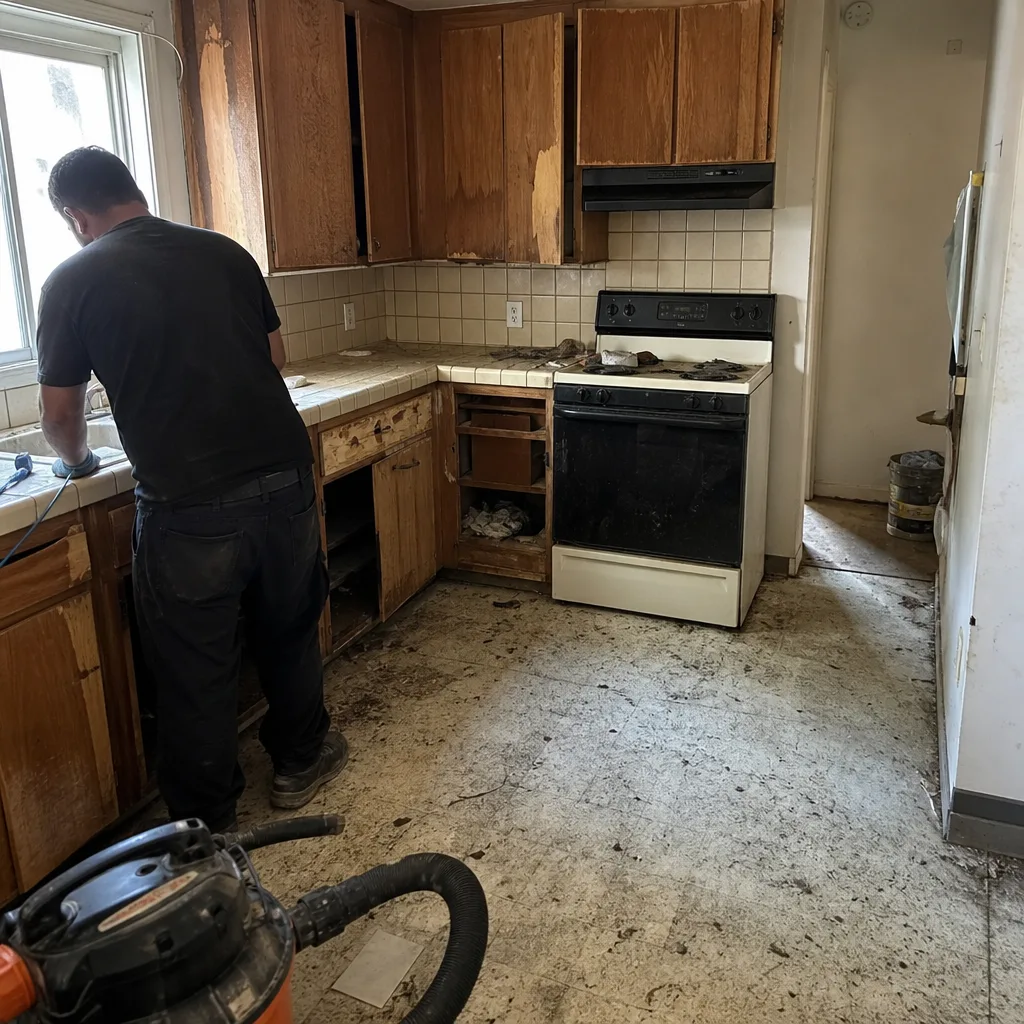
See the difference
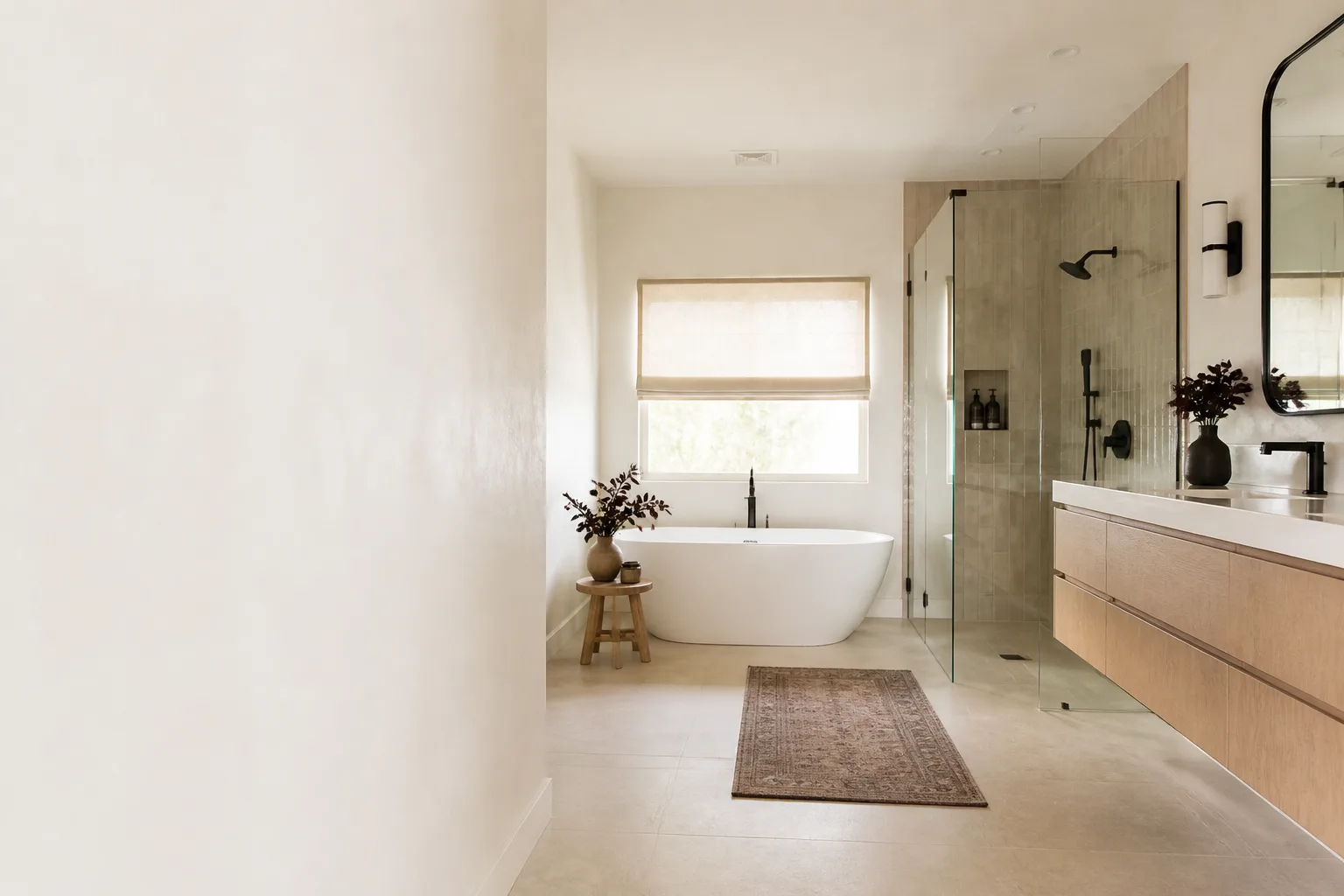
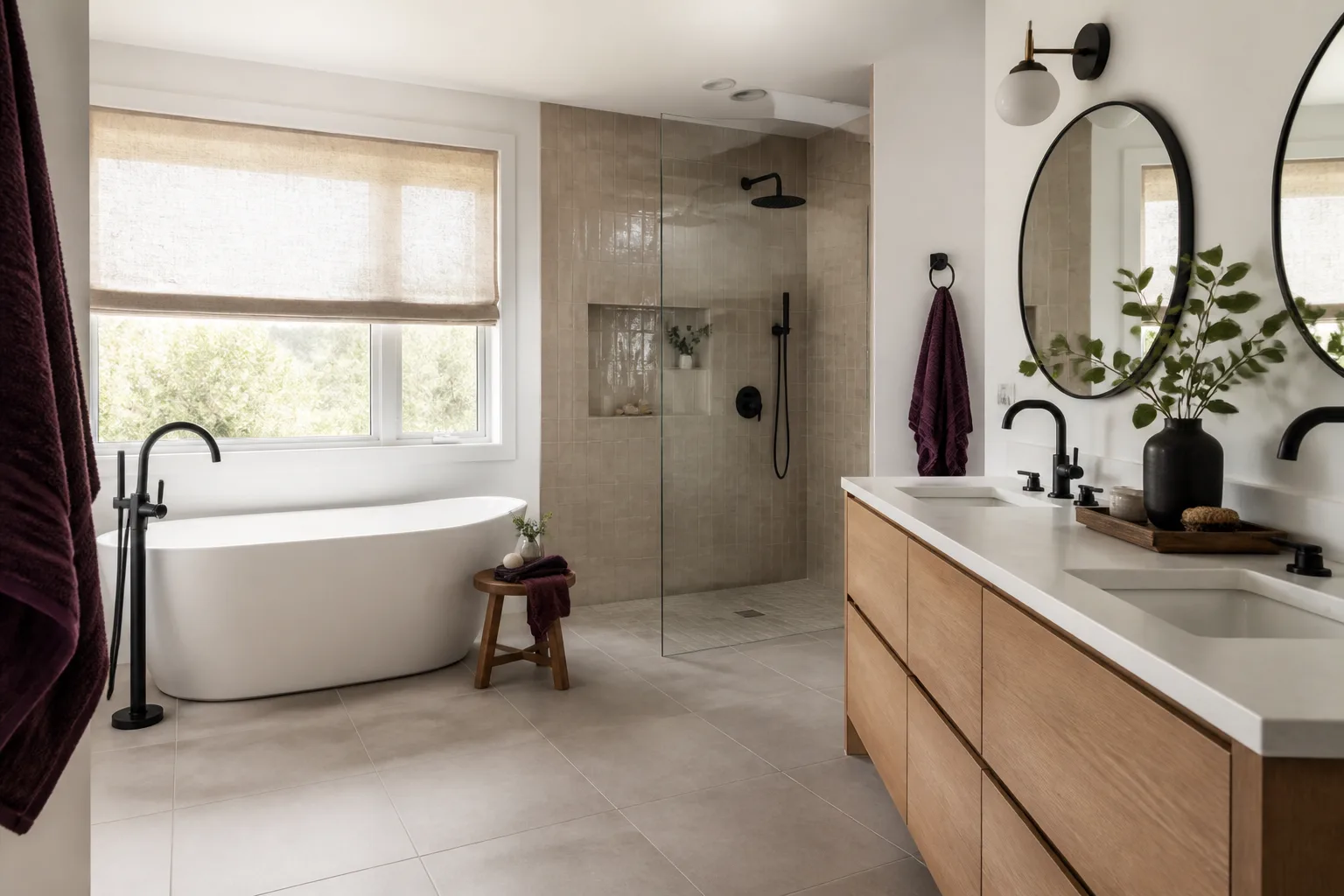
 Before
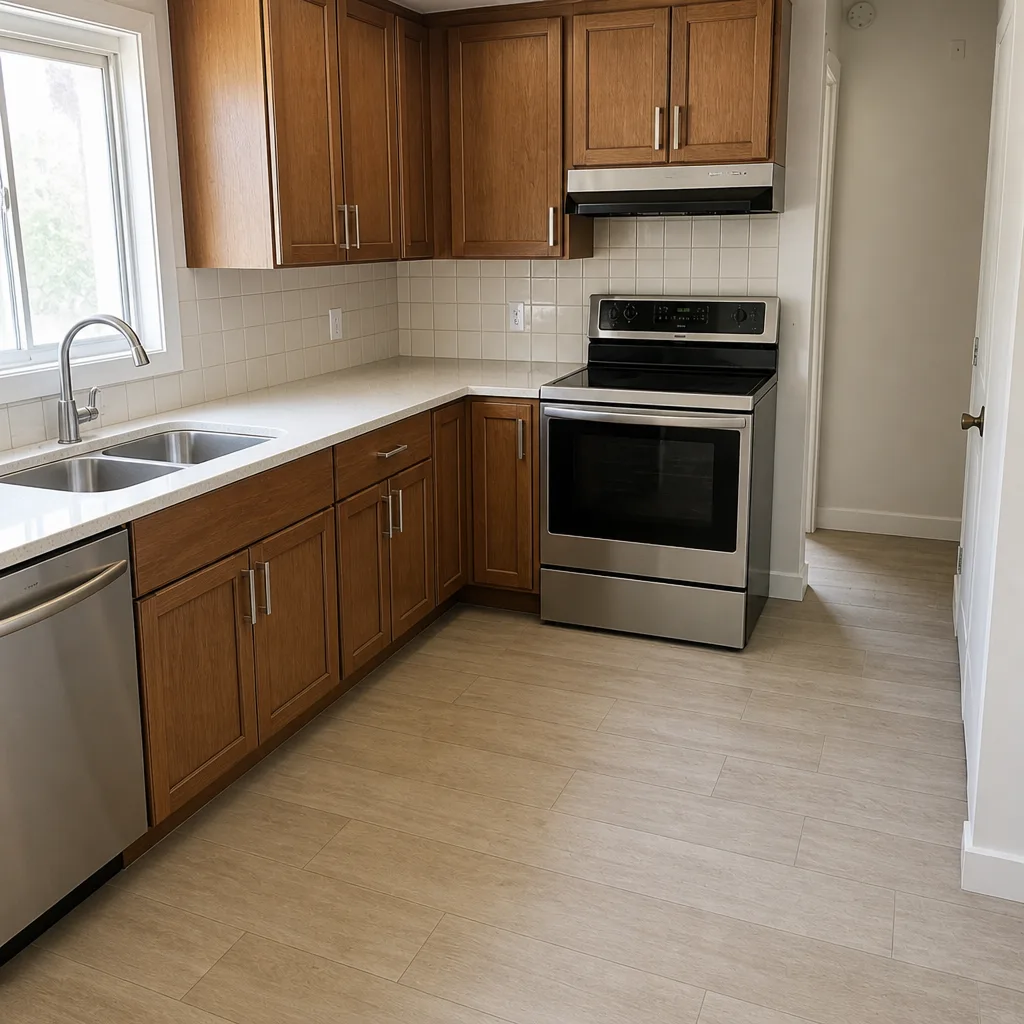 After
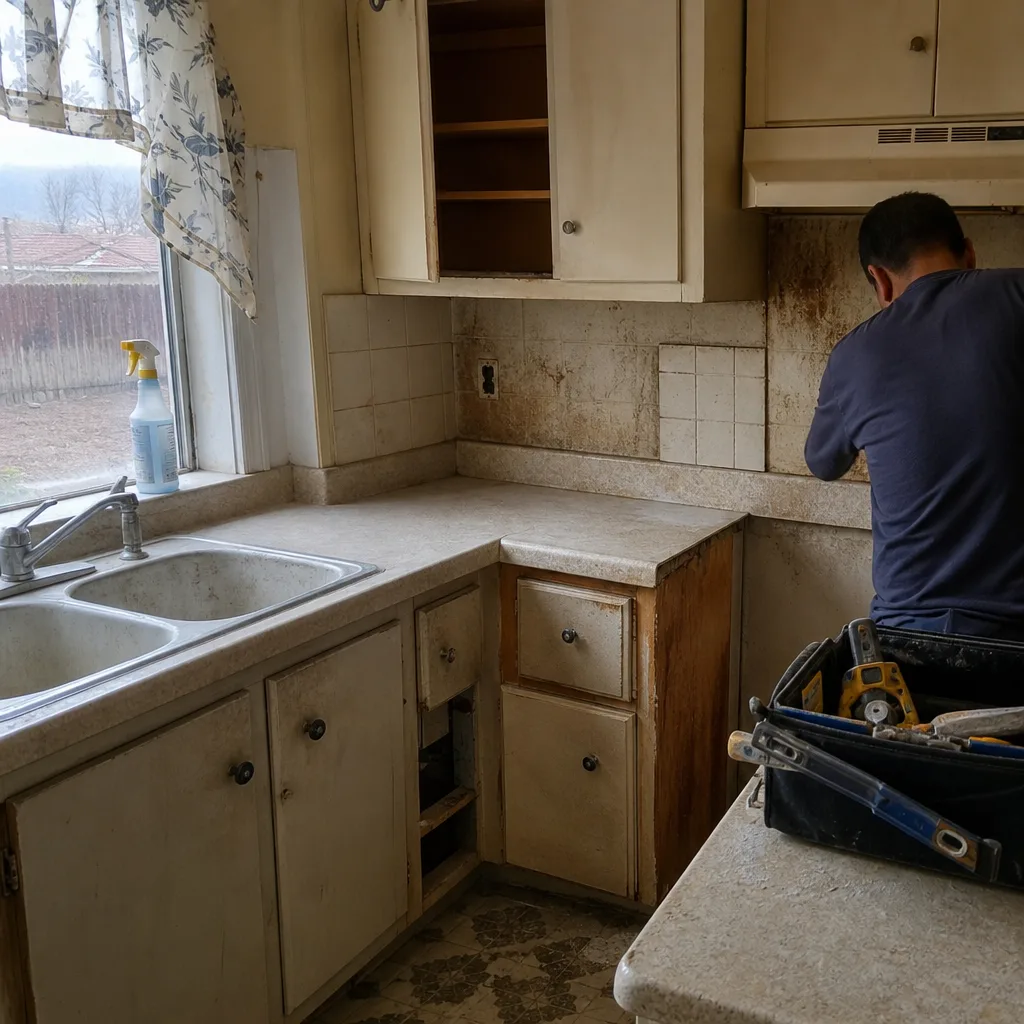 Before
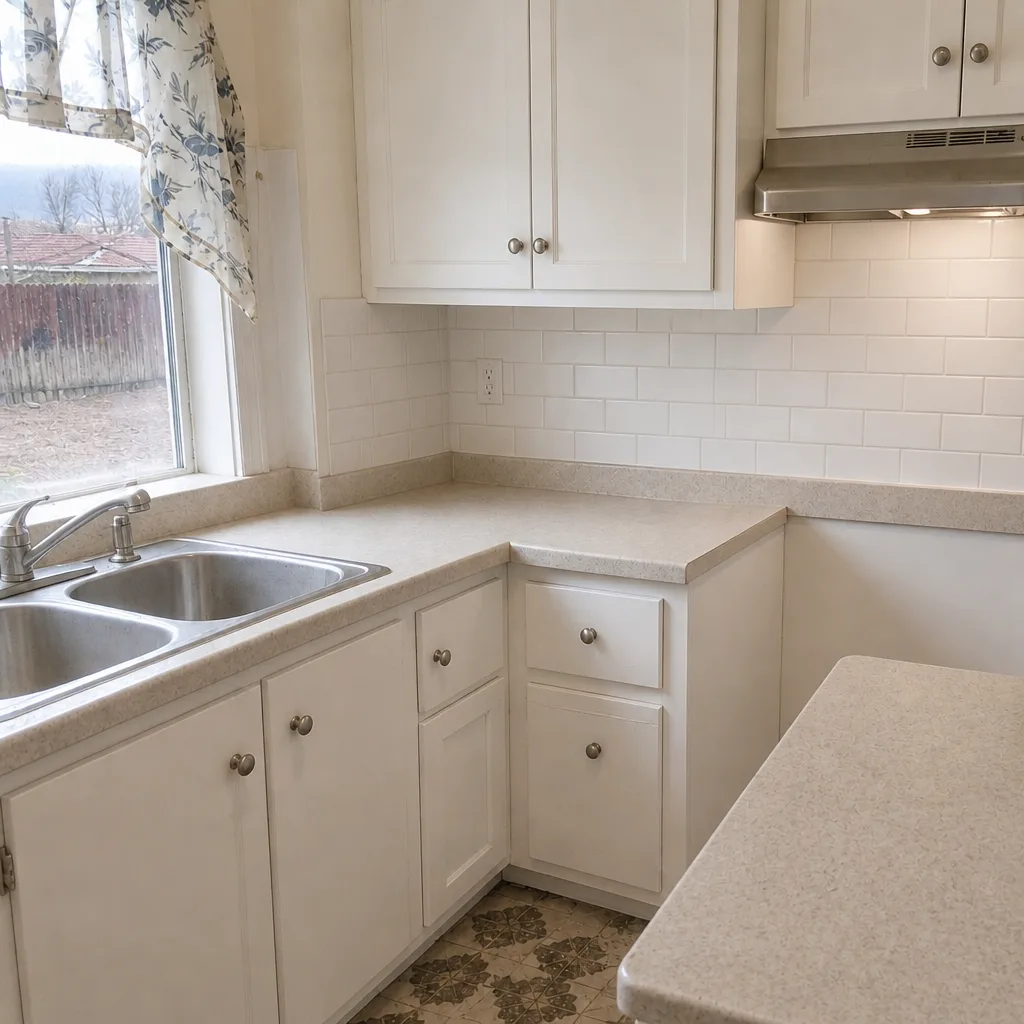 After
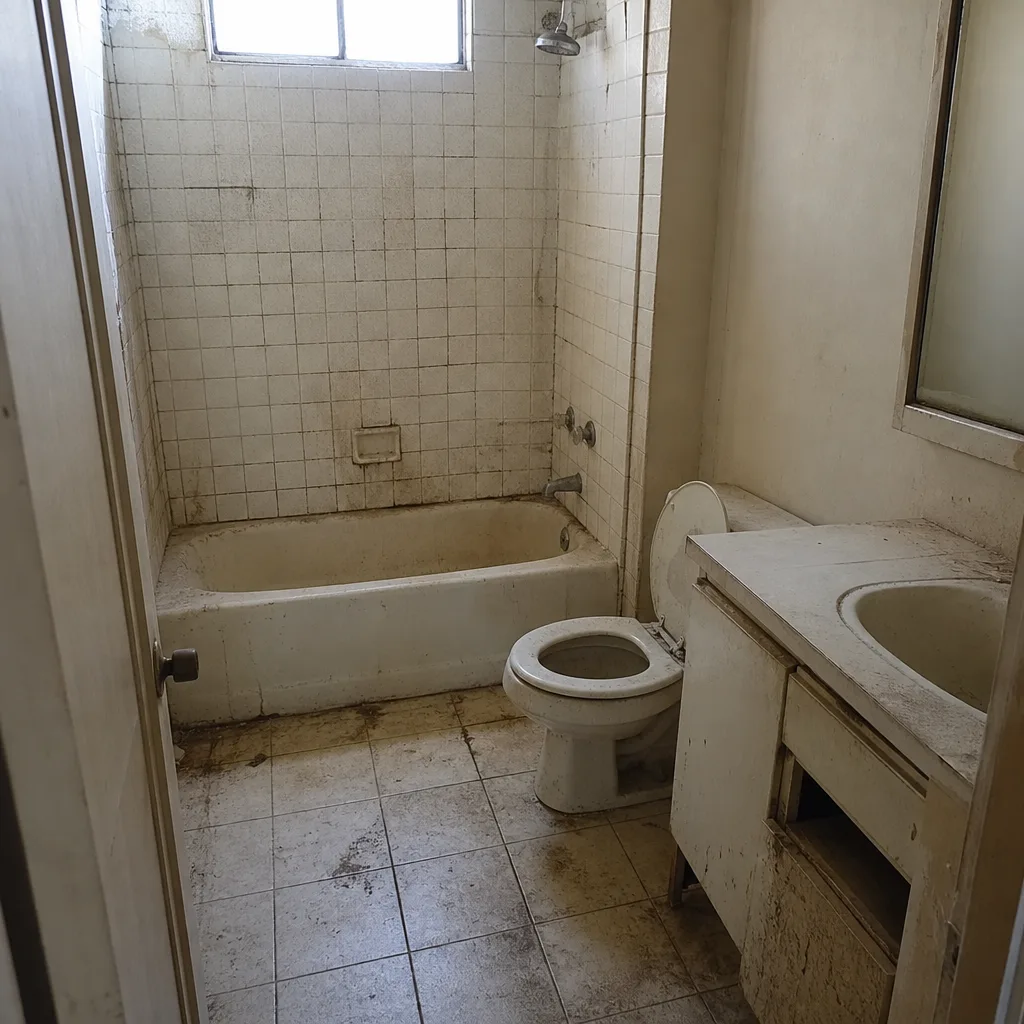 Before
 After
When to Call a Professional
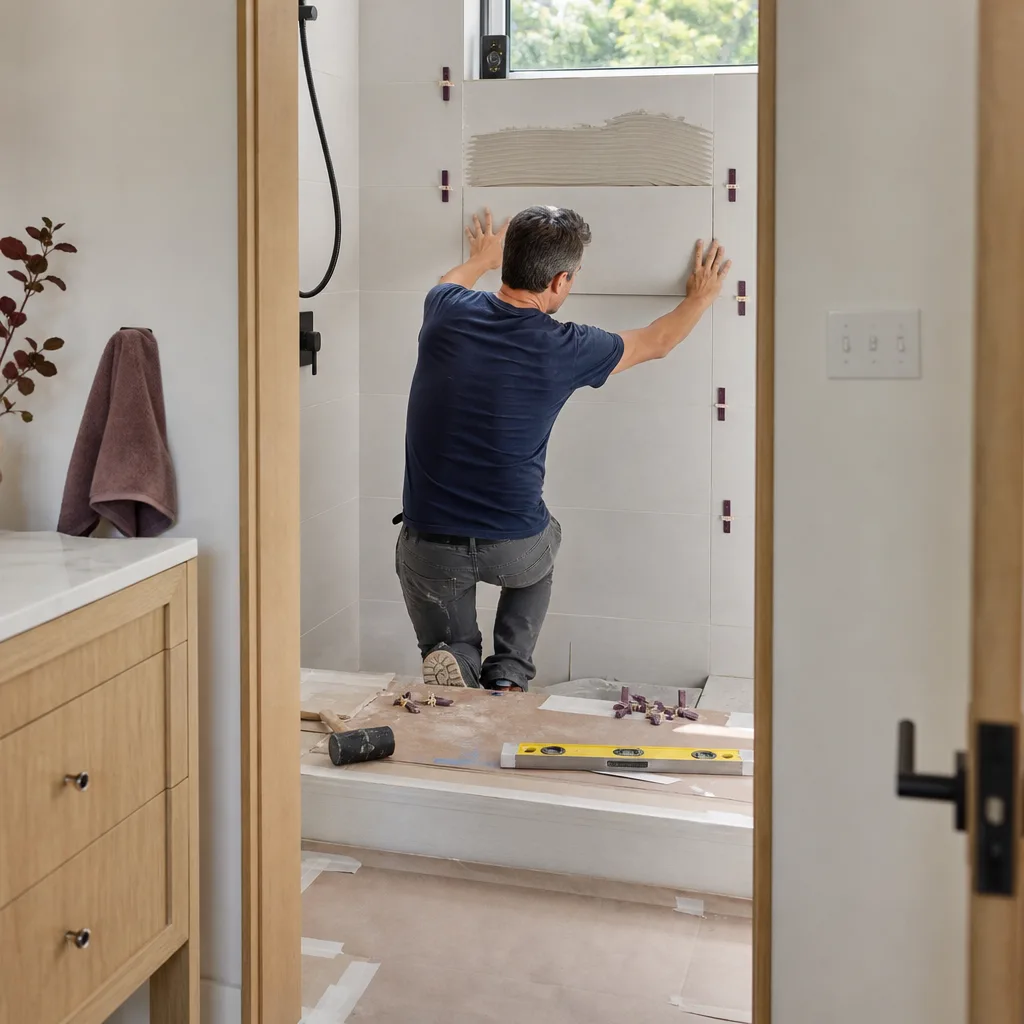
Call a licensed contractor the moment the scope includes a supply line, a drain, an electrical circuit, a shower pan, or a wall. That’s not a skill judgment, it’s the line where the City of Palmdale inspection, your homeowner’s policy, and your resale disclosure all depend on who did the work and what paper trail exists. For the cosmetic layer, paint, caulk, hardware, mirror, you can save real money doing it yourself, and we’d tell you the same thing in person.
If you’re mid-plan on a Palmdale bathroom and want a second set of eyes on the scope, a written price, and a documented record of what your current bathroom actually looks like behind the tile, Rowan Construction Group Palmdale offers free estimates. Call (844) 320-8244 to schedule. We also bring a free second opinion on any written estimate you’ve received, reviewed line by line at no charge. And if your bathroom remodel is one part of a larger project, from Rowan Construction Group Palmdale home through Home Additions & ADU in Palmdale, we scope and price those together so the permit sequence doesn’t collide. For exterior work that often follows a bathroom refresh, our pages on Driveway & Pavers in Palmdale and Fence Installation in Palmdale show how we price those trades, with the same written-price discipline applied to every one.
Frequently Asked Questions
It depends on which parts of the bathroom you touch. Paint, caulk, vanity hardware, mirrors, and a like-for-like fixture replacement on existing connections don’t require a permit. Plumbing rough-in, new electrical circuits including GFCI, shower pan and waterproofing, and any structural wall change do require a permit and an inspection in Palmdale. Call the City of Palmdale building division for your specific scope before you start. If you’re unsure, we’ll walk your scope with you on a free estimate call at (844) 320-8244.
Labor alone typically runs $8 to $15 per square foot for tile, $95 to $145 per hour for a licensed plumber, and $85 to $130 per hour for an electrician in the Antelope Valley, before materials. A full gut remodel costs considerably more once you add fixtures (Kohler and Toto are common in Palmdale homes), cabinetry, waterproofing, and permit fees. We quote every bathroom as a flat written price with a written scope, so the number you agree to is the number you pay. Call (844) 320-8244 for a free written estimate.
You can, and it’s the task most likely to fail invisibly if you do. RedGard requires a specified wet-film thickness and a fabric-reinforced corner; Kerdi requires a 2-inch minimum seam overlap and a specific thinset; Wedi requires proprietary joint sealant and a set fastener pattern. Each of these looks correct on the surface and fails in six to eighteen months when water gets behind the tile. The repair cost of a failed membrane typically exceeds the labor you saved by doing it yourself. Given the permit requirement on shower pans, this is not a scope we recommend DIYing.
It can. California homeowner’s policies exclude ongoing seepage, construction defects, and damage tied to non-compliant construction. If a water loss traces back to a shower pan or supply line installed without a permit, the adjuster will note the missing permit record and the claim can be denied or reduced. The permit and inspection record is your documentation that the work met code. It’s the first thing an adjuster asks for and the last thing you want to be missing. Call (844) 320-8244 if you’d like a free second opinion on a quote you’re holding right now.
Yes. California sellers must disclose known material defects on the Transfer Disclosure Statement, and unpermitted work is a material fact. The City of Palmdale permit record is public, so a buyer’s agent will typically pull it during escrow. Unpermitted bathroom work commonly shows up as a $5,000 to $15,000 negotiating point against the seller, and it doesn’t go away once disclosed. The permit is cheaper than the disclosure.
Repainting is the safest. It requires no permit, has zero risk to the home’s systems, and can be undone for the cost of another gallon. Second safest is a vanity hardware and mirror refresh. If you want to save money on a bathroom and stay clear of permits, insurance, and resale issues, put your labor into the cosmetic layer and hire out everything inside the wall. Call (844) 320-8244 to confirm the scope before you start.
The Bottom Line
The DIY-versus-hire decision in a bathroom isn’t about how handy you are. It’s about which parts of the bathroom the City of Palmdale requires an inspection on, and which parts can cost you at resale if that inspection never happened. Do your own paint, caulk, hardware, and mirror. Hire out the plumbing, the electrical, the shower pan and membrane, and anything structural. Keep the permit record, the photos, and the written quote. That record is your homeowner’s policy’s best friend and your buyer’s best reason to pay your price. If you want the whole scope priced in writing and documented from open wall to final walk-through, Rowan Construction Group Palmdale handles seven trades under one written-price discipline. Call (844) 320-8244 for a free estimate or a free second opinion on any quote you’ve received.
Written by the team at Rowan Construction Group Palmdale.