Last updated November 18, 2026


Free written scope consultation - allowances, timeline, and change-order rules on paper before a single trade is scheduled
How to Hire a Construction Contractor in Palmdale: A Step-by-Step Guide
The California Contractors State License Board lists over 300,000 active licenses. A valid license number tells you a contractor passed a test and cleared a background check. It does not tell you they’ve ever finished a project within the agreed budget, pulled the right permit for an Antelope Valley addition, or answered a phone call when a subfloor turned out to be rotted. Those answers live in documents, not databases. This guide walks through the seven document requests, three contract clauses, and two on-site verifications that separate a contractor with a good portfolio from one with a defensible paper trail – sequenced the way a careful Palmdale homeowner should run it, from first call to final walkthrough.
Here’s what most hiring guides get wrong: they treat “check their license” as the finish line. In Palmdale, it’s the starting line. The high desert climate, the wind-driven dust, the temperature swings between a 100-degree July and a freezing January night – all of it stresses construction in ways a coastal contractor may never have handled. You want paper that proves your contractor has. Below is how to get it.
Quick Answer
To hire a construction contractor in Palmdale, verify the license number on the CSLB website at cslb.ca.gov, confirm the bond amount against your project size, request a certificate of insurance showing general liability and workers’ compensation, and insist on a written contract with a flat price, a written scope, and signed change orders before any scope addition. Then check the work history by phone, not by portfolio. The whole process takes about two weeks and saves months of regret.
Styles & brands we work with
- Kitchen remodeling
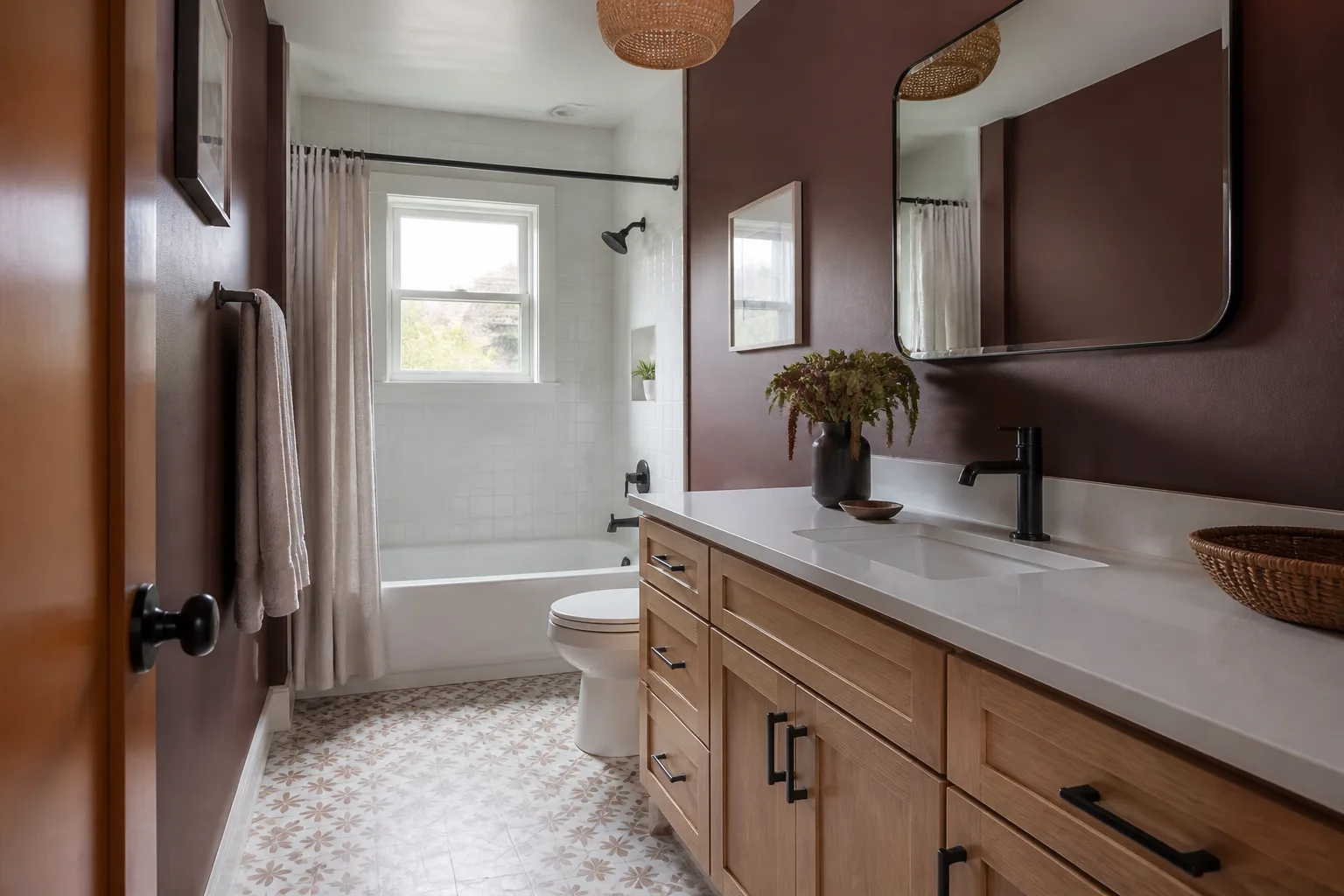
- Bathroom remodeling
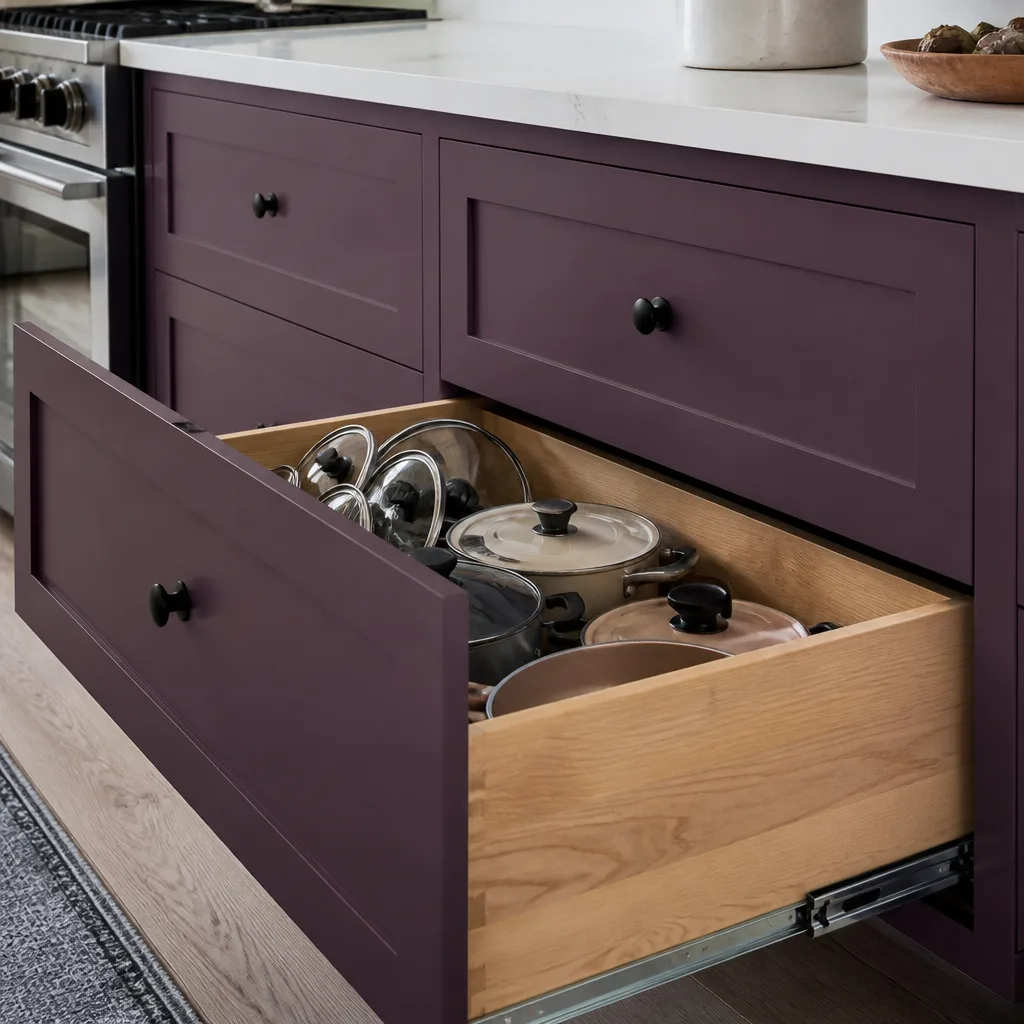
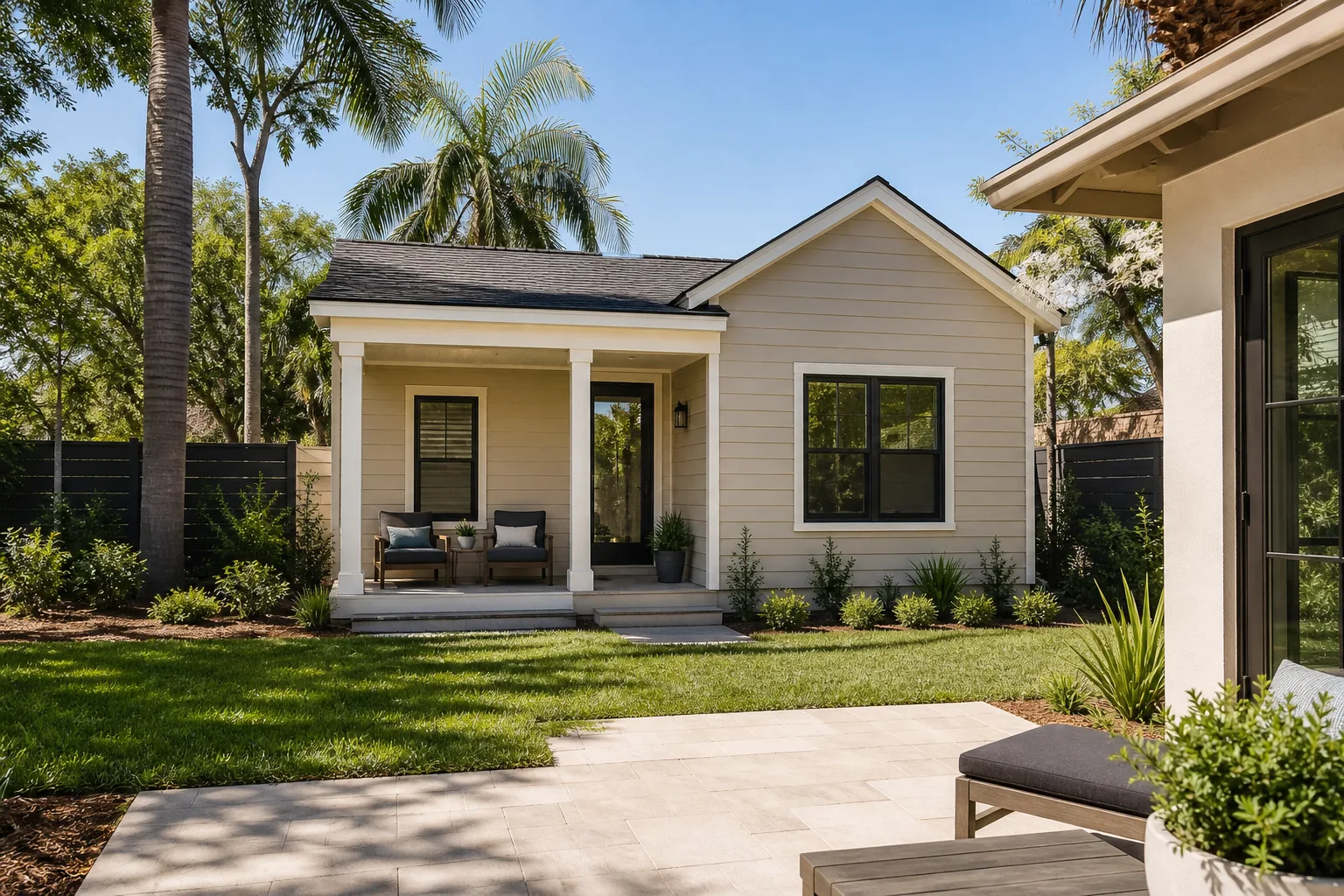
- Home additions & ADU
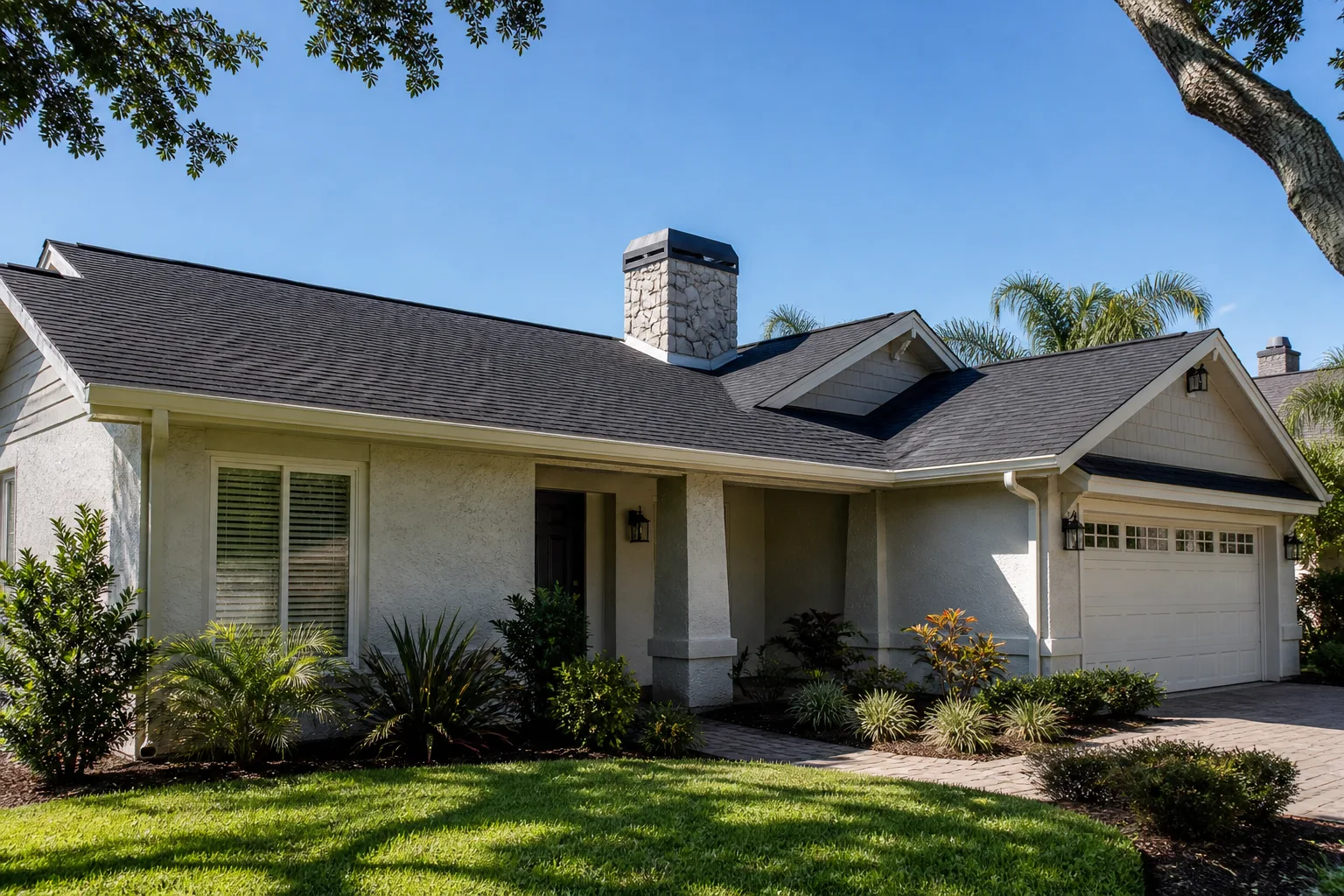
- Roofing
- Windows & doors
- Driveway & pavers
- Fence
Table of Contents
- Step 1: Verify the CSLB License (and Read Every Field)
- Step 2: Read the Certificate of Insurance Like an Underwriter
- Step 3: Request the Seven Documents
- Step 4: Normalize Three Bids on a Comparison Worksheet
- Step 5: Lock In Three Contract Clauses That Protect You
- Step 6: Run Two On-Site Verifications
- Step 7: Ask Reference Calls the Five Questions That Actually Reveal Character
- What Palmdale Permits and Climate Actually Demand of Your Contractor
Step 1: Verify the CSLB License (and Read Every Field)
Go to cslb.ca.gov and use the “Check a License” lookup. Enter the license number, not the business name – names change, license numbers don’t. What comes back is a page you should read line by line, because each field carries meaning most homeowners skip.
- License Status: “Active” is the only acceptable answer. “Expired,” “Suspended,” or “Canceled” are deal-breakers, full stop.
- Classification: A “B” license covers general building. An “A” covers engineering. A “C-39” is roofing. For a full remodel or an addition, you want a B or the specific C-classes the job requires. A roofer bidding your Home Additions & ADU in Palmdale is bidding outside their license.
- Bond Amount: California requires a $25,000 contractor bond. That’s a floor, not a ceiling – it protects you against a fairly small loss. On a $150,000 addition, request a certificate showing a bond or insurance policy sized to the project.
- Complaints and Discipline: Click the “Complaints” tab. Read the dates and dispositions. A single resolved complaint from 2014 reads differently than three open ones from last year. The CSLB publishes discipline actions, arbitration awards, and citations – all public record.
- Workers’ Compensation: The field will read either “Exempt” or list a carrier. “Exempt” means the contractor has no employees – fine if true, suspicious if a crew of eight shows up at your house.
In our experience, most Palmdale homeowners stop at “Active” and never read the classification or complaint history. That’s where the useful information lives. Ten minutes on the CSLB site tells you more than an hour of showroom conversation.
Step 2: Read the Certificate of Insurance Like an Underwriter
A Certificate of Insurance (COI) is a one-page document from the contractor’s insurer listing their coverage. Most homeowners glance at it and file it. Read it instead.
For general liability on a project over $50,000 in California, look for a policy with a per-occurrence limit of at least $1 million and an aggregate of at least $2 million. Below that, one serious incident can exhaust the coverage and leave you exposed.
Workers’ compensation is where homeowners get burned. California requires every employer to carry workers’ comp. If a worker is injured on your property and the contractor has no policy, you may be seen as the employer – and your homeowners insurance may not cover it. Look for a policy with a carrier name, a policy number, and an effective date covering your project window.
Two verification steps most people skip:
- Call the carrier. The phone number on the COI should connect you to an agency that confirms the policy is active, not canceled for non-payment. Photos of expired certificates circulate.
- Confirm you’re listed as “additional insured.” Ask the contractor to have their insurer add you to the policy for the duration of the project. It costs the contractor nothing and gives you a direct line if a claim arises. A contractor who resists this is telling you something.
Step 3: Request the Seven Documents
Ask any Palmdale contractor you’re considering for these seven items, in writing, before you sign anything. A serious contractor produces them within a business day. Stall tactics are your answer.
- CSLB license printout – a screenshot of the active license page, dated.
- Certificate of Insurance – general liability and workers’ comp, with carrier phone numbers.
- Bond certificate – from the surety, not a photocopy of a business card.
- Written scope of work – what’s included, what isn’t, room by room. Not “remodel the kitchen.”
- Written flat price – one number, with line items, before any work starts.
- Written warranty – in plain language, on company letterhead, describing what’s covered and for how long.
- Three references – from the last 18 months, with phone numbers, for projects similar in scope to yours.
Rowan Construction Group’s Haven Standard treats documents one, four, five, and six as the point of the exercise – a written price before any work starts, on every trade, from kitchen remodels through additions. That’s Clause 1. Under Clause 2, no work proceeds on a change until the change order is signed. The paperwork isn’t overhead. It’s the product.
Step 4: Normalize Three Bids on a Comparison Worksheet
Three bids come back. The lowest looks great – until you discover it excluded debris haul, permit fees, or temporary power. Here’s how to make three bids comparable, line by line.
Build a spreadsheet with these columns. For every bid, mark “Included,” “Excluded,” or “$X Extra.”
- Permit fees and expediting – Palmdale permits for additions and structural work run several thousand dollars. Some contractors put them in the bid, some leave them to you.
- Debris haul and dumpster rental – skip this and you’ll be buying a dumpster on day one.
- Temporary power, water, and portable sanitation – often excluded. Add up what a rented generator and porta-potty cost for the project duration.
- Materials by brand and spec – “tile” is not a material. “Daltile porcelain, 12×24, matte” is. Quikrete vs. Sakrete concrete mix, KraftMaid vs. Wellborn cabinets – the names are the number.
- Change order markup – ask what percentage the contractor adds to a change order. 10% is common; 25% is a red flag.
- Payment schedule – a balanced draw schedule keeps money aligned with progress. Flat 50% up front is a warning sign.
- Warranty duration and terms – in writing, with what’s covered and how a claim is filed.
A bid of $100,000 that includes permits and haul and a bid of $85,000 that excludes them may be identical once normalized. Do the math before you call either one “the cheaper contractor.”
Step 5: Lock In Three Contract Clauses That Protect You
Most construction contracts are the contractor’s form. You can and should negotiate three clauses before you sign. Word them like this.
Clause One – Flat Price and Written Scope. “The price stated in this contract is a flat price for the scope described in Exhibit A. No work outside Exhibit A shall be performed, and no additional charge shall accrue, without a written change order signed by both parties prior to commencement of the changed work.” This clause prevents the mid-project “we found something” conversation from becoming an open checkbook.
Clause Two – Change Order Discipline. “All change orders shall state the added scope, the added cost, and any schedule impact in writing, and shall be signed by both parties before any additional work begins. Verbal authorizations are not valid.” Under this clause, no one swings a hammer on a change until your signature is on paper. It’s the discipline that keeps projects within a few percent of the agreed number.
Clause Three – Lien Release on Payment. “Contractor shall provide a conditional lien release with each progress payment request and an unconditional final lien release upon final payment.” Without this, a subcontractor you’ve never met can place a mechanic’s lien on your house for a bill the general contractor didn’t pay.
Read every clause of every contract, and don’t sign one that doesn’t contain these three. For projects like a new Driveway & Pavers in Palmdale installation, the same rules apply at a smaller scale.
Step 6: Run Two On-Site Verifications
Two site visits before you sign tell you more than a dozen phone calls.
Visit One – A Live Jobsite. Ask the contractor if you can walk a current project (with the homeowner’s permission). What you’re looking for: is the site swept, or is debris everywhere? Are materials covered, or is $3,000 of cabinetry sitting in the yard? Are there marked vehicles with the company name on the door? A live person answering the phone is a Rowan feature we treat as baseline – but on a jobsite, ask a worker who their supervisor is and whether they’ve been background-checked. In our experience, subcontractors working on a legitimately run site can tell you, without prompting, who signs their check.
Visit Two – A Completed Job. Ask to see one finished project from at least six months prior, ideally a year. Walk the seams. Look at the transition between the tile and the drywall. Look at how the pavers sit against the house; if a Palmdale backyard has a paver edge that has started to heave after a summer, the base wasn’t compacted. Ask the homeowner, in person, one question: “Was the final number the number on the contract?” The pause before the answer is the answer.
Step 7: Ask Reference Calls the Five Questions That Actually Reveal Character
“Did they do good work?” is a worthless question. Everyone says yes. Ask these five, in this order, and let the reference talk.
- “How much did the final invoice exceed the original bid, and what was the reason?” A 2% overage with a signed change order for an actual surprise is normal. A 30% overage explained as “unexpected” is not.
- “Was the project finished on the date promised? If not, how late, and how did the contractor communicate the delay?” Delays happen. Silence is what to watch for.
- “Did you ever have to call them back for a problem after the job wrapped? How did they handle it?” This reveals warranty behavior in practice, not on paper.
- “Did they walk you through the permits and inspections, or did you handle that yourself?” In Palmdale, a contractor who hides from the city inspection process is a contractor whose work you can’t verify.
- “If you had a friend hiring a contractor next week, would you hand them this number without a caveat?” The “yes but…” answer is the real answer.
Call at least three references, and make sure at least one project was the same scope and size as yours. References from a $15,000 fence job will not tell you what a $150,000 addition has been like. For the fence scale specifically, see our guide on Fence Installation in Palmdale.
What Palmdale Permits and Climate Actually Demand of Your Contractor
Palmdale sits in the Antelope Valley, and the high-desert climate writes its own specs into every project. Wind events that top 40 mph in spring, summer temperatures that push onto the 100s, and winter nights that drop below freezing – all of it tests materials in ways a Los Angeles or Orange County contractor may not have designed for.
What that means for your contractor choice:
- Wind-rated roofing. GAF and Owens Corning both publish wind-uplift ratings; your contract should name the specific shingle and the rating. A 110-mph rated shingle in an area with spring gusts isn’t an upgrade – it’s a starting spec.
- Concrete mix design. Pavers and slabs in Palmdale need a mix that can handle the temperature swing. Ask whether the contractor specifies Quikrete or Sakrete mixes for small pours, and what PSI rating they’re using for structural slabs.
- Permits through the City of Palmdale. Additions, structural changes, roofing above a certain square footage, and any electrical or plumbing changes require permits and inspections. Ask the contractor to describe, in the bid, who pulls the permit and who meets the inspector. If the answer is “you do,” the bid isn’t complete.
- ADUs and the current rules. Palmdale ADU rules have changed more than once in recent years. A contractor who says “we build prefab units like Abodu or Cover and don’t need permits” is either confused or misleading. Every ADU needs permits and a foundation, utility, and occupancy inspection. The material choice is the easy part; the permit path is the work.
Rowan Construction Group’s trades run on the same documentation standard whether the job is a $15,000 fence or a $150,000 ADU – because the specs and permits don’t get simpler when the dirt starts to move. Start with our Rowan Construction Group Palmdale home page if you want to see the standard before you call.
Common Mistakes to Avoid
- Accepting a verbal bid. In our experience, a verbal number on a phone call and a written number on paper differ by thousands, always in the same direction. Insist on the number in writing before any meeting ends.
- Skipping the “Exempt” workers’ comp check. “Exempt” assumes the contractor has no employees. If a Palmdale crew of six is on your roof, that certificate doesn’t match reality, and your exposure is real.
- Choosing the lowest bid before normalizing. Permit fees, debris haul, and temporary power are the three most commonly excluded line items – each can add $3,000 to $8,000 on a mid-size Palmdale project.
- Signing a contract without a change order clause. Verbal changes are unenforceable on your side and enforceable on theirs. Get the clause in writing before you sign.
- Not walking a live jobsite. Sight-unseen hires are how homeowners end up with a crew that isn’t background-checked, doesn’t show up on Mondays, and has no supervision.
- Reference calls that only say “good work.” Skip the compliment and ask the budget overrun question. That’s the one that reveals character.
- Forgetting the lien release. An unpaid subcontractor can place a lien on your home even if you paid the general contractor in full. Get a signed lien release with every payment.
See the difference
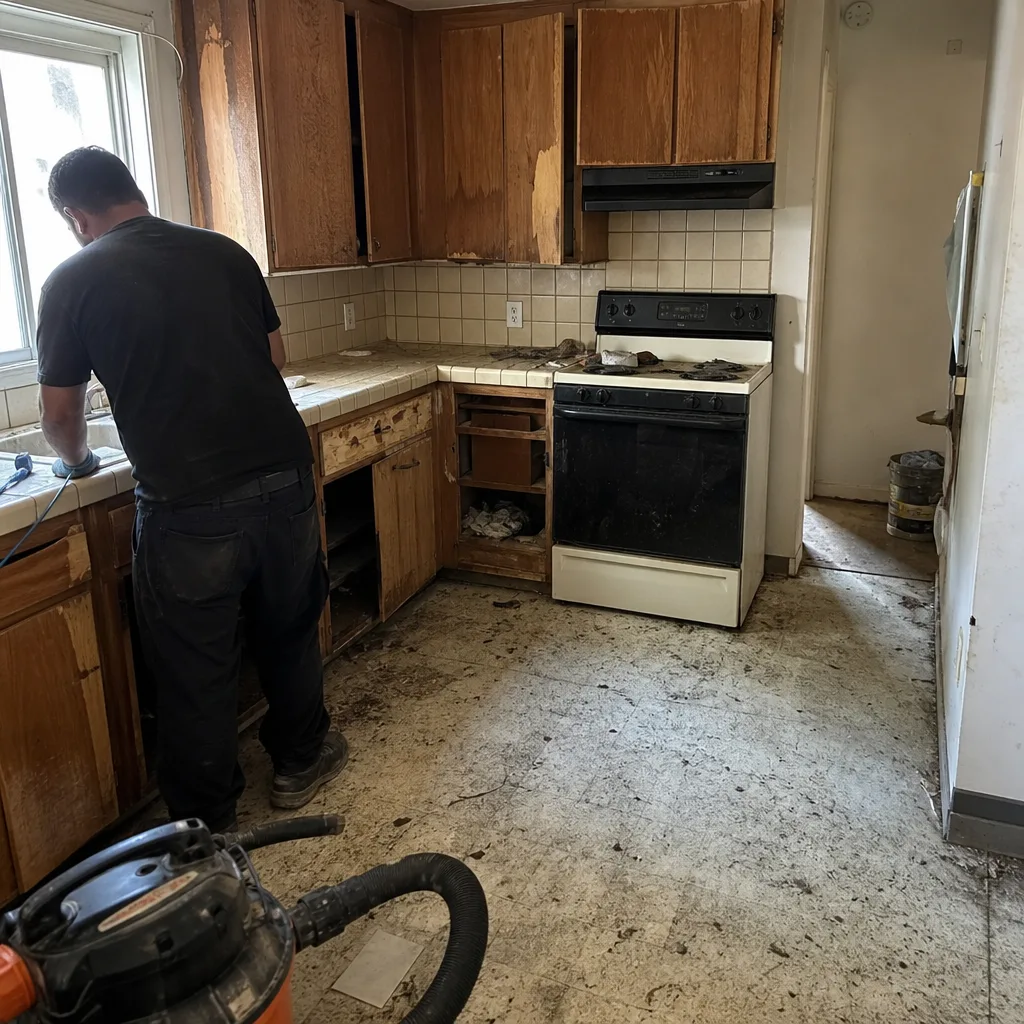 Before
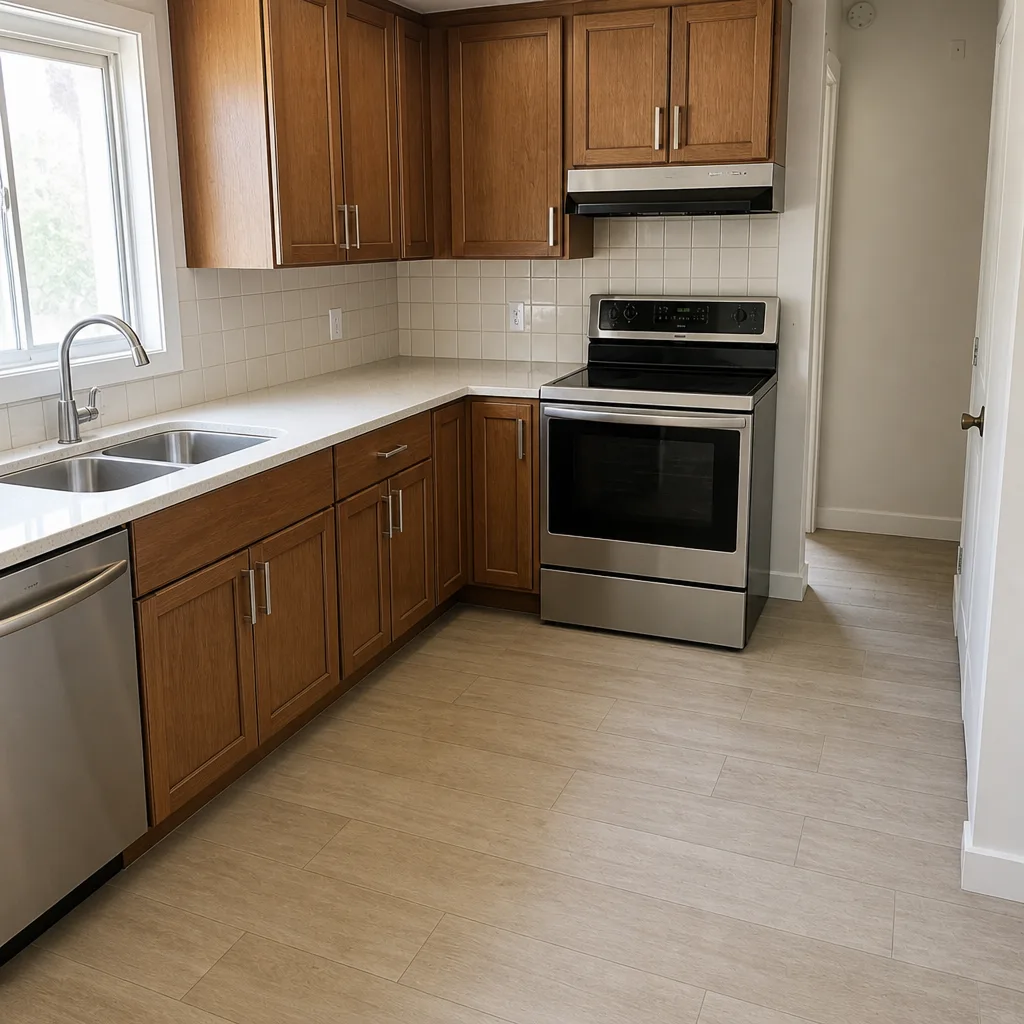 After
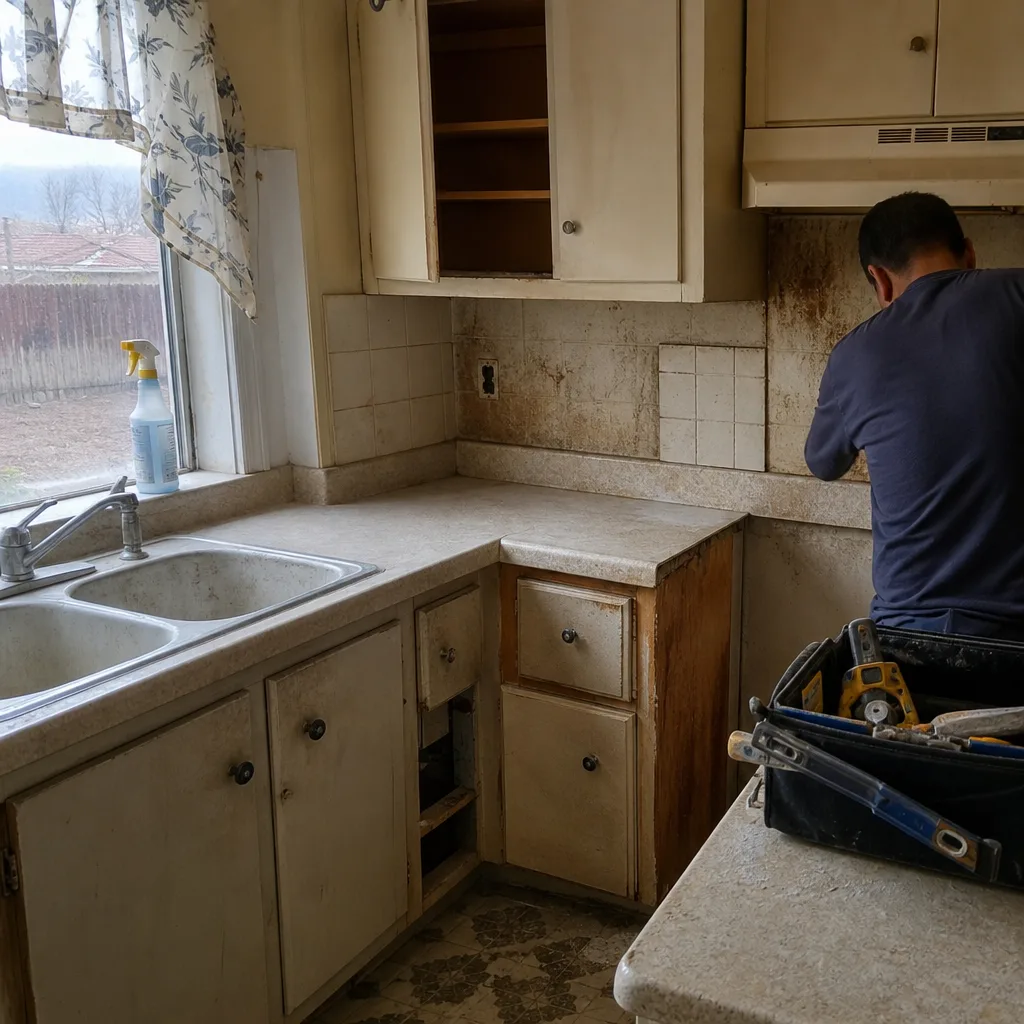 Before
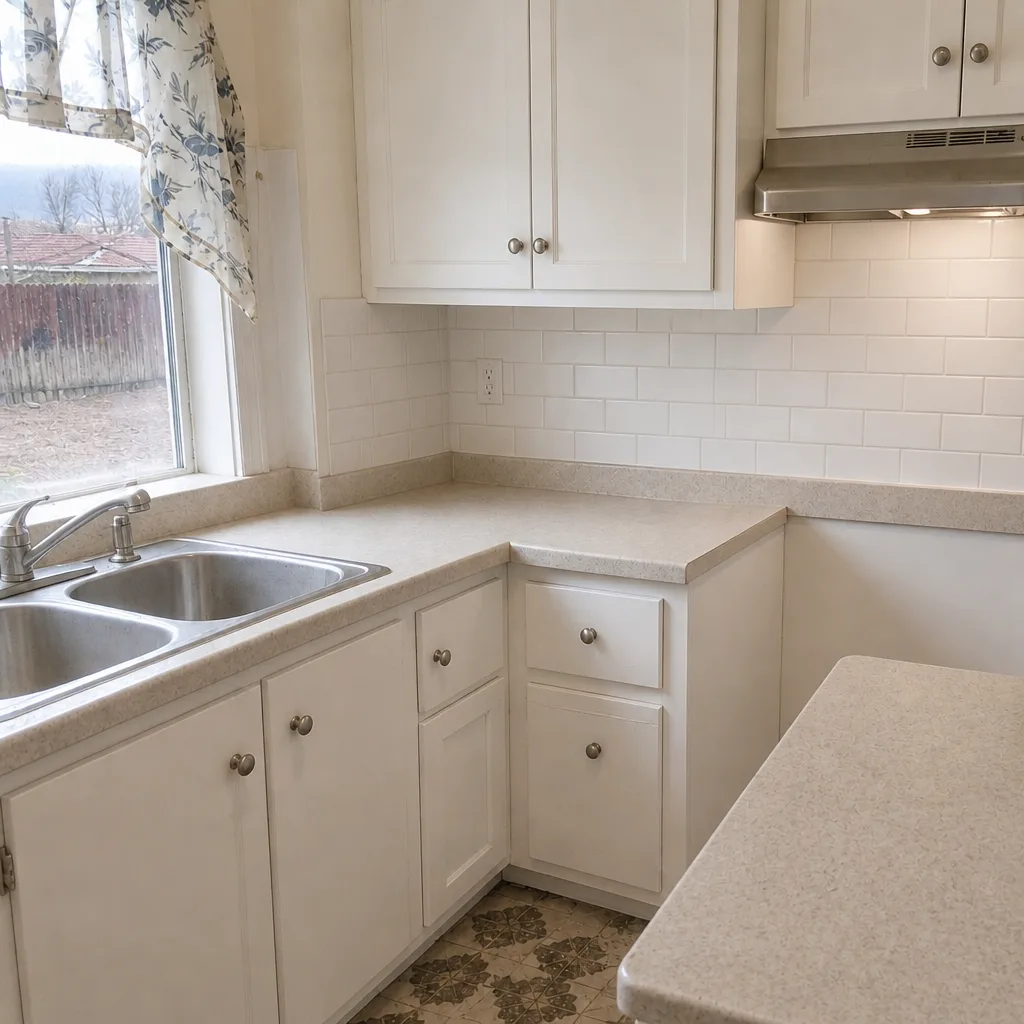 After
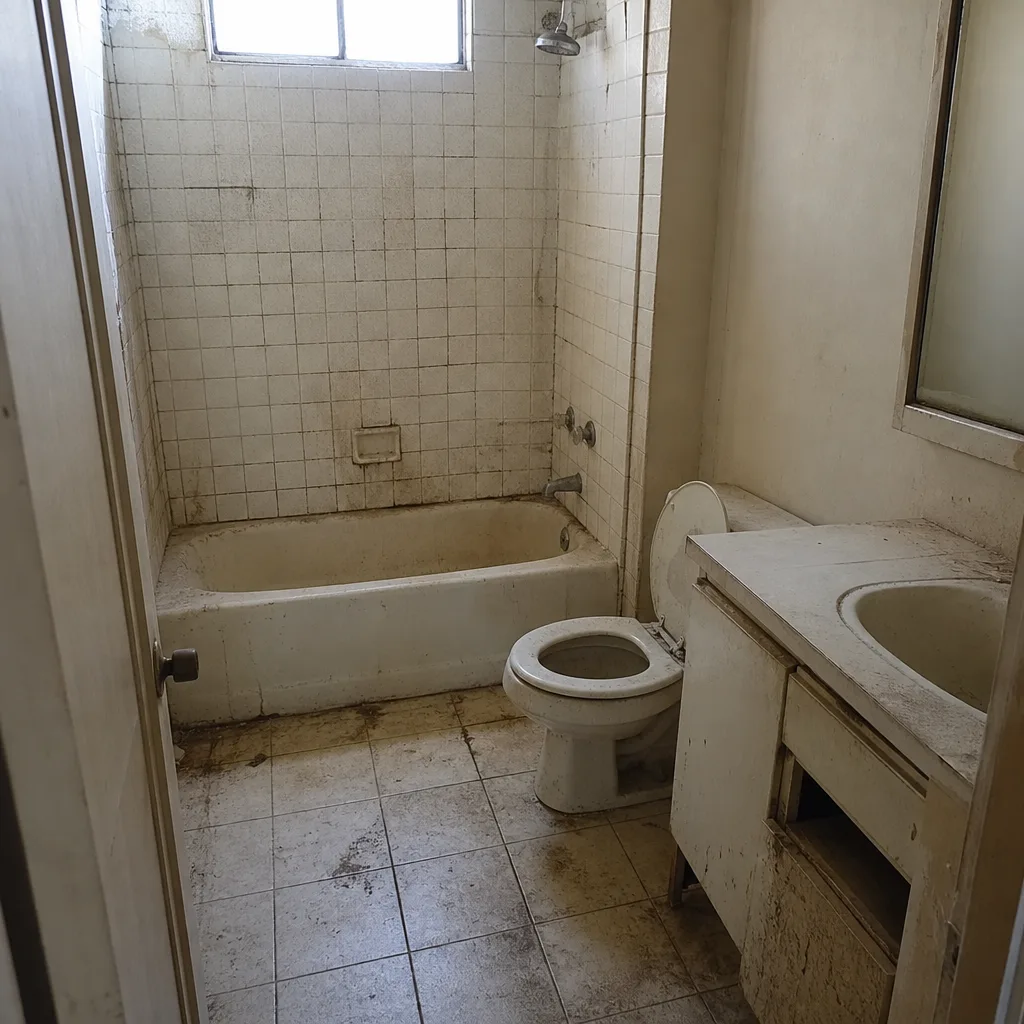 Before
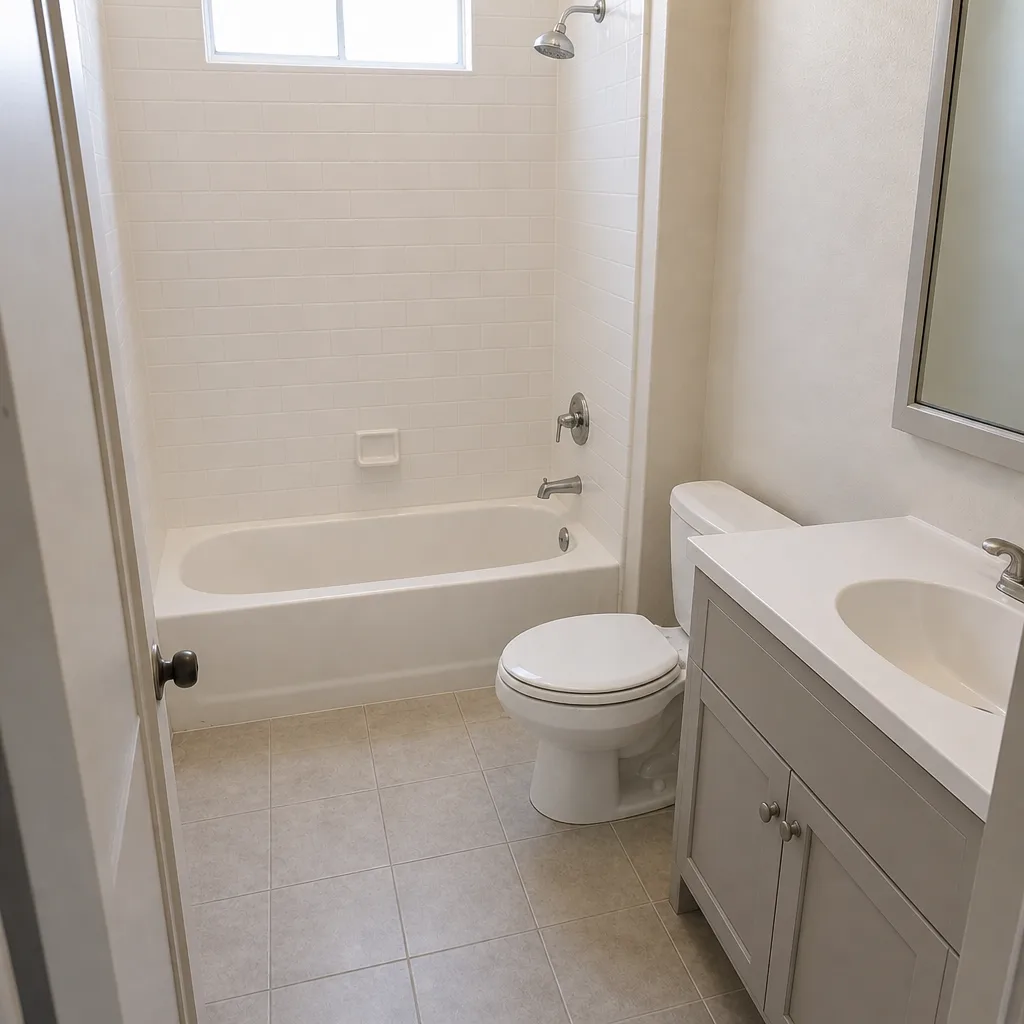 After
When to Call a Professional
Some work belongs in your hands: paint, trim, a single light fixture. What doesn’t: anything involving structural change, permits, roof decking, gas lines, electrical panel work, or an addition. If a project needs an inspector’s signature, it needs a licensed contractor, and in Palmdale it also needs one who knows the city’s permit process and the Antelope Valley wind and temperature loads. The moment your plan touches a permit, you’re in professional territory. So is any job that would require a permit – even if you’re tempted to skip it. Rowan Construction Group Palmdale offers free estimates in Palmdale, with a written flat price before any work starts – call (844) 320-8244 to schedule yours.
Frequently Asked Questions
Go to cslb.ca.gov and use the “Check a License” tool, entering the license number – not the name. Look for “Active” status, confirm the classification matches your project (B for general, C-39 for roofing, and so on), then click the Complaints and Discipline tabs and read the history. If the license isn’t active, walk away.
A typical Palmdale kitchen remodel runs $45,000 to $85,000; a full bathroom remodels $18,000 to $38,000; and a home addition runs $180,000 to $350,000 depending on size and finish. A written flat price with a written scope should not change unless the scope changes, and any scope change should require your signed change order before work begins. Call (844) 320-8244 for a written estimate specific to your project – it’s free.
At minimum: general liability with $1 million per occurrence and $2 million aggregate, plus an active workers’ compensation policy with the carrier name and policy number visible on the certificate. For any project over $50,000, ask to be listed as additional insured, and call the carrier directly to confirm the policy hasn’t lapsed.
Yes. Every ADU in Palmdale needs building permits, utility permits, and occupancy inspections, regardless of whether it’s site-built or prefabricated. Brands like Abodu and Cover simplify the material selection, not the permit path. Any contractor who tells you permits are optional is not someone you want holding the nail gun.
The Haven Standard is the set of written operating rules behind every Rowan Construction Group project, and its Clause 1 is a written price before any work starts – no verbal quotes, no “we’ll figure out the number after demo.” Clause 2 requires signed change orders before any scope addition. Clause 3 documents the warranty. It matters because it converts a verbal promise into a contract clause you can hold someone to.
A kitchen remodel runs 5 to 8 weeks, a bathroom 3 to 6 weeks, a home addition 4 to 8 months, and a fence or paver project 3 to 8 days. Delays are normal when weather or inspection schedules interfere; they’re not normal when they’re unexplained. Ask your contractor to put the schedule in writing, and require a written update within 48 hours of any slip.
The Bottom Line
Hiring a construction contractor in Palmdale comes down to documentation, not personality. Verify the CSLB license number and read every field. Get a certificate of insurance with a carrier phone number you can call. Request the seven documents and expect them within a business day. Normalize three bids on the same worksheet before comparing prices. Insist on three contract clauses: flat written price, signed change orders, and lien releases. Visit a live jobsite and walk a finished project. Ask references about budget overruns, not compliments. Do those steps in that order and you’ll hire the Palmdale contractor with a defensible paper trail, not just a pretty portfolio – and you’ll have the records to hold them to the number.
Call (844) 320-8244 to schedule your free estimate. A written flat price, a written scope, and the documentation to match – before any work starts.
Written by the team at Rowan Construction Group Palmdale.